Fitness, Nutrition, Health and Sports Blog In the HSNstore Blog you will find tips about Fitness, sport in general, nutrition, and health – HSNstore.com

Knowing what our weight will be, or rather, how to deduce it, is a prior step to take in order to prepare our diet, even before buying any kind of supplements or taking protein directly. Would you buy a can of petrol or diesel without knowing how your next car works?
What is Body Composition?
Let’s start by defining this concept that may sound familiar. Body composition refers to the relationship between fat and muscle mass (fat-free tissue). A person who has a high percentage of fat-free tissue, in relation to the fat itself, will be indicative of maintaining a better level of health and also aesthetic or Fitness.
What types of fat are there, where are they located and what is their function?
Fat plays an energetic role, in our body, i.e., it stores calories, and also has a hormonal role, thus influencing the metabolism. There are several types of fat:
- Brown fat: also known as brown adipose tissue, it has an interesting function, which is to maintain body temperature, i.e., to produce heat. Moreover, its activation leads to the consumption of calories, as in cold environments, where the reserves located in the body (mainly the neck) are depleted. It has a greater number of capillaries and therefore greater oxygen consumption, as well as providing sympathetic stimulation to the fat cells. People with more brown fat have a better body composition.
- White fat: this is the type of fat that results from the storage of excess calories. The energy reserve available to our body, gives us the unsightly appearance when we overdo it. It is an endocrine organ that provides a release of certain hormones, among which can regulate appetite and hunger.
- Subcutaneous fat: the fat located under the skin, which is used to measure the folds and determine the % of fat.
- Visceral fat: this is the fat located around the organs, which can compromise our health if it increases excessively (risk of diabetes, cardiovascular accidents, etc.).
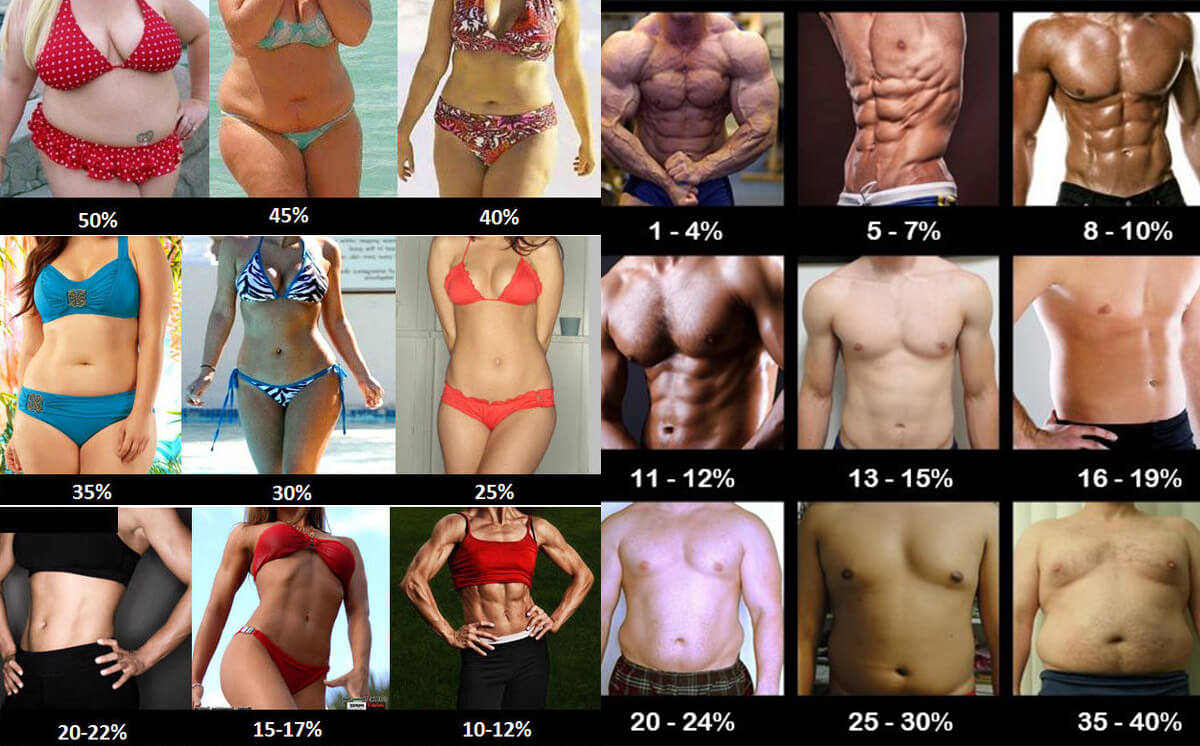
Generally, when we talk about body composition, it is important to indicate the percentage of fat, since without it, and without observing the person, we could deduce beforehand characteristics that are very different from reality.
Methods for Calculating Fat Percentage
Among the different procedures that exist for calculating the percentage of fat, the fold measurement is the one we recommend, basically because of its accuracy and simplicity, as well as its affordability.
Other methods include:
- Bioelectrical impedance analysis (BIA)
- Anthropometric measurements: although it is quite simple, as it consists of taking measurements of the circumference of different parts of the body, such as the neck, waist, or height, it is not very reliable (fat is not measured directly).
- Hydrostatic weighing or Densimetry: this provides the most accurate measurements. However, the procedure must be carried out in special facilities, since we have to immerse ourselves in a tank of water. It is also quite expensive, and cannot be repeated frequently.
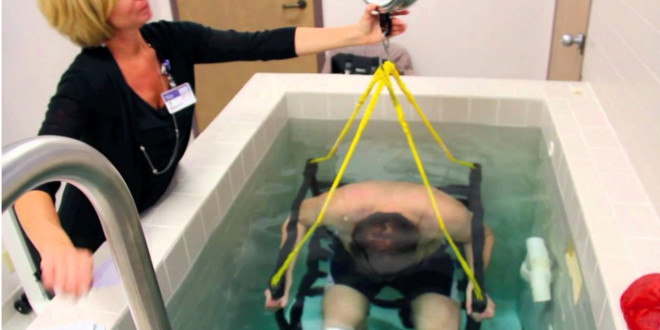
A good solution would be to combine bioimpedance with fold measurement. Hydrostatic weighing analysis is discarded due to its complexity and cost.
What is Fold Measurement?
We will need callipers, which is a fairly inexpensive utensil, as well as a pencil and paper. This device helps us to pinch certain areas of the body and give us a measurement in millimetres, which we write down. Subsequently, we introduce these data into the corresponding formula and estimate the percentage of fat.
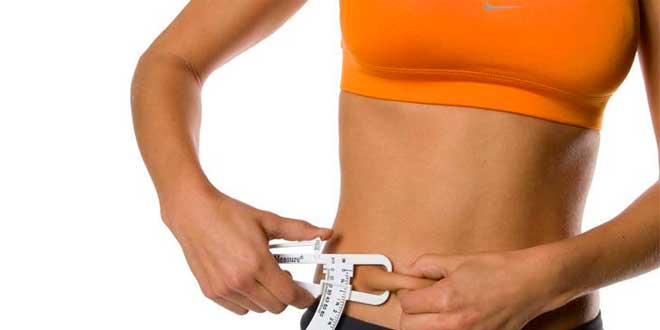
If you don’t know anyone who has experience with it, there is always time to learn.
How to perform the Fold Measurement?
In this case, measurements are taken at 3 specific points:
For women
- Triceps
- Suprailiac
- Thigh
For men
- Pectoral
- Abdomen
- Thigh
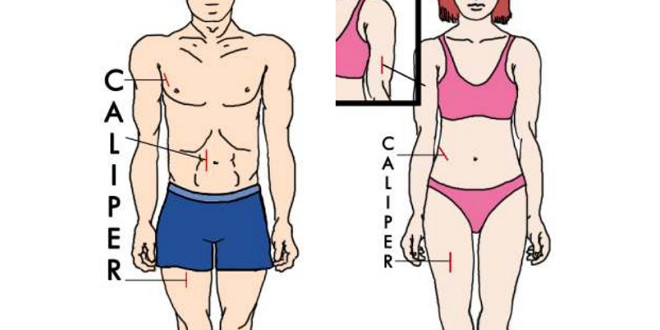
Formula for calculating fat percentage with callipers
We use the Jackson & Pollock formula for 3 folds, in women and men. Previously, we have to obtain for each sex the sum of the 3 folds and introduce them in the formula. Also that value squared.
Body Density = 1.0994291 – 0.0009929*(Sum of Folds in mm) + 0.0000023*(Sum of Folds in mm^2) – 0.0001392*(Age)
For Men
Body Density = 1.10938 – 0.0008267*(Sum of Folds in mm) + 0.0000016*(Sum of Folds in mm^2) – 0.0002574*(Age)
This first result will give us the Body Density, which again in another formula, we can use to obtain the body fat percentage:
How often do we measure our fat percentage?
In spite of the above, it is really quite complicated to keep accurate measurements of fat %, unless we have unlimited availability of the most advanced methods, something unfeasible, I think that the best way to “consult” our state responds to a scheme such as this:
- Weigh yourself once a week, always on the same day and under the same conditions (after going to the bathroom in the morning, for example). Keep in mind that if you do it every day, as many people do, your weight will fluctuate considerably due to glycogen storage and fluid retention. Avoid becoming obsessed and don’t do it every day!
- Take measurements of the folds every week and if you have a special scale, also take their measurements to check them.
- Measure your waist circumference every week, which is a very quick indicator of whether you are losing fat.
What is a Healthy Fat Level?
The following tables show the ideal fat percentages according to age and sex, based on the equations established by Jackson & Pollock, from the study of the measurement of folds in the prediction equations.
In the other case, information has been added in relation to research carried out by ACE (American Council on Exercise) in the United States, which brings together a number of specialised members in the training sector with accredited certifications.
Fat Percentage Table by Jackson & Pollock
These are the levels at which it can be considered suitable for a non-active audience.
| Fat Percentage % | ||
| Age (Years) | Women | Men |
| 20 | 17,7 | 8,5 |
| 25 | 18,4 | 10,5 |
| 30 | 19,3 | 12,7 |
| 35 | 21,5 | 13,7 |
| 40 | 22,2 | 15,3 |
| 45 | 22,9 | 16,4 |
| 50 | 25,2 | 18,9 |
| 55 | 26,3 | 20,9 |
Fat Percentage Table by ACE (American Council on Exercise)
| Women | Men | |
| Essential Fat* | 10-13% | 2-5% |
| Athletes | 14-20% | 6-13% |
| Fitness | 21-24% | 14-17% |
| Average** | 25-31% | 18-24% |
| Obesity | +32% | +25% |
*Essential fat is the minimum amount that a person must maintain for the proper functioning of the body and for health.
**The average over the values in the non-active public.
How to calculate my Ideal Weight?
Once we know how to measure our fat percentage, as well as approximately how much it should be, it’s time to find out how to reach our ideal weight.
This process consists of calculating the amount of calories we need according to the objective, whether it is to reduce, maintain or increase our weight. In this case, the first thing to do is to know a method to know precisely how many calories to set, and for this, among the solutions that exist, I prefer the Harris-Benedict Formula, as it is a good way to start this path, especially if you do not have any previous experience.
How to improve my Body Composition?
To improve body composition, there must be an alteration of the two variables: a decrease in fat, or an increase in mass. Both processes cannot occur simultaneously, so the most important thing, in my opinion, would be to reduce the fat percentage, if we start from a high one, which could be more than 15%. All this with a view to maintaining a better visual appearance.
In this process, an energy deficit must be established, i.e., the daily calorie count must be negative (more calories expended than consumed). So far, it seems simple, but nevertheless, there are a number of consequences to consider, such as loss of muscle mass, reduced metabolism and less energy available for training.
The body will seek to conserve energy because it will detect an alarm situation, so it will “burn” fewer calories, and it will also generate a hunger signal. Now, it doesn’t seem so simple… So the best solution (I don’t know of any other) is to establish a calorie cycling strategy and combine it with a training plan.
Related Entries
- How much protein do I need?
- Carbohydrates in the Diet
- Improve your body composition by cycling calories
- What is my Somatotype?
- BMI and ICC two measurements to know our body composition
- Quick and easy way to establish a diet
- Women's diet: apply the 30 calorie rule
- IIFYM or Flexible Diet
- Percentage of Fat 1 digit