Fitness, Nutrition, Health and Sports Blog In the HSNstore Blog you will find tips about Fitness, sport in general, nutrition, and health – HSNstore.com
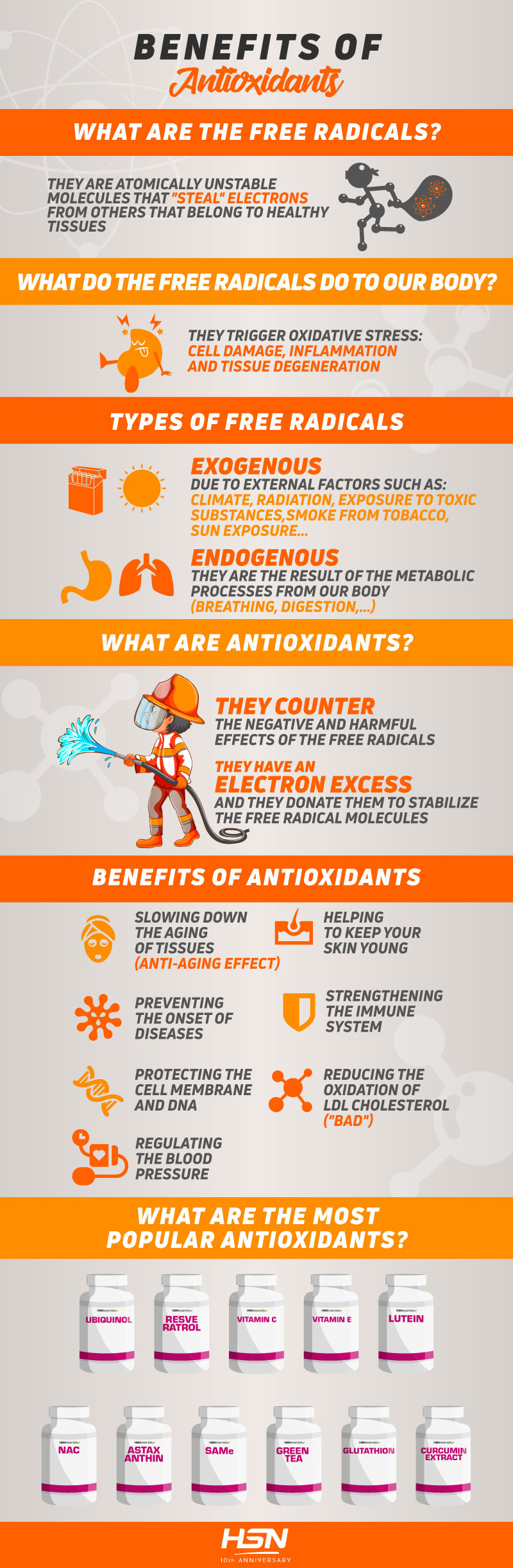
 Antioxidants are key elements for neutralising unstable molecules called free radicals.
- Their main function is to protect our cells from oxidation, a natural but potentially harmful process for health and ageing.
What are oxidative stress and free radicals?
Oxygen is vital, but its metabolism generates Reactive Oxygen Species (ROS). Oxidative stress occurs when there is an imbalance: we have too many free radicals and too few antioxidant defences.
Effects on health
Excess oxidative stress is associated with:
- Inflammatory diseases (arthritis, lupus).
- Cardiovascular and ischaemic conditions.
- Neurodegenerative diseases (Alzheimer’s, Parkinson’s).
- Premature ageing.
External factors that “oxidise” you
Although the body naturally produces free radicals, these external factors increase their production:
- Exposure to UV rays and pollution.
- Tobacco smoke and alcohol.
- Excessive physical exercise without adequate recovery.
- Diets high in processed foods.
How do antioxidants work?
An antioxidant is a “generous” molecule: it donates electrons to free radicals to stabilise them without becoming unstable itself.
Classification of defences:
- Enzymatic Systems (Endogenous): such as Glutathione, Catalase or Superoxide Dismutase (SOD).
- Micronutrients (Exogenous): vitamins and compounds that we must obtain from the diet.
The best antioxidants: Guide by nutrient
Here is a breakdown of the most powerful elements you can find in foods and food supplements:
| Nutrient | Main function | Where to find it |
| Vitamin C | Structure of bones and blood vessels | Citrus fruits, blueberries, pineapple |
| Vitamin E | Protects cell membranes | Nuts and vegetable oils |
| Astaxanthin | The most powerful carotenoid for skin and vision | Microalgae and crustaceans |
| Curcumin | Powerful anti-inflammatory and antioxidant | Turmeric (curry) |
| Ubiquinol (CoQ10) | Cellular energy and heart longevity | Organ meats and supplementation |
Why take antioxidants?
As we age, our natural production of enzymes such as catalase or ubiquinol decreases. Providing external sources helps improve quality of life and reduce the risk of chronic diseases.
Tips for your daily diet:
- Prioritise brightly coloured vegetables: they indicate the presence of lycopene (red), beta-carotene (orange) or chlorophyll (green).
- Add N-Acetyl Cysteine (NAC): it helps eliminate heavy metals such as lead and mercury.
- Don’t forget Matcha Tea: one of the most concentrated sources of catechins.