Fitness, Nutrition, Health and Sports Blog In the HSNstore Blog you will find tips about Fitness, sport in general, nutrition, and health – HSNstore.com

So often heard in the sports world, oxidative stress refers to the imbalance between the production of pro-oxidants and the ability of a biological system to quickly detoxify intermediate reactants.
What Are Free Radicals?
Atoms or groups of atoms that have an unpaired electron ready to pair up, so they are highly reactive. These radicals roam our body trying to steal an electron from stable molecules to reach their electrochemical stability.
The moment this happens, a chemically destabilized compound is created, which is then forced to snatch back the electron it “lost” from another nearby molecule, and that one from another (chain reaction)
Free Radicals Speed Up Aging
The action of free radicals results in erosion of the cell membrane or DNA and RNA chains. Erosions in the cell membrane reduce its permeability and therefore its function, so over time, the percentage of damaged cells increases up to 50% in old age; this forms the basis of aging and opens the door to diseases.

Which Are the Free Radicals?
The most common free radicals can be divided into three groups:
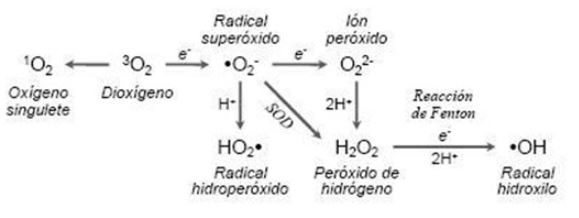
- ROS (reactive oxygen species): superoxide anion (-O2-), hydrogen peroxide (H2O2), and hydroxyl radical (-OH). Formed in aerobic oxidation processes inside mitochondria.
- RNS or NOS (reactive nitrogen species): peroxynitrite (ONO2-) derived from NO oxidation.
- Secondary radical species, which start from free radicals: lipid peroxidation, protein carbonyls, nitrotyrosine…
Antioxidants to Control Free Radical Levels
A antioxidant is a molecule that protects others from oxidation, oxidizing itself (reactions with copper and iron) and turning into harmless compounds. Plus, they create a favorable environment for other antioxidants to work (cascade mechanism).
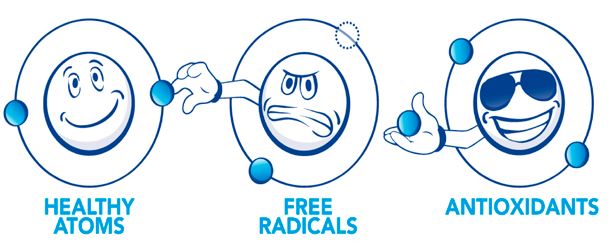
Our own body produces free radicals in moderate amounts to fight bacteria and viruses, which are then easily neutralized by our own system
Body’s Antioxidant Systems
The human body, having an aerobic metabolism, has its own detoxifying or antioxidant systems. Among them are:
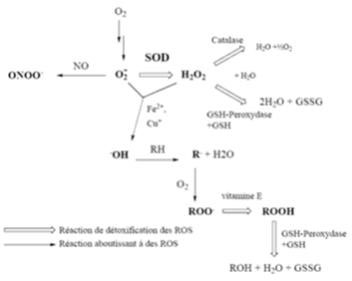
- ENZYMATIC SYSTEMS: Catalase and superoxide dismutase (SOD); plus others like GPX, TPX, GRX, TRX…
- NON-ENZYMATIC SYSTEMS: Notably glutathione (GSH), uric acid, and bilirubin. GSH is a tripeptide synthesized in the liver containing a sulfhydryl or thiol group (-SH), making it perfect to reduce free radical effects, and it’s the core element of many enzymatic detox systems (GSH peroxidase and GSH reductase, linked to selenium).
- DIET: ascorbic acid (vitamin C) and carotenoids (in fruits and veggies); tocopherols and vitamin E (seeds, some vegetable oils, and virgin olive oil), red fruit polyphenols; minerals (Se, Fe, Cu, Zn); flavonoids, etc.
Oxidative Stress and Physical Exercise
So often heard in sports, oxidative stress refers to the imbalance between pro-oxidant production and the ability of a biological system to quickly detoxify intermediate reactants (antioxidants). It can happen for two reasons:
- Excess formation of ROS and RNS
- Deficit of AOX systems.

In either case, it’s known that high oxidative stress causes damage to macromolecules and disrupts redox signaling and control mechanisms
Aerobic Training Increases Free Radicals
Sports practice causes a rise in free radicals due to increased oxygen consumption and oxidative processes compared to resting state. Among the pathways explaining this ROS and RNS increase, the main one is accepted to be the mitochondrial electron transport chain, responsible for over 90% of cellular VO2.

Also, since their oxidative capacity is higher, type I fibers and aerobic training are linked to greater free radical production than type II fibers and anaerobic training (weights)
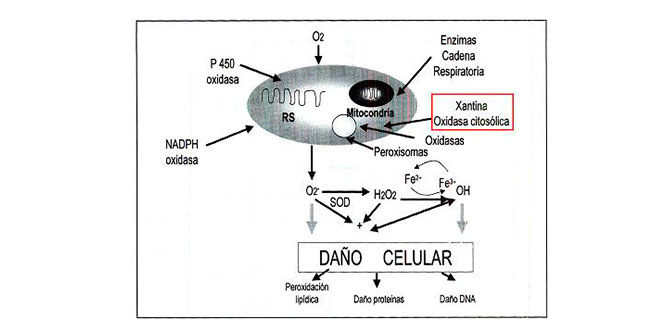
Right after exercise, immediate reperfusion brings free radicals to these areas, potentially causing damage there too.
Effects of Free Radicals on Skeletal Muscle
Modulation of force production
There’s an optimal cellular redox state for muscle force production (“hormesis”). 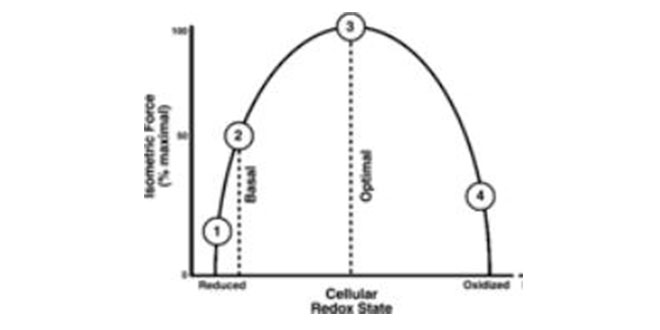 Induction of muscle fatigue
Muscle fatigue is defined as the exercise-induced reduction in the ability of skeletal muscle to generate force. One cause is oxidative stress: ROS have been shown to act on myofibrillar proteins, reducing their sensitivity to Ca2+. Muscle fatigue onset can be delayed during heavy load periods with antioxidants like N-acetyl-cysteine (NAC), a thiol (-SH) donor that allows glutathione (endogenous antioxidant) resynthesis.
Adaptive response to exercise
On one hand, acute responses to a single exercise session increase oxidative stress, but regarding chronic exercise responses, there are benefits from repeated acute damage linked to this oxidative stress.
Experimental evidence supports the idea that habitual physical training makes ROS act as inducers of antioxidant systems, especially in skeletal muscle.
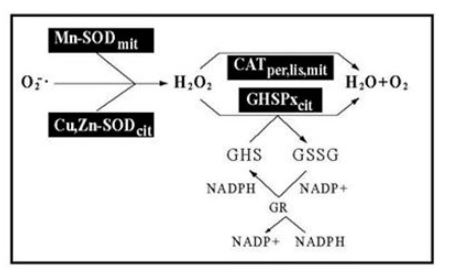
All this happens through activation of redox signaling pathways, allowing changes in gene and enzyme expression: most studies show ↑ SOD and GPX; while CAT doesn’t show such significant increases
Triphala Extract from EssentialSeries
Antioxidants to Reduce Oxidative Stress
As seen before, antioxidants play a key role in neutralizing ROS, with our body having its own mechanisms to handle them. Sometimes, this balance of regulatory substances can be compromised. Also, taking antioxidants close to training might not always be the best move.
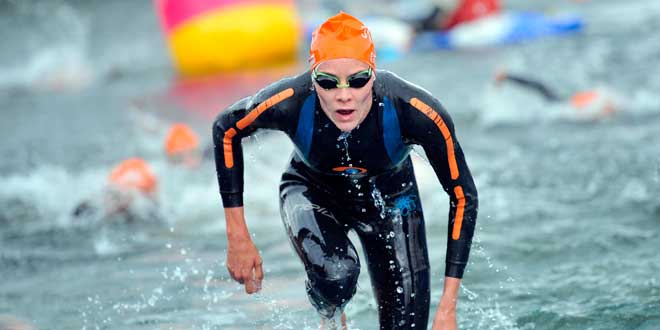
Therefore, except in mesocycles involving a hypocaloric diet with high training load (especially high volume or aerobic training, as part of a competitive plan), adding antioxidant supplements might not be fully effective beyond what the diet already provides, though it should always be personalized
Sources
- Bentley, D. J., Ackerman, J., Clifford, T., & Slattery, K. S. (2014). Acute and Chronic Effects of Antioxidant Supplementation on Exercise Performance. Antioxidants in Sport Nutrition, 141.
- Dekany, M., Nemeskeri, V., Györe, I., Harbula, I., Malomsoki, J., & Pucsok, J. (2006). Antioxidant status of interval-trained athletes in various sports. International journal of sports medicine, 27(2), 112-116.
- Gómez, C. M. C., & Ribes, J. V. (2004). Role of free radicals in exhaustive physical exercise. Effect of antioxidant administration. Physiology Department. Valencia, University of Valencia (Doctoral Thesis).
- Kanter, M. M. (1994). Free radicals, exercise, and antioxidant supplementation. International journal of sport nutrition, 4(3), 205-220.
- Salinas, J. G. (2007). Function of antioxidant supplements during exercise. Medicina Interna de México, 23(3).
- Wagner, K. H. (2014). Antioxidants in Sport Nutrition. Antioxidants in Sport Nutrition, 67.
Related Posts
- You can buy the best antioxidant supplements at the HSN online store
- Top 10 Best Antioxidants
- Antioxidants to Speed Up Recovery After Exercise?
- Properties and Benefits of Glutathione