Fitness, Nutrition, Health and Sports Blog In the HSNstore Blog you will find tips about Fitness, sport in general, nutrition, and health – HSNstore.com

Is 50g of sugar more fattening than oatmeal? Is brown rice better than white rice? Should you eat less fruit to limit the amount of fructose?
Quite interesting questions, and at first glance, easy to answer, aren’t they? I will try to shed some light on this topic.
Of course, they are not the same thing. There are several ways to classify carbohydrates and differentiate between the different types, and above all, most importantly, what do we spend our energy on?
Carbohydrates are to blame…
It could be said that carbohydrates are the “great misunderstood” of the fitness world.
Some people are terrified of them, especially after a certain hour has passed. You can still hear the saying: “…cut carbs at 3 o’clock…” As if eating them after that time could have “consequences”.
Let’s look at sugar, which has the connotation of being responsible for making us fat.
Many people think that a calorie of sugar is more fattening than a calorie of another type of carbohydrate. Others merely comment that in the end it is glucose that the body will eventually put into our stores, and therefore they do conclude that a calorie of both will affect us in the same way.
These arguments are often countered when insulin is involved, thus reverberating back to “a calorie is a calorie”.
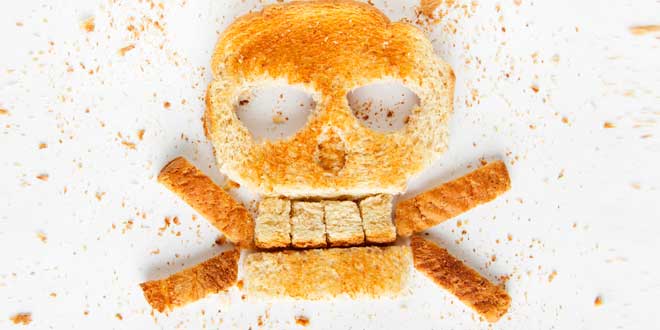
There are still many myths surrounding carbohydrates, but little by little, people are realising that they are not all bad.
This is one of the reasons why protein causes a higher satiety index than fats and carbohydrates. In other cases, important factors are not taken into account when classifying the effect of carbohydrates on our body, such as whether we accompany this nutrient with another type, such as fats or fibre, whether it is ingested in isolation on an empty stomach, and the total calorie intake.
Importance of carbohydrates
…carbohydrates are not essential
Well, that’s enough to put an end to the matter. In a way this is true, and unlike proteins and “essential fatty acids”, the body is able to meet physiological demands in the absence of carbohydrates.
The brain and other tissues need a certain amount of carbohydrates, but this can be met through macronutrient transformation processes, i.e. from proteins and fats.
Ketone use
When instead of obtaining energy from carbohydrates, we obtain it from fats, we use the term “ketones”.
This phenomenon occurs in low-carb or ketogenic diets
In this context, the pancreas will secrete glucagon, a catabolic hormone that “breaks down” free fatty acids as an energy substrate, and these are then called “ketones” or “ketone bodies”.
Gluconeogenesis
Another phenomenon that occurs, whereby glucose can be obtained from sources other than carbohydrates, is gluconeogenesis. This takes place in the liver, and sometimes in the kidneys, and follows a really complex metabolic pathway, in which the body “expends” quite a lot of energy to carry it out.
So, if we need energy, and carbohydrates provide it, why go round and round in circles…?
Carbohydrate cycling
When we design the diet, we start with a value for protein, in relation to our condition and requirements, and similarly, once the necessary calories have been established, we conclude with the percentage assigned to fat.
Will eating carbs make me fat?
As this type of question is always answered, we will again make the same point:
…surplus calories will be the determining factor for weight gain…
If there is an excess of fats or carbohydrates, or even proteins, the fat percentage will tend to rise. Despite the so-called “low-carb” diets, which “demonise” carbohydrates, the only truth is that if you eat more than you need, you know what the result will be.
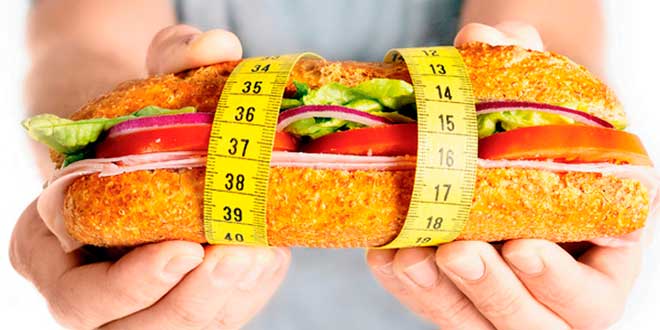
And indeed, if you “stuff yourself” with carbs, more than fulfilling your requirements, then it is normal that there is weight gain.
What is liponogenesis?
I now comment on a term that is little known, technically speaking, but colloquially speaking, the term used to contradict: “…if I eat carbohydrates I will cover up…”
This refers to the idea that by eating carbohydrates, excess carbohydrates will automatically be converted into fat. This is known as liponogenesis or the formation of new fat.
In this process, the fat is created by excess carbohydrates.
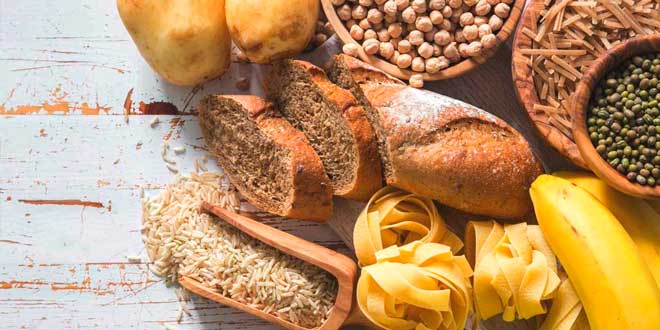
Lipogenesis will occur when eating large amounts of carbohydrates and very little fat, below 10%. The human body will be able to store between 400 and 700g of glycogen.
We will now explain key concepts that will help us to understand how this nutrient works and how it behaves and affects our bodies:
Complex and Simple Carbohydrates
One way to distinguish carbohydrates is to separate them into these two groups, according to their molecular structure, and how quickly the sugar is digested and absorbed, including of course the triggering role of insulin.
Simple carbohydrates have one or two sugars, while complex carbohydrates have more than three sugars in their structure. Fructose (fruit sugar), lactose (milk sugar) and sucralose are examples of simple carbohydrates, while on the other side are “starches” including potatoes, legumes, rice and grain products.
The more complex the structure, the longer it takes for the carbohydrate to be absorbed by the body.
At the same time, the simpler the carbohydrate, the greater the power to alter blood glucose levels, as a direct consequence of the pancreas secreting, to a greater or lesser extent, insulin in response to detecting this sugar that we introduce into our body.
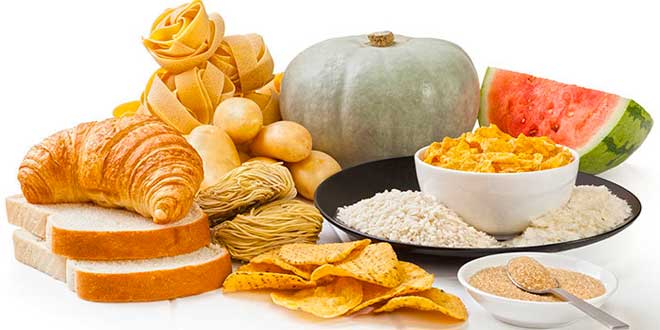
Moderation in the consumption of certain sources, as well as practising healthy habits, will help drastically in better weight control.
Insulin Index, Glycaemic Index, and Glycaemic Load
- The insulin index (II) is the postprandial measurement of insulin secretion after food intake, and will depend on carbohydrate, protein and fat quantity and quality, as well as their interaction.
- The glycaemic index (GI) is the body’s response, raising blood sugar levels. The GI is not always proportional to the insulin response.
- Glycaemic load (GL) is a number that estimates how carbohydrate intake will affect a person in terms of blood glucose rise. The GC takes into account the total carbohydrate content of the meal as well as the glycaemic index (GI).
Calculate the Glycaemic Load
GL = (GI x amount of grams of carbohydrates) / 100
The resulting number shall be classified according to:
- Low GL => < or = 10
- medium GL => between 11-19
- High GL => > 20
The lower the GL of a food, the lower the rate at which glucose rises in the blood.
What about the Glycaemic Index?
In the case of the glycaemic index (GI), it is decided to differentiate carbohydrates according to their effect on the rise in blood sugar after ingestion.
High GI foods will be those that are rapidly digested and absorbed, causing alterations in blood glucose levels.
Low GI foods, on the other hand, tend to be digested and absorbed at a slower rate, leading to a progressive rise in blood sugar and thus insulin levels.

This is another way of explaining the relationship between the nature of carbs and their effects on our bodies.
Does Carbohydrate Type Really Matter?
Carbohydrates are an energetic macronutrient, which are useful for the athlete, as well as for the person who, without practising any activity regularly, should also ingest a certain amount of calories per day from this nutrient.
It will be the source or type of carbohydrate that will differentiate the composition of one diet from another.
Carbohydrates are found in numerous sources, both in vegetables and fruits, starches, flours… Some people have an intolerance to a specific type of carbohydrate, such as cereals.
Sources of carbohydrates
- Vegetables
- Fruits
- Oat
- Rice
- Potatoes and Sweet Potatoes
- Quinoa
- Whole grain foods
- Bread
This raises the question of whether or not it is healthy, or rather, whether or not to take what kind of carbohydrates, in response to many dietary approaches, which either have to do with “paleo“, “low-carb” dieting patterns, or simply have relevance to the “hormonal environment” and the secretion of certain substances by the body, such as insulin, which is considered “bad” or can increase the process of gaining fat.
Carbohydrates should be the mainstay of the diet for athletes, in moderation for other people who are not so tired, and, of course, not excluded from the diet and labelled as a “banned substance”.

In a balanced diet, all 3 macronutrients will be present, without exception.
Does Carbohydrate Type Matter for Body Composition?
The question now is whether the source of carbohydrates will produce any change in body composition.
In this order, if we seek to improve our body composition by reducing the percentage of fat, we must first establish a hypocaloric diet, i.e. produce a deficit in the total daily calorie count, to obviously promote fat mobilisation.
In this sense, for an energy demand, it makes no difference whether we get it from white bread or brown rice… of course, in other areas, there can be controversy:
- Satiety index
- Micronutrient supply
However, this does not mean that we should only eat simple carbohydrates, but that another important aspect should be taken into account, namely micronutrients. These are practically non-existent in simple carbohydrates, while fibrous (vegetables) and complex carbohydrates are abundant in them.
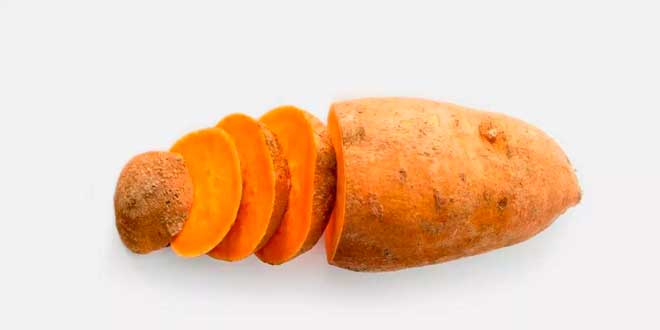
The calories of sugar compared to sweet potatoes will be empty calories in this sense, being nutritionally speaking, much richer those coming from the second food.
Does Carbohydrate Type Matter for Physical Performance?
This is where, perhaps, the source or origin of the carbohydrate may raise even more questions.
Basically, the main criteria for measuring physical or athletic performance based on the type of carbohydrate, as well as the needs of the sportsperson and/or athlete himself/herself, will be based on:
- Type of activity
- Weight control
Type of activity
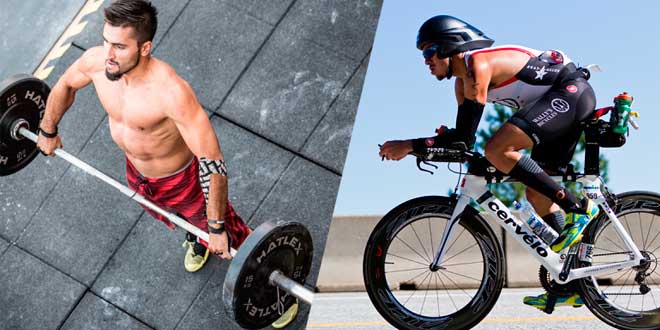
For the first case, we justify it in terms of the characteristics of the effort, such as resistance and intensity.
The diet of both can vary significantly, and in particular, carbohydrate intake will be more critical in the former.

Likewise, if we compare a cyclist with an ultramarathon athlete, we would be in another hypothetical case, given that the latter has achieved unusual adaptations, and in any case, his needs derive from a high calorie intake, without regard, in most cases, to the source.
Weight control
In the second case, if a competitive athlete needs to enter a weight category, he or she will have to adjust a diet in this respect, where calories tend to be restricted and are usually based on carbohydrates.
One of the main reasons is that when we ingest these nutrients our body stores them as glycogen, and this induces the uptake and retention of water, around 2-3g per 1g of glycogen.

Therefore, in order to obtain the weight according to the category, this control is “played” with and the carbohydrate sources become complex and from vegetables, according to the established protocol.
Carbohydrate Supplements
This type of carbohydrate product aims to make it easier for the athlete to obtain this energy source at certain times and to allow a substantial improvement in both sports performance and muscle recovery.
Obviously, the type of carbohydrate will influence such an immediate energy response.
On the other hand, if our task is to complete a bicycle route, we can benefit from taking Palatinose, which is a very low GI energy source, and the energy will be supplied gradually, in order to guarantee our energy status.
A recommendation would be to investigate according to our sporting activity and focus on the use of these carbohydrate supplements for moments before, during and after training or competition, in order to get the most out of them and their characteristics.
For the rest of the meals, select foods of complex origin, as these are the ones that will provide the most “nutritional benefits”.
Remember: if I want energy, here and now, I’d rather have a fast-assimilating carbohydrate than a slow-digesting, fibre-laden one, and by the time I have energy available, we’ll have already taken a shower.
Conclusions
- As sportspeople, carbohydrates have a very important function, and that is to maintain the energy deposits destined for this purpose, which allows us to focus on physical activity with guarantees; as well as providing calories to complete our requirements.
- Depending on the activity, you will need more or less carbohydrates.
- Carbohydrates are not converted directly into fat. If there is an excess of them, we will put on weight by exceeding our calorie requirements.
Sources
- Metabolic and behavioral effects of a high-sucrose diet during weight loss. Surwit RS, Feinglos MN, McCaskill CC, Clay SL, Babyak MA, Brownlow BS, Plaisted CS, Lin PH. Am J Clin Nutr. 1997 Apr;65(4):908-15
- No difference in body weight decrease between a low-glycemic-index and a high-glycemic-index diet but reduced LDL cholesterol after 10-wk ad libitum intake of the low-glycemic-index diet. Sloth B, Krog-Mikkelsen I, Flint A, Tetens I, Björck I, Vinoy S, Elmståhl H, Astrup A, Lang V, Raben A. Am J Clin Nutr. 2004 Aug;80(2):337-47
- Glycemic response and health–a systematic review and meta-analysis: relations between dietary glycemic properties and health outcomes. Livesey G, Taylor R, Hulshof T, Howlett J. Am J Clin Nutr. 2008 Jan;87(1):258S-268S
- Randomized controlled trial of changes in dietary carbohydrate/fat ratio and simple vs complex carbohydrates on body weight and blood lipids: the CARMEN study. The Carbohydrate Ratio Management in European National diets. Saris WH, Astrup A, Prentice AM, Zunft HJ, Formiguera X, Verboeket-van de Venne WP, Raben A, Poppitt SD, Seppelt B, Johnston S, Vasilaras TH, Keogh GF. Int J Obes Relat Metab Disord. 2000 Oct;24(10):1310-8
Related Entries
- Post-Workout Carbohydrate Guide
- CrossFit and Nutrition