Fitness, Nutrition, Health and Sports Blog In the HSNstore Blog you will find tips about Fitness, sport in general, nutrition, and health – HSNstore.com

Calorie Cycling is a simple nutritional strategy that, together with an exercise plan, can help us in Body Recomposition.
What Is Calorie Cycling?
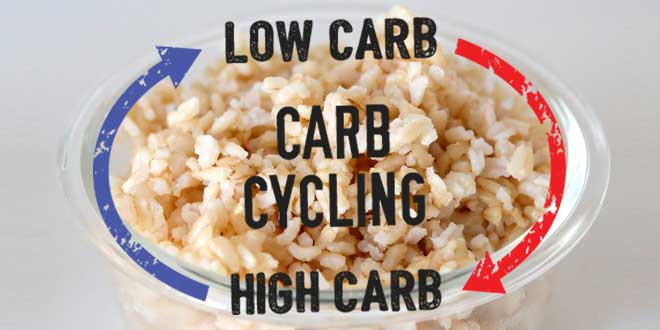
Calorie Cycling is a calorie «zig-zag», that’s to day, a feeding pattern where periods of high calorie days and low calorie days alternate. Calories are «played» with, depending on the intensity of training for each day.

With the cycling of calories (or, rather, of carbohydrates, according to my approach), we’re looking to avoid the adaptation of linear diets
Why Do Calorie Cycling?
The main aims are to improve fat loss, a greater adherence to the diet, with less hunger, adjusting the calorie requirements according to demand, and the reduction in the negative metabolic and hormonal adaptations of a normal weight loss diet.

Who Can Calorie Cycle?
With the following approach, my recommendation is for those people who start with a not very high percentage of fat, around 15%, and who also do not condition their daily activity. In this sense, to stick to the plan, the tasks of daily life should not be too severe (physical works…). Otherwise, I think it would be better to opt for another approach.
This cycling of calories is closely linked to the proposed training approach; if you have another athletic objective, you’d better look for another method…
Consequences of Maintaining a Linear Diet
Stagnation
The main problem with linear diets and prolonged deficits is related to our own system. The human body is able to adapt to calorie deficits. If good results are achieved at the beginning, maintaining the same approach over time will become increasingly difficult.
Hormonal Level
Falling levels of certain hormones are also common in this type of calorie restriction. In particular, leptin, which governs important aspects such as hunger.

Similarly, if our body fat index is already low, the problem becomes a little more pronounced. In such case, I recommend you apply the 10% fat reduction protocol
Calorie Cycling for Muscle Mass Gain and Fat Loss?
Both if your goal is to Gain Muscle Mass or Lose Fat, the energy balance is important. To put it simply, if you’re looking to reduce your weight, take in fewer calories than you spend, and if you want to increase it, increase your calorie intake. Although it sounds quite simple, there are actually other factors involved: distribution of macronutrients, hormonal environment, training…

In this case, your plan should be oriented towards losing fat and maintaining muscle mass
How to Calorie Cycle
At the calorie and macronutrient breakdown level, we’ll maintain the same Proteins and Fat values every day, rotating the Carbohydrates instead, depending on the type of day, and once the calculation of the weekly caloric calculation is obtained. The deficit will then be applied to this.

Type of Training Days
- 3 High Days (‘H’)… Load Training
- 2 Medium Days (‘M’)… Cardio Training
- 2 Low Days (‘L’)… Active Rest
Intermittent Fasting and Calorie Cycling
As I have developed the strategy of cycling calories, and to facilitate low calorie days, I advise Intermittent Fasting, as there are fewer calories than usual. It’s best to group them in a shorter time window (8 hours).
During the hours of fasting, we’ll be able to do low intensity activities, such as walking or simply being on the move… though I’d like to point out that this method it may be much more feasible for people with a more sedentary profile
Training and Calorie Cycling
My recommendation to carry out this plan is to combine the weight training with a Pull-Push Routine for 3 Days, together with the Aerobic Exercise, based on the combination of three types: LISS+MISS+HIIT.

There will be a total of 5 training days (+2 «active breaks»)
How Many Calorie to Consume?
The first and fundamental step is to find out your total daily calorie intake. Knowing our metabolic or basal expenditure, we then need to add an activity factor. This will vary according to the other daily activities we take part in. So, if our work is sedentary, we’ll opt for a more conservative value.
Create a Deficit
The value we obtain will be what’s needed to maintain our weight. However, as we have already observed, we’re wanting to lose fat, so we need to create a caloric deficit. I prefer to produce a moderate deficit of around 20%.
This deficit will not be linear during the week, but will vary according to the day
How Much Protein Should I Have?
The amount of protein varies according to activity, but for reference, a value between 1.8 – 2.5g protein per kg body weight (fat free), will be best for our target. My recommendation is to take an intermediate value, around 2.2g.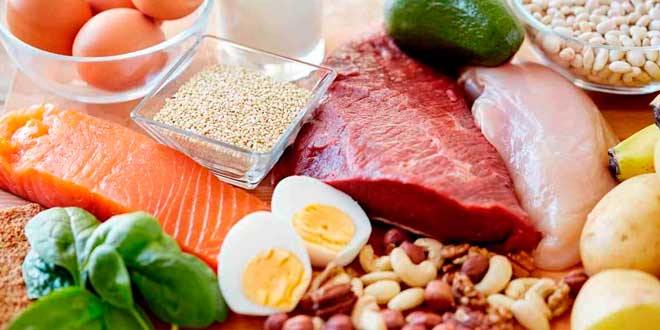
The Most Protein-Rich Foods
How Much Fat Should I Have?
How much protein we need? For our strategy, and for most diets, it’s normal NOT to reduce the intake of fat to the 20-30% of total calories. If we do, we’ll be lacking oil in our engine (never better put :P). I’ll take the highest value.
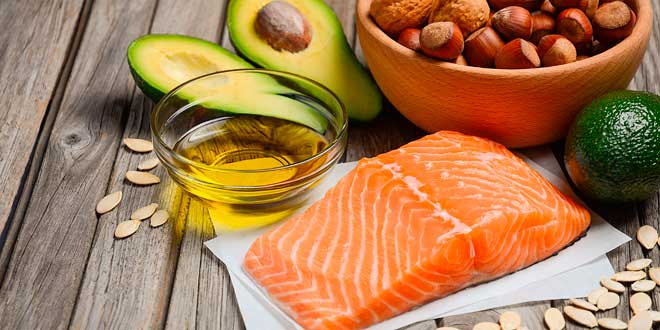
The Fat, about which much has been written, plays a very important role in this story, especially for the proper functioning of hormones
How Much Carbohydrate Should I Have?
The amount of carbohydrates to be consumed is obtained from the difference between the sum of calories from protein+fat and the total calories. So, we’ll have…
- High Days (‘H’)… Maintenance Calories
- Medium Days (‘M’)… Deficit
- Low Days (‘L’)… Basal Calories
Distribution of Training Days
| MONDAY | TUESDAY | WEDNESDAY | THURSDAY | FRIDAY | SATURDAY | SUNDAY |
| H | M | L | H | M | L | L |
| G | HIIT | LISS | G | G | LISS | MISS |
How to Do LISS Training?
This day is the day of active rest, where we’ll simply walk around for an our and a half at a brisk pace.
How to Do MISS Training?
This day will be of moderate intensity. I recommend training with a heart rate monitor, maximising training in 'Zone 2'. For exercises, we can go for the rowing machine or bike, using them for about 45-60min.
How to Do HIIT Training?
We’re going to base it on this training example. Optionally, you can vary the working time:rest time.
Calorie Cycling Training Routine
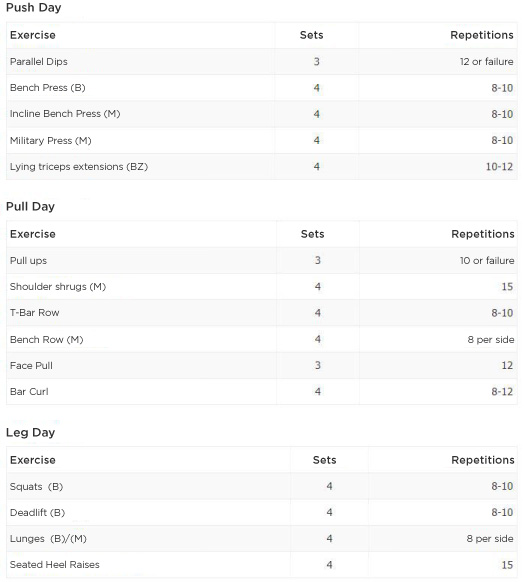
*Source: Pull-Push Routine
Example Calculation of Calories and Macronutrients
- My stats are: weight 85kg, height 175cm, 33 years old, with a BF (Body Fat) over 10%, so my lean weight will be 76.5kg.
- My calorie maintenance requirement will be: 2900kcals per day, and 20300kcals per week. Applying the 20% deficit -> 16300kcals/week.
- My amount of protein: 170g
- My amount of fat: 75g
- My amount of carbohydrates: 240g
Example Calorie Distribution
- 2 High Days (‘H’)… Calorie Maintenance (2900kcals)
- 2 Medium Days (‘M’)… Deficit (2300kcals)
- 3 Low Days (‘L’)… Basal Calories (1900kcals)
So, our plan would look like this:
Training Day Distribution
| MONDAY | TUESDAY | WEDNESDAY | THURSDAY | FRIDAY | SATURDAY | SUNDAY |
| H | M | L | H | M | L | L |
| Gym Routine (Pull) | HIIT | LISS | Gym Routine (Leg) | Gym Routine (Pug) | LISS | MISS |
| 2900kcals | 2300kcals | 1900kcals | 2900kcals | 2300kcals | 1900kcals | 1900kcals |
Related Entires
- How Many Calories Do You Need to Build Muscle?
- The More Muscle Mass the Greater the Caloric Expenditure?