 Fitness, Nutrition, Health and Sports Blog In the HSNstore Blog you will find tips about Fitness, sport in general, nutrition, and health – HSNstore.com

Hi, with this article I want to give you a reference on how to perform any exercise repetition in the most correct way possible. Often, the focus is on explaining the exercise itself, arm placement, body position, …, but the most basic part is overlooked: feeling each repetition from within. I’d like to link several ideas that less experienced users might not consider, but that over time in the gym they’ll realize are probably the best things to pay attention to before dropping them into their routines!
The perfect repetition might sound like a movie title, but it’s the most important thing when starting any sports program. It’s not just for weightlifting, but also for other sports involving movement patterns in each workout to improve skills. In our field, bodybuilding, it’s the factor that can limit progress and gains, and if we don’t give it the attention it deserves, we’ll make a huge mistake.
Here are some guidelines to keep in mind to start the “perfect repetition”:
Technique
This should be trivial for anyone who goes to lift weights, you must know how to perform the movement correctly.
It’s the first step to start any exercise: making sure the exercise is executed perfectly.
Then, isolated exercises like a biceps curl, which are easier to visualize, are not the same as multi-joint or basic exercises, like the big 3: deadlift, squat, and bench press.
These require solid technique and knowledge of the movement pattern; otherwise, we risk serious injury or it will be quite hard to increase weights. So, the smartest move is to go to the best trainer you know who can explain how to perform the exercise.
Results will be proportional to how well you know the technique
Position
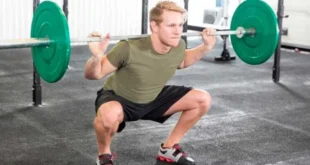
This comes from the previous point and means that every time you start the exercise, take a moment to think about what you’re about to do, don’t act like a “robot.” If you’re about to do a set of squats, I don’t want you to just load the plates, get under the bar, and start going up and down… It’s better to pause a second under the bar, adjust your feet position, place your “hunch” under the bar feeling it fit your back, extend your arms and “grip” the bar horizontally, take a deep breath, understand the movement that’s about to happen and the muscles involved, so during the range of motion you realize that the area starting to “tingle” is exactly the one you want to work.
Avoid moving without understanding the mind-muscle connection
Learn the Goal of Each Set
Linking with the previous points, it’s crucial to know what result you expect after each set of reps.
Usually, you start with warm-up sets, then some approach sets close to the target weight, and finally the effective sets, the ones that really give you all the “power” of working under muscle tension.
If you train with a strength routine, you need to keep this in mind even more, because you have to progress properly in each session and highlight the key role of those effective sets.
Hypertrophy, Feel the Muscles
If your goal is sarcoplasmic hypertrophy, which unlike myofibrillar hypertrophy aims for maximum muscle growth, you must focus on each rep and the tension the muscle is bearing. As you lift the weight, your arm will start to pump up, a sign that blood flow is happening and nutrients carried by the bloodstream are rushing into your biceps fibers!
This is where several supplementation protocols come into play, like intra-workout drinks, usually made of free-form amino acids, perfectly digestible and transportable through the bloodstream
So, there’s high oxygenation in the area and nutrient delivery, while metabolic waste products from physical stress are removed.
Power, Speed Up the Movement
If your goal is to increase power, focus on speeding up the movement pattern, moving the load as fast as possible to recruit the most motor units, which are muscle fibers. This triggers neural adaptation to progress.
According to some studies, focusing effort on the concentric phase speed not only improves this capacity curve but also helps better strength development
Count Down
Switch the mindset here. If you usually count up, you might psychologically get stuck and feel a bit “choked,” thinking about reaching the target number of reps.
This strategy usually works best for rep ranges around 10-12. You’ll boost your progress.
Back to the “Mind-Muscle” topic, the psychological factor also plays a role physically. The mind rules the muscle!
Same Technique in the First and Last Rep
This relates to the first point about correct execution of the movement. It’s not enough to start with strict technique and then lose all “respect” for the exercise as fatigue sets in, ending up doing anything but the exercise you started. Obviously, as reps increase, energy stores, especially the phosphate substrate, get depleted, resulting in a notable drop in performance.
Fibers tend to fatigue and stop responding properly. That’s why load and program goal matter, whether strength, hypertrophy, etc. Whatever it is, keep technique tight at all times, and if you notice your reps lose “quality,” better drop the weight and end the set.
What separates an experienced user from a newbie is the latter’s urge to load more weight no matter what, thinking it’ll bring better results, while the advanced lifter focuses on performing the full range of motion correctly and rigorously setting the load
So, here’s what we could do: for a given set, do the number of reps that let you perform the movement with correct technique, loading the weight set for your goal (strength, hypertrophy), and when you feel you might fail or technique suffers, end the set.
In this context, leave the rocking, assistance, or other tricks to others — we train with strict technique!
Also, in one of those forced “reps,” you risk injury, bad habits, messing up the movement pattern, and affecting motor unit recovery — the functional units of nerves and muscles.
Last Tips
You’ve crossed the technical limit if:
- You use excessive momentum to lift the weight, which doesn’t match the load or exercise type, especially during the concentric phase, deviating from the prescribed movement pattern
- You don’t respect the full range of motion
- The concentric phase speed may slow down as fatigue builds with more reps, but that doesn’t mean losing form. Just keep lifting, even if slower than at the start, and stop when you can’t “push” or the movement doesn’t flow
- Increasing load shouldn’t be an excuse for poor technique