 Fitness, Nutrition, Health and Sports Blog In the HSNstore Blog you will find tips about Fitness, sport in general, nutrition, and health – HSNstore.com
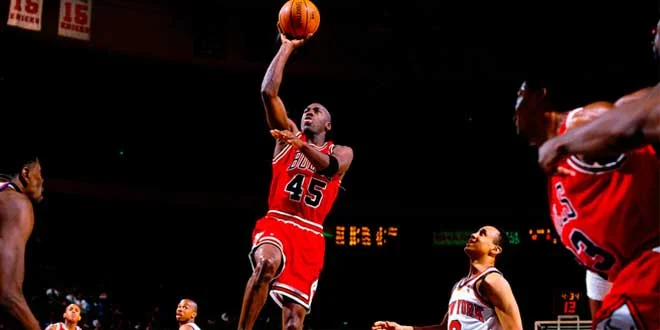

Athletic identity (AI) is defined as the level of importance, strength, and exclusive dedication an athlete puts into practicing and maintaining their sport, always influenced by the context they live in.
So, both personal and socioeconomic factors determine AI levels and build the athlete’s personal self-identity. Roughly speaking, identity is made up of public and private elements:
- Private elements are parts of identity not available for public analysis or scrutiny (attitudes, beliefs, feelings, and emotions) and, of course, are influenced by the development context an athlete has or had.
- Public elements refer to perceptions about how others see and evaluate the person in performing a certain social role (role model, successful athlete, person with a high level of effort, etc.).

But how much can an individual’s psychological structure determine their sports results? Can someone’s personality change how those factors influence success, or do those factors weigh more than personality itself?
Considering recommendations that AI can be predicted based on personality variables, and that personality traits make a significant contribution to AI formation, their interrelation is scientifically relevant to help create “happy champions”.
Extraversion and competitive level, the keys
Research suggests two predictor variables of AI: the extraversion trait and athletes’ competitive level.

On one hand, the results about the influence of the extraversion trait on AI show that athletes scoring higher in extraversion also score higher in AI. In this sense, sport is an ideal way to gain diverse experiences that expand social networks and relationships, allowing athletes to express sociability traits and seek support and social recognition from their “peers,” which characterize extraversion.
This idea is reinforced by the fact that significant correlations with extraversion were found across all dimensions (self-identity, exclusivity, social identity, positive and negative affectivity, and overall AI). This shows that social relationships (especially nowadays) are key to building a psychologically balanced person, as they enable personal self-awareness.

Regarding the athletes’ competitive level, it also appears as a determining variable of AI, as expected. Athletes with higher competitive levels also show stronger attachment to their sports role. This could be compared to people who love their job (in any field) and feel connected to it, which gives them a stronger work identity.
Athletes develop their identity connected to the sports context, the environment where they spend much of their time interacting with teammates and coaches, with daily routines extended over years, allowing them to share experiences, habits, beliefs, and knowledge. This explains why, ultimately, the higher the competition level and athlete involvement, the greater the influence on AI.
This doesn’t mean that non-elite athletes don’t have athletic identity, though it will be lower. Levels of sports participation and commitment to a sport (though you could say commitment is to yourself) also foster that AI.
Should an ATHLETE be considered obsessed?
Regarding affectivity with sport, meaning happiness or sadness depending on sports success, no significant differences appear based on competitive level; but it is an important component of athletic identity.
- Positive affectivity (e.g., “I’m happy doing sport”)
- Negative affectivity (e.g., “I feel bad when I fail to reach my goals”).
This relationship is also explained by the fact that at high competition levels, athletes tend to shape their life projects around the sports context (exclusivity), giving more importance to social recognition of their skills and sports results (social identity), defining their self-identity as competitive or high-level athletes.
So, it’s understandable that generally, athletes who work in sport are happy doing it and, specifically, feel “momentarily” down (compared to the lasting happiness of doing their passion) when they don’t achieve goals.
Sports life is built on this, which doesn’t mean an athlete is obsessed*
*Obsessed (RAE, 2001): Person who has a mental disturbance caused by a fixed idea, which persistently invades the mind like anxiety. This thought, feeling, or tendency conflicts with the person’s conscious thinking but persists despite efforts to get rid of it.
In fact, the sports environment also boosts motivation levels and enables development of belonging (to the world, society, a group) and identity.

Therefore, sport should be seen as a tool for personal development, leading to one of the ultimate goals in personal growth: achieving autonomy and self-fulfillment. Personally, as a coach, I think this is being sidelined in favor of sports results over personal happiness.
Coaches’ leadership styles are received by athletes so that more democratic styles lead to higher identification and acceptance of the sports role, allowing higher AI scores; and, consequently, stronger self-identity.
Coach (assistants, staff, etc.) and athlete should form a team. Affectivity (always with professional responsibility) builds trust; and trust (seeing you succeed) is one of the first steps to success.
Do you think you have some athletic identity (AI)?
Sources
- Cabrita, T., Serpa, S., Rosado, A., & Marcos, V. (2014). Relationships between athletic identity and personality in competitive sport. In Revista de psicología del deporte (Vol. 23, pp. 0247-253).