Fitness, Nutrition, Health and Sports Blog In the HSNstore Blog you will find tips about Fitness, sport in general, nutrition, and health – HSNstore.com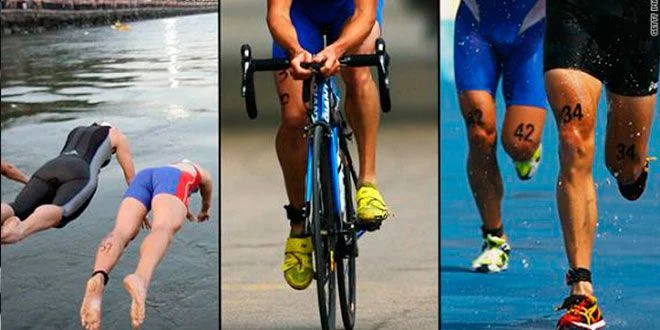

Polarized Training is a strategy to optimize performance in endurance sports
Endurance Sports
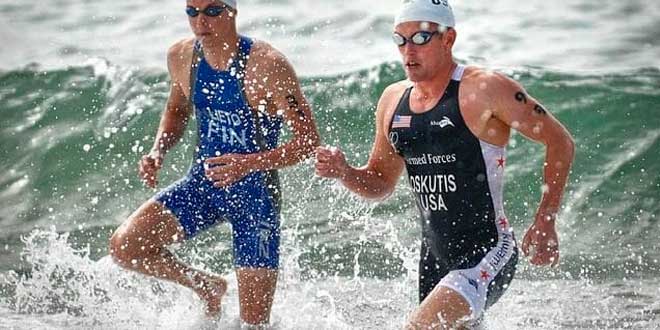
Athletes involved in endurance sports like running, triathlon, swimming, or cycling include four main methodologies in their training programs to boost sports performance to the max:
- Prolonged low-intensity, high-volume exercise.
- Training near or at the lactate threshold.
- High-intensity interval training with low volume (HIIT).
- A combination of the above, known as “polarized” training (POL).
Although there are supporters of each approach, all can be combined throughout a season, but if you want to specialize in endurance exercise, polarized training is one of the best to maximize adaptations and performance.
Understanding the variables
First, you need to know which variables define performance in endurance training.
You could say that increasing aerobic capacity is the main determinant
Aerobic capacity is determined by 3 factors:
- VO2max
- Lactate thresholds (LT and OBLA, explained in the next section).
- Work economy: running, pedaling (cycling), stroke (swimming).
It’s true that each of these factors should be trained to optimize aerobic endurance development, but doing so separately seems unlikely:
- Apparently, VO2max and lactate thresholds can adapt simultaneously through medium-high intensity endurance training.
- Work economy, on the other hand, is positively affected by experience, the proportion of type I fibers, and anthropometric characteristics. Also, it benefits from high-intensity strength training and/or high power values using compound exercises (squats, cleans, deadlifts, bench press…) and plyometrics.
The two lactate thresholds
Although the “lactate threshold” is often credited as the point of entering anaerobic metabolism, it’s actually more complex.
There are two main thresholds related to lactate.
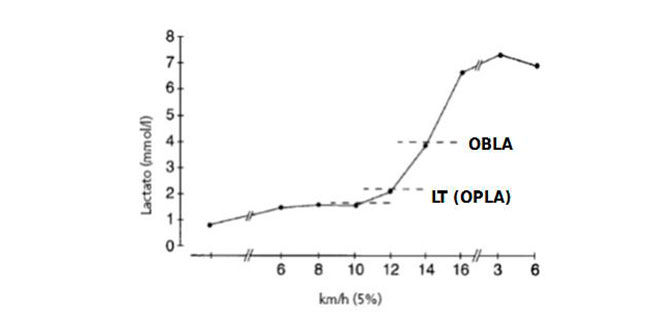
- Lactate threshold (LT) or Onset of Plasma Lactate Accumulation (OPLA): Refers to the first significant rise in lactate concentration, usually at a lactate concentration [LH] ≈ 2 mMol / L.
It’s also called the aerobic threshold because from this point on, lactate starts to accumulate faster than it can be cleared, beginning the aerobic-anaerobic transition.
In practice, this point can be set when a nonlinear increase in ventilation relative to workload occurs.
- Onset of Blood Lactate Accumulation (OBLA): From this point, lactate concentration rises exponentially ([LH] > 4 mMol / L), and aerobic contribution is lost.
The first 5 training zones
Really, zones should be determined first by lactate thresholds, and second by VO2max.
However, not all endurance athletes have access to the necessary tests
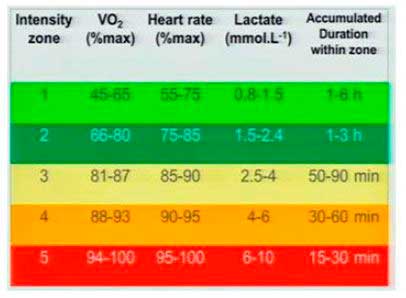
For that reason, and for the ease of getting “on the spot” feedback with a heart rate monitor, these factors can be fairly related to training heart rate (THR).
The image below shows the relationship between all of them, classifying intensity into five “zones”:
Intensity Table
Goals of each Training Zone
Zone 1 Goals
- Intensity zone for warming up.
- Improve base endurance.
- Specific endurance for very long-duration events.
- Increase blood flow to muscles.
- Help eliminate waste products.
- Active recovery method: helps recover faster from high-load workouts thanks to the “lactate shuttle” effect
- Fat metabolism is optimized.
Zone 2 Goals
- Specific endurance for exercise between long and very long duration. Generally, it’s the “low” intensity zone for endurance athletes and pros, used in extensive training.
- VO2max improvements start to become noticeable, especially in less trained subjects in this type of exercise.
- Fat metabolism is mainly optimized, though glycogen metabolism also improves to a lesser extent. This assumes a “normal” nutritional state, since training fasted or on a low-CHO diet would also affect energy pathways.

Zone 3 Goals (above the aerobic threshold)
- Endurance improvement for medium-long duration exercise.
- Training focused on this threshold zone (zone 3) is popular among amateur athletes, especially those with less time to train, so it’s linked to improving sustained pace.
- VO2max improvements continue, especially in less trained subjects. For more experienced athletes, it helps maintain the threshold during “detraining.”
- Carbohydrate and fat metabolic pathways combine, but keep in mind the diet considerations mentioned in zone 2.
Zone 4 Goals
- Specific endurance improvement for medium-duration events, and the maximum zone usually reached in endurance events among amateur athletes (10K is a prime example).
- Intensity suitable for interval methods: sets, intervals, Fartlek, or similar. These workouts are mainly used in team sports working in groups.
- Optimal zone for VO2max improvement.
- Improves muscle glycolytic capacity. Optimizing this adaptation can be done through training and diet manipulation.
- This zone generates high metabolic impact, so it usually requires at least one day of moderate intensity recovery (zone 2-3).
Zone 5 Goals
- Specific endurance for short-medium events (max. 30 minutes). This is the maximum intensity zone in HIIT training.
- Substantial VO2max improvement, though overtraining here can cause the opposite effect.
- If using interval methods like those in zone 4, recovery must be high.
- Lipid metabolism contribution is practically ruled out (except special conditions), relying on glycogen and the phosphagen system (phosphocreatine).
- Training with maximum metabolic (and even joint) impact, usually needing a couple of recovery days: one light intensity, another moderate.
- Zone for high-level experienced runners.
Reducing to 3 training zones
Once physiological and mechanical adaptations are consolidated, you can talk about 3 training zones instead of the 5 covered earlier.
The reason is there’s no known biological marker that clearly separates zones 1-2 and 3-4, so they overlap.
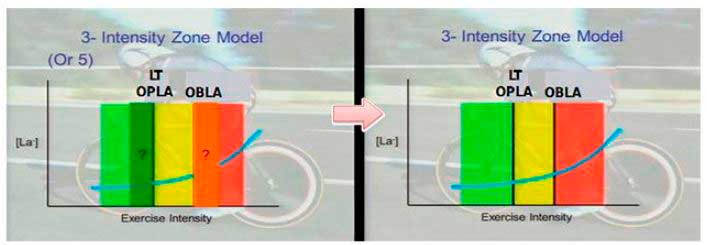
So the transformation looks like this:
| 5-ZONE MODEL | 3-ZONE MODEL | AEROBIC/ANAEROBIC | TRAINING HR (% HRmax) |
| ZONES 1+2 | NEW ZONE 1 | Aerobic | 55-80% |
| ZONES 3+4 | NEW ZONE 2 | Transition | 80-90% |
| ZONE 5 | NEW ZONE 3 | Anaerobic | 90-100% |
Polarized work distribution
Once the athlete has maximized gains from training at the LT threshold zone with a certain training volume, it’s necessary to increase intensity.
That’s when a distribution with a higher level of “polarization” begins
Usually, endurance events are done maintaining intensity in the new zone 2 (yellow), near OBLA, or at the start of the new zone 3 (red).

That’s why for a long time preparation protocols focused on zone 2 work, both in elite and especially amateurs
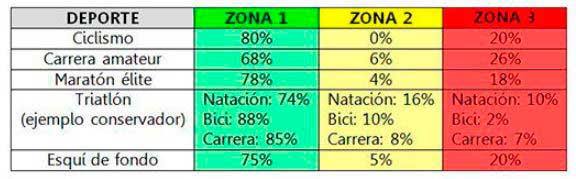
This kind of “classic” work could have a seasonal distribution like this:
- 30% work in zone 1
- 60% work in zone 2
- 10% work in zone 3
However, although polarized training isn’t new, it has been tested and researched a lot in recent years and has shown more positive results than “classic” endurance training.
Polarization means limiting work in phase II, which is usually the race phase, and shifting most of it to phase I.
To avoid overtraining after work in zone III, the remaining workouts should be done at lower intensity, resulting in higher volumes at low intensity and a smaller but significant proportion at higher intensities.
Here are some examples of seasonal plans shown in different sports:
Advantages and physiological explanation
This polarized distribution has shown greater improvements in key endurance performance variables such as:
- Maximum oxygen consumption (VO2max).
- Maximum power developed.
- Time to exhaustion at 95% of Individual Maximum Power.
- Speed and power developed at the OBLA point.
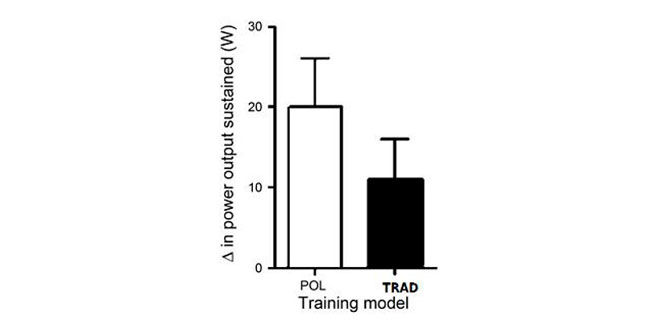
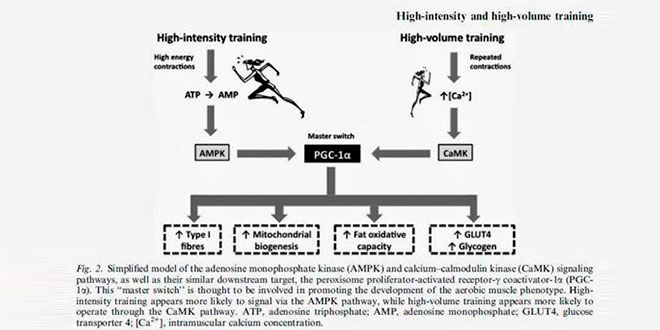
The possible physiological explanation is that combining high-intensity and high-volume training targets physiological parameters in an optimal proportion for this improvement.
Also, since high-intensity training (zone 3) doesn’t impact the autonomic nervous system (which controls involuntary actions), this would be an advantage compared to classic zone 2 work.
Final notes: more isn’t better
The polarized protocol is well documented in experienced athletes, so if you’re just starting endurance training, it’s better to follow more conservative periodizations.
For well-trained athletes, this “classic” work zone wouldn’t provide enough stimulus for new adaptations.
Polarizing doesn’t “fatigue” as much as classic training in terms of physical tiredness, but that doesn’t mean zone 1 workouts should be turned into medium workouts (zone 2) just because you feel capable. The success of polarized training lies in approaching each zone with maximum focus and respecting that avoidance of zone 2.
Sources
- Institut National du Sport et de l’Éducation Physique (INSEP) (2013). Managing the distribution of training intensity: the polarized model. Training periodization. Deep-root cultural heritage and innovative paradigms. http://www.canal-insep.fr/. Retrieved December 11, 2014 from: http://www.canal-insep.fr/fr/training-periodization-deep-root-cultural-heritage-and-innovative-paradigms-2013/ei_13_10_va_pr_stephen_seiler-mov
- Laursen, P. B. (2010). Training for intense exercise performance: high‐intensity or high‐volume training?. Scandinavian journal of medicine & science in sports, 20(s2), 1-10.
- Mujika, I. (2014). Olympic Preparation of a World-Class Female Triathlete. International journal of sports physiology and performance. 9(4):727-731.
- Muñoz, I., Seiler, S., Bautista, J., España, J., Larumbe, E., & Esteve-Lanao, J. (2014). Does polarized training improve performance in recreational runners?. International journal of sports physiology and performance, 9(2), 265-272.
- Neal, C. M., Hunter, A. M., Brennan, L., O’Sullivan, A., Hamilton, D. L., DeVito, G., & Galloway, S. D. (2013). Six weeks of a polarized training-intensity distribution leads to greater physiological and performance adaptations than a threshold model in trained cyclists. Journal of Applied Physiology,114(4), 461-471.
- Turner, A. N. (2011). Aerobic Capacity Training in Distance Runners: A Break from Tradition. PubliCE Standard.
- Mujika, I. (2014). Olympic Preparation of a World-Class Female Triathlete. International journal of sports physiology and performance. 9(4):727-731.
- Muñoz, I., Seiler, S., Bautista, J., España, J., Larumbe, E., & Esteve-Lanao, J. (2014). Does polarized training improve performance in recreational runners?. International journal of sports physiology and performance, 9(2), 265-272.
- Neal, C. M., Hunter, A. M., Brennan, L., O’Sullivan, A., Hamilton, D. L., DeVito, G., & Galloway, S. D. (2013). Six weeks of a polarized training-intensity distribution leads to greater physiological and performance adaptations than a threshold model in trained cyclists. Journal of Applied Physiology,114(4), 461-471.
- Turner, A. N. (2011). Aerobic Capacity Training in Distance Runners: A Break from Tradition. PubliCE Standard.
Related Posts