Fitness, Nutrition, Health and Sports Blog In the HSNstore Blog you will find tips about Fitness, sport in general, nutrition, and health – HSNstore.com

Strength or Cardio? Hypertrophy development or cardiovascular improvement? Why not both? This question has been sparking debate for many years. Let me introduce you to the Training Interference Phenomenon
Boosting sports performance
A bodybuilder has the clear goal of achieving the greatest hypertrophy possible; a powerlifter aims to generate the highest strength possible in a limited number of lifts; an endurance athlete looks to maintain a pace while controlling bioparameters over a long period of time;

In all these cases, the training focus each athlete will adopt to improve performance seems obvious, because their capacity is clearly defined
What is the training interference phenomenon?
It’s the principle behind the theory that combining aerobic training and strength training limits the development of strength-specific adaptations due to the aerobic training.

An athlete who doesn’t focus their training on developing the key performance capacity will inevitably not reach their maximum potential.
CrossFit, the clearest example of concurrent training
A mixed-sport practitioner, like a CrossFit athlete, is perhaps the clearest example of concurrent training alongside rugby and American football.
If you dedicate 50% of your efforts to strength development (necessary in your sport) and 50% to improving cardiorespiratory capacity (increasing VO2 max), also a key factor in your sport, the benefit would be 50-50, right? Or will combining both approaches limit development to 30-50? And what about the other 20%?

Well, that would be the collateral damage of the combo—lost potential.
Scientific evidence on the training interference phenomenon
Studies
Wilson et al., (2012) published a meta-analysis comparing adaptations in muscle hypertrophy, strength, and power between groups doing strength training, endurance training, and concurrent training.
Results
Results showed that strength training and concurrent training were superior to endurance training when it came to hypertrophy and strength adaptations, with strength training outperforming concurrent training for these adaptations; however, for power development, strength training showed significantly better results than concurrent training, which in turn was better than endurance training (0.91 vs 0.55 vs 0.11).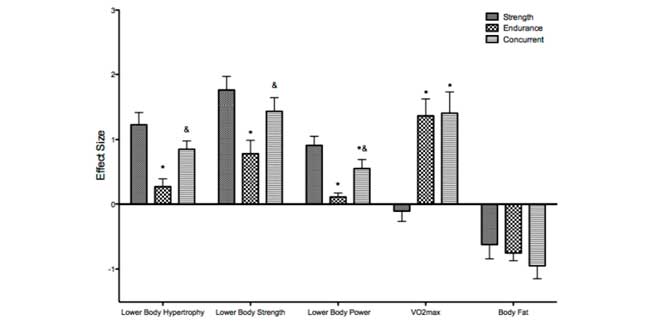
Figure I. Adaptations in strength, endurance, and concurrent training
Concurrent training
The authors found a negative correlation between endurance training on a cycle ergometer (stationary bike) and running in concurrent training. They observed that concurrent training where aerobic capacity was developed through running produced fewer adaptations in all measured parameters than training on a cycle ergometer.

In other words, running causes more interference in capacity development than cycling.
Causes
The authors suggest two possible reasons why this might have happened:
- First, cycling might resemble the motor patterns we use when performing complex free weight techniques more closely.
- Second, a more physiological explanation where interference is caused by greater muscle damage from running compared to cycling.
Looking closely, the second explanation seems more plausible, which could be confirmed by measuring musculoskeletal damage biomarkers that were not assessed in the study, so we’ll have to stay curious…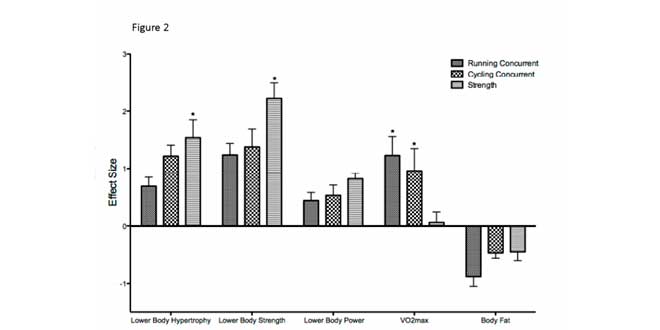
Figure II. Adaptations in strength training, concurrent running, and concurrent cycling.
A negative correlation was found between endurance training volume and frequency with hypertrophy, strength, and power adaptations, showing that higher volume—both in session length and weekly frequency—increased interference more than other endurance training approaches.
Improving aerobic capacity
We know that to increase VO2 MAX and shift the anaerobic threshold, to boost aerobic capacity, it’s best to focus on intensive work near this maximum oxygen consumption capacity and preferably above the anaerobic threshold.

That’s why, although we can improve VO2 max through extensive training (like marathon running), the key factor isn’t that, but rather shifting the aerobic threshold to maintain pace without metabolic acidosis.
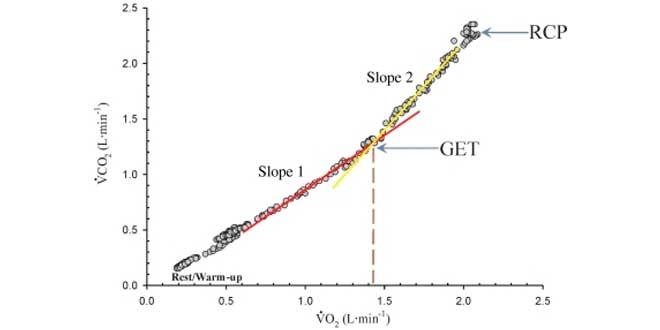 Figure III. Threshold determination graph in incremental protocol.
Reducing training interference
For us, as practitioners of “mixed” sports like those mentioned earlier, we’d benefit more from short-duration, high-intensity training (like HIIT) than from extensive training.
And according to the study mentioned above, low-impact cardiovascular exercise, minimizing muscle damage, would be better than exercises like running in terms of reducing training interference. Still, we must consider the specificity of sport movements in competition and weigh cost/benefit.
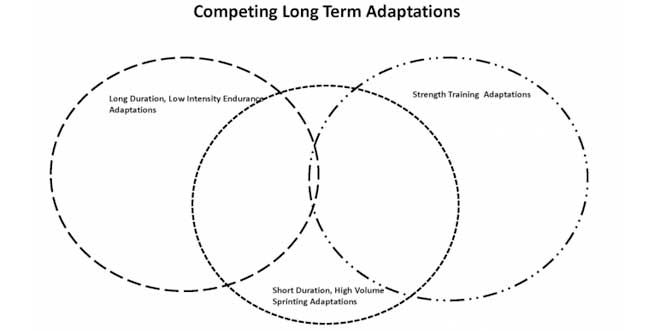 Figure IV. Adaptations in strength and short- and long-duration endurance training.
This is also shown by Fyfe et al (2016) in their study “Endurance Training Intensity Does Not Mediate Interference to Maximal Lower-Body Strength Gain during Short-Term Concurrent Training.”
Sources
- Fyfe, J. J., Bartlett, J. D., Hanson, E. D., Stepto, N. K., & Bishop, D. J. (2016). Endurance Training Intensity Does Not Mediate Interference to Maximal Lower-Body Strength Gain during Short-Term Concurrent Training. Frontiers in Physiology, 7, 487.
- Wilson, J., Marín, P., Rhea, M., Wilson, S., Loenneke, J & Andersen, J.C. (2011). Concurrent training: A meta-analysis examining interference of aerobic and resistance exercises. Journal of strength and conditioning research / National Strength & Conditioning Association. 26. 2293-307. 10.1519/JSC.0b013e31823a3e2d.
Related Posts
- Doing Cardio in Bulking Phase?
- Hybrid Training: Get More Muscle Hypertrophy
- How to Improve Aerobic Efficiency in Zone 2