 Fitness, Nutrition, Health and Sports Blog In the HSNstore Blog you will find tips about Fitness, sport in general, nutrition, and health – HSNstore.com

Several studies have shown that muscle growth varies along the length of the muscle fiber, specifically, muscle oxygenation is higher in the area closer to where the tension is received, and lower in the distal muscle fibers where the tension was less.
- Some researchers have suggested that differences in muscle hypertrophy at different points along the muscle length could arise due to differences in muscle activity of the different fibers.
- Other researchers support that differences in muscle oxygenation (that is, metabolic stress caused mainly by hypoxia) between muscle fibers could be the key factor for muscle growth.
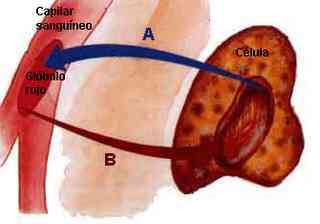
To analyze if there were differences in oxygen saturation of muscle tissue and EMG activity in different muscle regions, various muscles were studied during specific work, observing the medial area of the muscle and its proximal and distal zones (insertions).
- Triceps extensions on pulley (emphasis on the medial head).
- Quadriceps extensions.
- Supinated biceps curl.
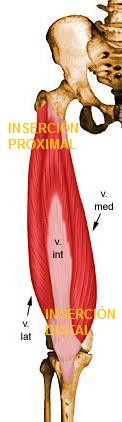
The analyzed studies had in common that EMG activities during exercises were similar, but tissue oxygenation differed between regions during contractions: tissue oxygenation values at the insertions were significantly lower than those in the central region.
These results suggest the possibility that differences in muscle oxygenation are responsible for regional differences in hypertrophy within the same muscle. Increased blood flow to muscles saturates muscle fibers with nutrients and also anabolic hormones that can boost muscle growth.
practical applications
This could explain why the muscle area with higher oxygen saturation had a greater size increase compared to the more distant regions, which had less tissue saturation. This is noticeable, for example, in the difficulty of developing the upper chest region, which can be achieved if specific work is emphasized from multiple angles.

sources
- Calbet, J. A. L., Rådegran, G., Boushel, R. and Saltin, B. (2009). On the mechanisms that limit oxygen uptake during exercise in acute and chronic hypoxia: role of muscle mass. The Journal of Physiology, 587: 477–490.
- Miyamoto, N., Wakahara, T., Ema, R. and Kawakami, Y. (2013), Non-uniform muscle oxygenation despite uniform neuromuscular activity within the vastus lateralis during fatiguing heavy resistance exercise. Clinical Physiology and Functional Imaging, 33: 463–469.
- Wagner, PD. (2012). Muscle intracellular oxygenation during exercise: optimization for oxygen transport, metabolism, and adaptive change. European Journal of Applied Physiology. Volume 112, Issue 1, pp 1-8.