Fitness, Nutrition, Health and Sports Blog In the HSNstore Blog you will find tips about Fitness, sport in general, nutrition, and health – HSNstore.com

Metabolic flexibility is the ability of the body to use one energy substrate or another depending on the intensity of physical activity.
Anyone who has been following me for a long time knows that I am an advocate of the flexible diet, where all foods have a place in the diet, the only thing that varies is the portions.
However, nowadays there is much debate as to whether high-fat diets are the best for performance, or whether carbohydrates are essential to improve our performance.
High-Fat Diet to Burn More Body Fat
“Bro, consume fats and your body will burn more body fat.”
It is possibly one of the sayings most advocated by the detractors of high-carbohydrate diets, the “eat fat to burn fat”. This phrase does not really tell a lie.
Comparison of High Fat vs. High Carbohydrate Diet
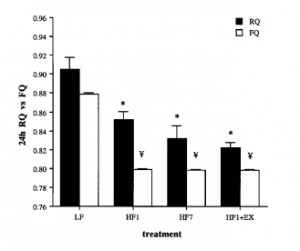
Low fat (LF) vs. high fat (HF) diets
As we can see in the graph above, low fat diets (LF=Low Fat) result in a higher RQ than high fat diets (HF=High Fat). This reflects a greater use of fat as fuel.
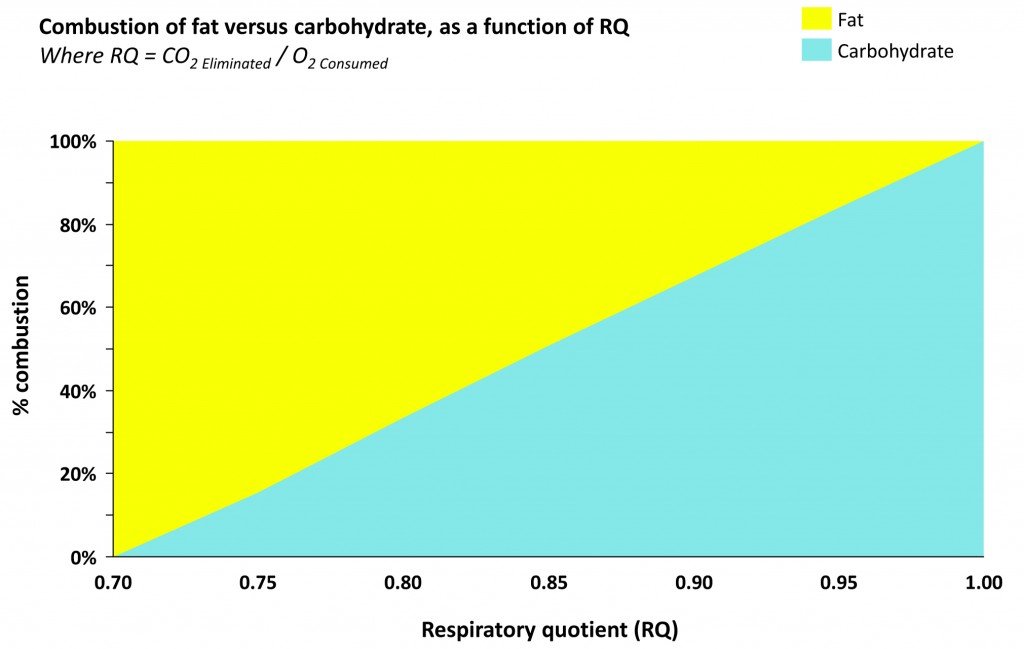
As you can see, the lower the RQ, the higher the fat utilisation (0.70 gives a fat utilisation close to 100%).
Dietary fat oxidises earlier than body fat
The fact that a high-fat diet causes our cells to use fat as a source of energy does not mean that the fat it “oxidises” comes from our body stores.
In other words, most of the fat your cells use comes from the fats you take in with your food.
Intramuscular lipid accumulation
In addition, high-fat diets increase intramuscular lipids for use as fuel, so the body avoids using body fat.
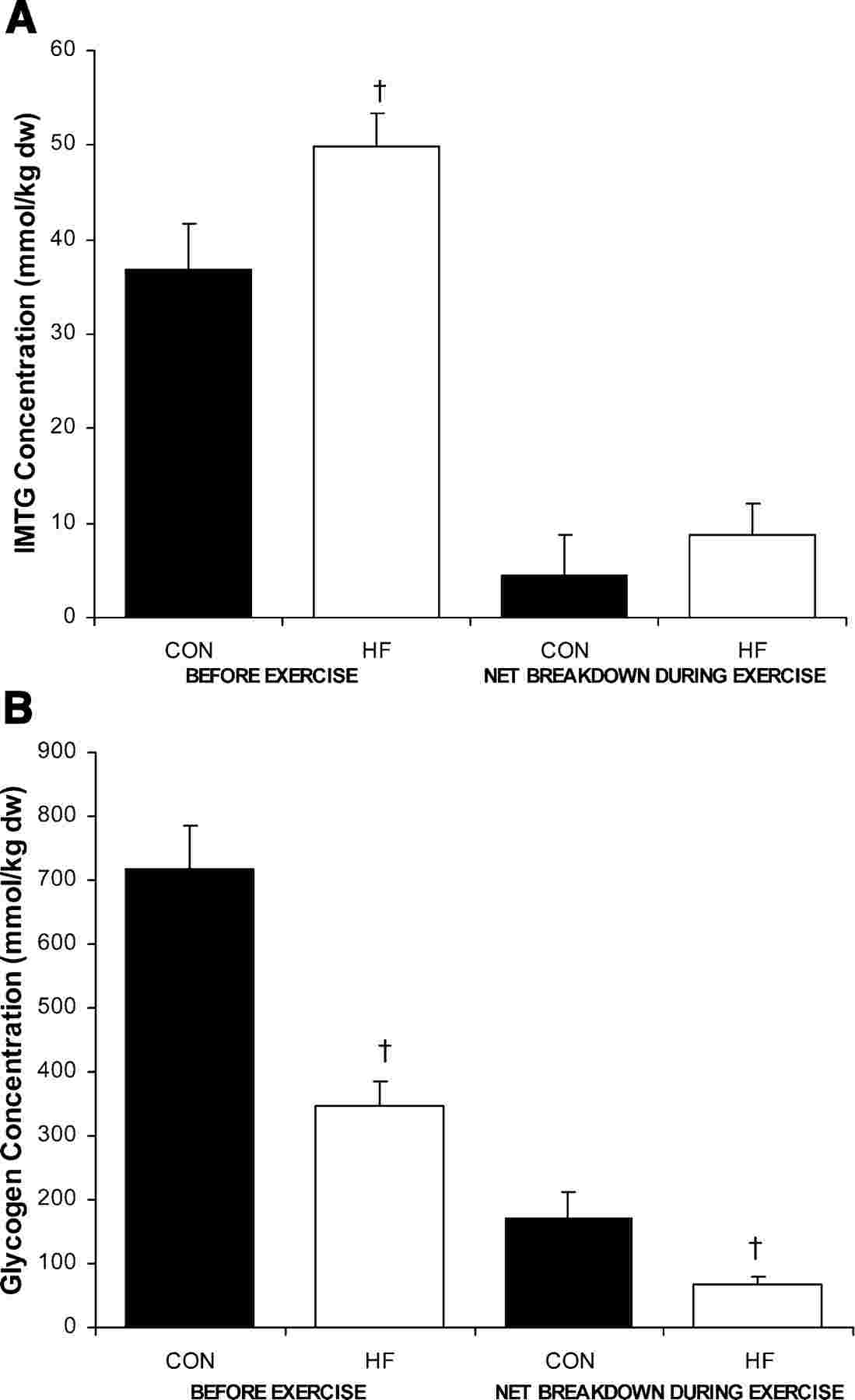
In graph A, we observe that the high-fat (HF) diets have a higher intramuscular triglyceride (IMTG) content than the control diet.
This is exactly what I said in the previous paragraph: ↑High fat diets=↑lipids in muscle. Thus, the graph shows that during training the use of fats is higher than the control diet (nothing new…).
Conversely, graph B demonstrates how high-fat diets produce half as much muscle glycogen. This translates as a higher glycogen breakdown in moderate-high carbohydrate diets.
What is Metabolic Flexibility?
The ability of the cell to use “fat” or glucose is the basis of athletic performance.
This is because varying the amount of carbohydrates and fats in the diet allows for greater metabolic flexibility.
That is, if we base a diet only on carbohydrates, our body will become accustomed to using glucose efficiently. On the other hand, if we only eat a ketogenic diet our body will adapt to using fat efficiently.
Which is better fuel: fats or carbohydrates?
At this point the question arises: so what is better to use as fuel? glucose? fat?
The answer is, it depends on the intensity of the exercise.
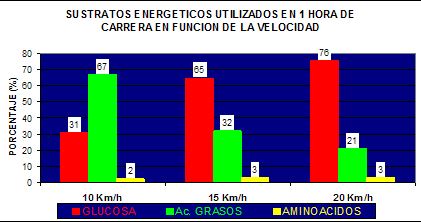
This graph shows how the use of glucose, fat or amino acids as fuel varies depending on the intensity of running.
If you look at low intensity (10km/h) the macronutrient that is most used is fat (67%) while at high intensity (20km/h) it is glucose (76%). The contribution of amino acids (protein) as fuel is negligible, as it is only 3%.
So as you can see, your muscle is not going to degrade because you do a bit of exercise on an empty stomach or because you move your ass off the couch…
Metabolic Flexibility and Exercise Intensity
ATP production
The role of both is to provide energy in the form of ATP (adenosine triphosphate), a molecule that is used as a “currency” for most metabolic processes.
Thus, we must understand that fat is metabolised differently from glucose. Therefore, they follow completely different routes:
- Fat produces fatty acids that are metabolised through beta-oxidation.
- Glucose is metabolised through a pathway called glycolysis.
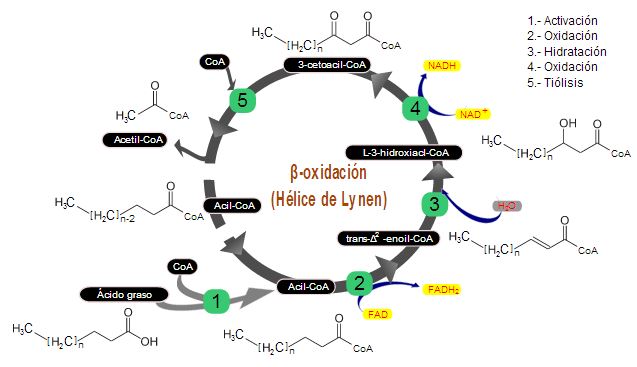
Process of fatty acid (fat) metabolisation through beta-oxidation.
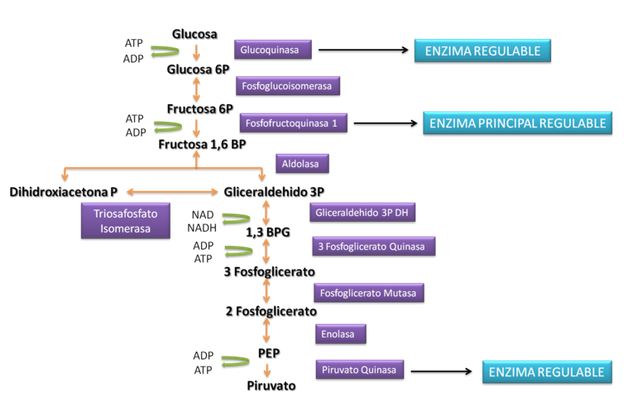
Mechanism of glycolysis to break down glucose and produce energy.
Fat VS Glucose Metabolisation
Many of you are now wondering… if fat produces more energy when metabolised, why don’t we eat a high-fat diet to improve performance?
Basically because fat metabolisation is a very slow process, i.e. it produces a lot of energy but takes time to complete.
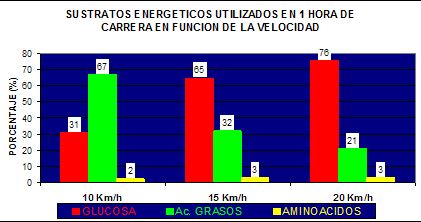
This explains the graph seen at the beginning, where we see that at low intensity fat is the main fuel, while as we increase the intensity its use decreases, falling by more than 50%.
Keep in mind that during an intense workout your body needs instant energy. This only occurs with anaerobic glucose metabolism, i.e. the oxidation of glucose when there is no oxygen (sprints… crossfit training… etc.).

For this reason, in light but prolonged training such as jogging, marathon running, or simply light weights with ample rest, eating a high-fat diet does not produce a feeling of fatigue.
Carbohydrates to enhance high-intensity exercise
An example of this is the study1 where we see that increasing carbohydrate intake during a (HIIT) protocol results in a 4.9 and 8.1% increase in total distance and distance at high intensity respectively.
In the case of people who train with weights at high intensity or practice CrossFit, we see that strength during this type of training is lower as we decrease carbohydrates2 due to a lower amount of glycogen at muscle level.
If we lift less weight, we decrease the stimulus at the muscle level, and therefore hypertrophy is less.

However, when we look at the studies, it can be seen that low-carbohydrate diets are a better option for maintaining muscle mass than high-carbohydrate diets, mainly due to two aspects:
- They use subjects who are overweight or inexperienced in weight training, so the stimulus at the muscular level is greater.
- The high-fat diets they use have a higher amount of protein than the “control” high-carbohydrate diets. They are typically 25-30% as opposed to 10-15%.
Hormones and Metabolic Flexibility
Do they influence?
Of course they have an influence. Although in some hormones, as in the case of testosterone, its effects are visible rather when there is a lack of it and never in excess. Let me explain.
When we seek to increase testosterone through diet, we can raise it but at levels well below the anabolic effect line.
Cortisol and low-carbohydrate diet
When we studied some trials on the impact of low-carbohydrate diets on the hormonal environment, we focused mainly on two hormones: cortisol and testosterone.
Generally speaking, ketogenic diets are observed to increase maximal oxygen uptake (VO2MAX ). This promotes a greater need for oxygen to keep pace than would be the case with a mixed diet (where the use of glucose and fatty acids is favoured). This translates into a lower total training load on the ketogenic diet3.
In the same study we can also observe higher cortisol levels when training on a ketogenic diet.
Low-carbohydrate diet and Testosterone
However, if there is one particularly clear study, it is Lane’s4.
This compared the effect of a low carbohydrate diet (30%) versus a moderate-high carbohydrate diet (60%) following training at 70% VO2max. Both groups consumed the same amount of protein (20-25%) so we ruled out the effect of a low protein diet that I mentioned earlier.
The result was that those on a low-carbohydrate diet increased their cortisol levels, while those on a moderate-high diet did not change.
The free testosterone/cortisol ratio decreased by 43% in those on a low-carbohydrate diet compared to those on a moderate-high carbohydrate diet.
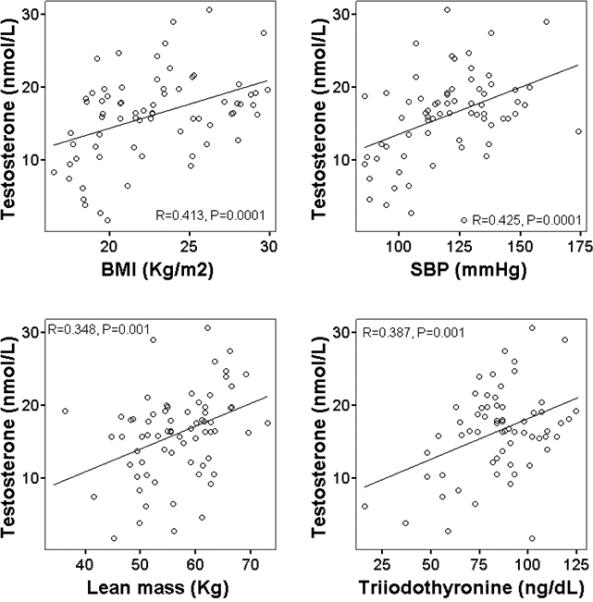
This means that in the low-carbohydrate group, they suffered a drop in their testosterone levels and an increase in their cortisol levels.
Conclusions
It should be remembered that people who follow a low-calorie diet for a prolonged period of time suffer a drop in their testosterone levels5.
So adding an increase in cortisol and a decrease in testosterone from intense training to a low-carbohydrate diet may not be the best idea for maintaining your strength during this stage.
Bibliographic sources
- The effects of carbohydrate intake and muscle glycogen content on self-paced intermittent-sprint exercise despite no knowledge of carbohydrate manipulation.
Skein M1, Duffield R, Kelly BT, Marino FE. - Dietary Carbohydrate and Protein Manipulation and Exercise Recovery in Novice Weight-LiftersLYONEL BENJAMIN1, PETER BLANPIED2, LINDA LAMONT 1
- The effects of a ketogenic diet on exercise metabolism and physical performance in off-road cyclists. Zajac A1, Poprzecki S2, Maszczyk A3, Czuba M4, Michalczyk M5, Zydek G6.
- Influence of dietary carbohydrate intake on the free testosterone: cortisol ratio responses to short-term intensive exercise training.Lane AR1, Duke JW, Hackney AC.
- Aging Cell. 2010 Apr;9(2):236-42. doi: 10.1111/j.1474-9726.2010.00553.x. Epub 2010 Jan 20. Long-term effects of calorie restriction on serum sex-hormone concentrations in men. Cangemi R1, Friedmann AJ, Holloszy JO, Fontana L.
Related Entries
- Homeostasis, hormones at work
- Thyroid: How to regulate hormones through exercise
- High-Fat, Low-Carbohydrate Diet for Weight Loss