Fitness, Nutrition, Health and Sports Blog In the HSNstore Blog you will find tips about Fitness, sport in general, nutrition, and health – HSNstore.com


What is the recommended dose?
Here is the “million dollar question” related to the essential amino acids of the moment.
Let us try to give a concise answer.
Nutrition experts suggest that the recommended dose of BCAAs is at a rate of 144mg x kg body weight.
- For example, if you weigh 75kg, you should ingest around 11g of BCAAs.
However, it is sometimes the case that: doses below 3g daily give significant results in some people while others, with around 50 kg of lean fat, report notable benefits with doses of around 10g.
But what is the BCAA ratio?
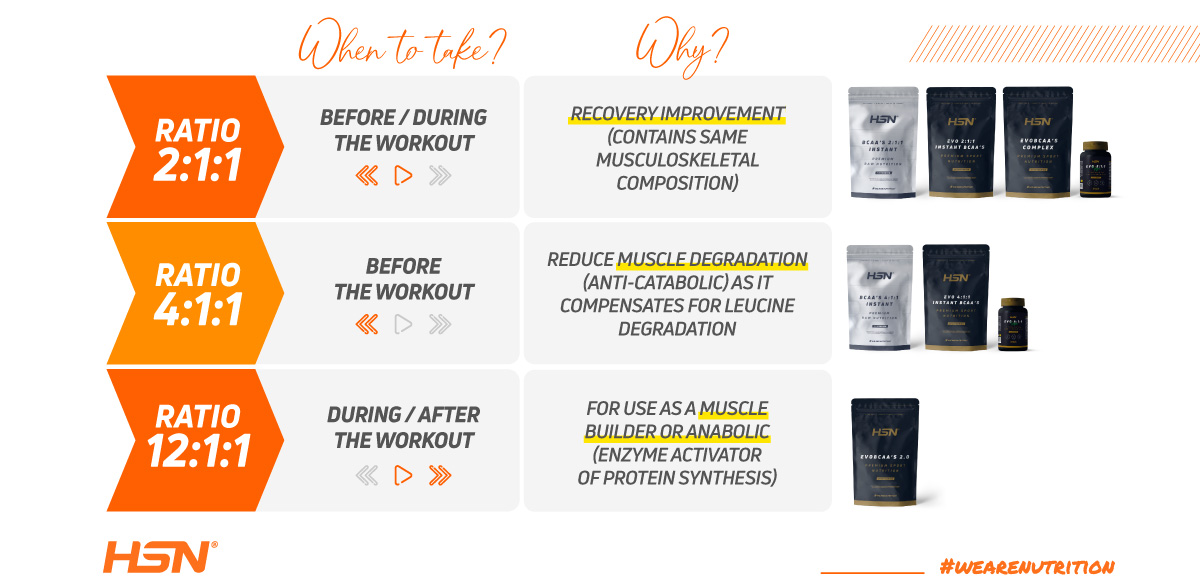
The ratio refers to the amount of leucine, valine and isoleucine provided by a branched amino acid supplement. It is expressed as follows: A:B:C, where:
- A -> amount of leucine.
- B and C -> amount of isoleucine/valine.
| Amount per service | |
| L-Leucine | 2260mg |
| L-Isoleucine | 1130mg |
| L-Valine | 1130mg |
This would be an example of Instant BCAAs 2:1:1 2.0 by RawSeries.
What is the best BCAA ratio?
At HSN, we believe that the 12:1:1 ratio, with a higher amount of leucine, is the best option.
Our justification for the high ratio is based on the latest research and reviews:
“…Of all the interest captured by BCAAs, leucine is considered to be the main inducer of acute changes in protein translation (in other words, the main player in promoting protein synthesis). In this context, Dreyer et al. and other studies have shown that leucine supplementation after strength training can increase mTOR signalling and protein translation (synthesis)…”
“…Leucine, in particular, is recognised as a cornerstone that, when provided in the correct amounts (3-6 g), activates the mTORC1 complex…”
When to take BCAAs in your training routine?
There are several existing strategies for the administration of this supplement, which allows us to speak of Peri-training Supplementation (before, during and/or after training), the most appropriate option according to our criteria.
Before training
We begin this section with the option of training on an empty stomach, a practice that will be intensely reinforced if you add the triplet of amino acids that concerns us.
This intake, unless you are training on an empty stomach, can be substituted to directly target intra-workout.
As explained above, the use of branched chain amino acids helps to conserve muscle glycogen and preserve tissues for high-intensity physical activity.
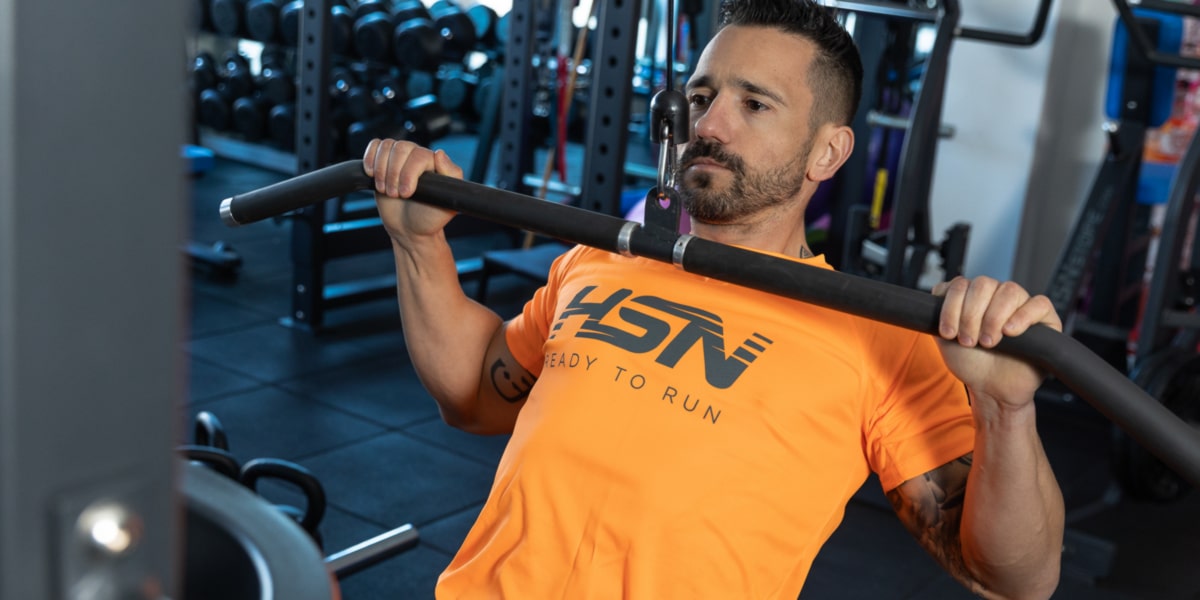
You can take BCAAs before your workout on an empty stomach.
During training
In certain cases, if you have BCAAs in powder form, with good solubility and sweetened, you can use it as an intra-workout drink.
How? By mixing the product in a bottle of water and taking short sips for the duration of the session.
For this purpose, combining branched chain amino acids with a product that provides energy and hydration in a very effective way can become your best ally when facing intense and demanding challenges.
Indications:
- Mix: 1 scoop of Evocarbs 2.0 per 500 ml of water. Add 1 scoop of Evobcaas 2.0.
- Take: Every 45 minutes of intense activity.
Are you looking for a more powerful option? Here’s an “all-rounder”!
- Mix: 1 scoop of Evocarbs 2.0 per 500 ml of water. Add ½ scoop of Evobcaas 2.0 and 1 scoop of Evopept 2.0.
- Take: Every 45 minutes of intense activity.
After training
You finish your training and need to find an efficient intake of BCAAs. Take note of a highly recommended one!
By taking branched-chain amino acids after training, you ensure that they do not have to be digested and pass directly into the bloodstream, thus nourishing the muscle cells.
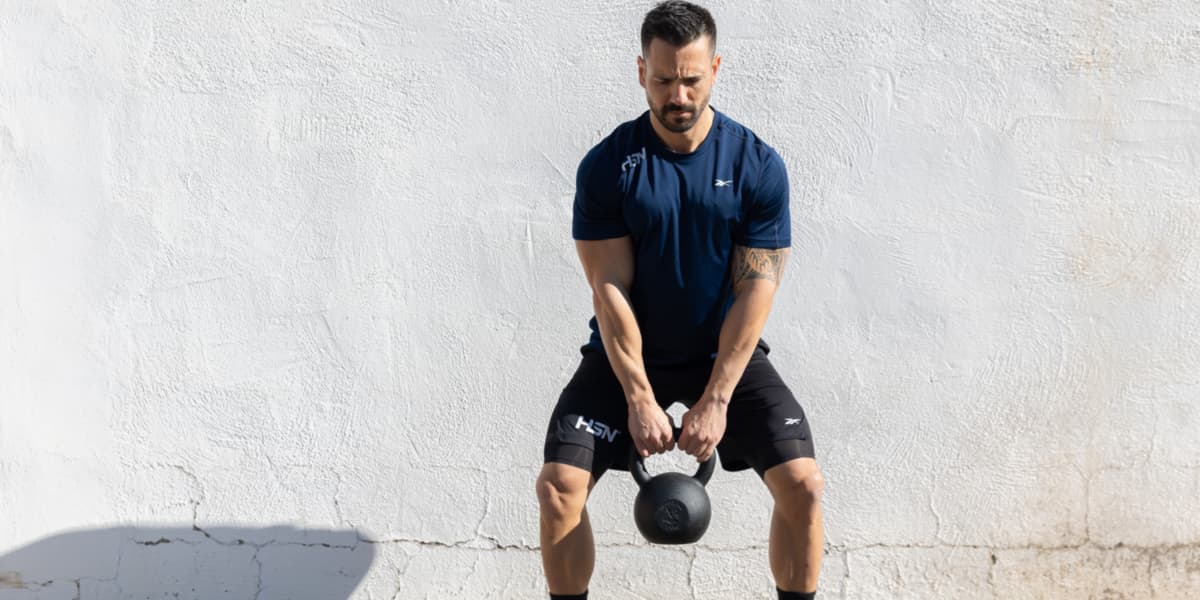
What happens then? Well, BCAAs slow down muscle catabolism processes more quickly!
What formats are available?
- Powder: ideal for those who prefer to take as a sports drink or mix with other products, such as carbohydrates, creatine…
- Capsules: for those who prefer to opt for an effective dose that they can carry with them to take anywhere.
- Tablets: particularly suitable to cover nutritional needs, especially in certain types of diets or in a process of muscle definition, and to accompany meals.
Advice and recommendations
- If you are training on an empty stomach, taking BCAAs before or during exercise is a very interesting strategy to reduce the breakdown of muscle mass, especially at high intensity.
- The standard dose is usually between 5-10 grams per intake of BCAAs.
- Choose the ratio you need depending on your target.
- Taking BCAAs can speed up recovery, especially in the muscle definition phase.
- Choose a quality raw material, preferably from vegetal fermentation.
Related Entries
- Why take BCAAs or Branched Chain Amino Acids.
- BCAAs and Endurance Sports.
- BCAAs and Ornithine, improves response capacity.
- BCAAs in Definition.