What is Palmitoylethanolamide (PEA)?
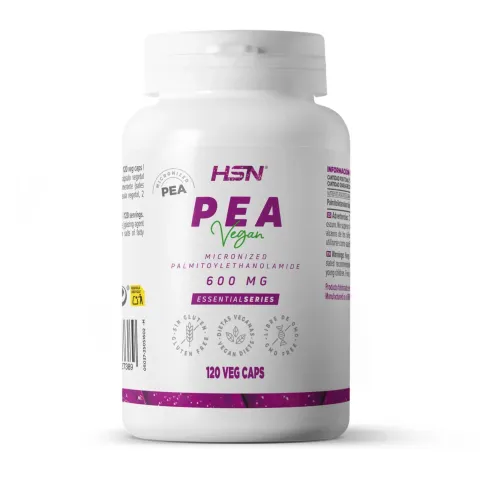
Micronized Palmitoylethanolamide (PEA) 600mg from EssentialSeries is a dietary supplement based on palmitoylethanolamide.
Palmitoylethanolamide (PEA) is a lipid compound naturally produced by the human body as part of its physiological mechanisms. It belongs to the fatty acid amides group and is found in tissues like the brain, liver, and muscles. It’s also present in small amounts in foods such as egg, avocado, and soy. Using it as a dietary supplement allows you to add a significant dose of this important compound, which has been the focus of scientific research.
HSN’s PEA gives you 600 mg per capsule, in a high-quality micronized form.
Micronized PEA - For those who want pure single-ingredient quality
Our micronized PEA 600 mg is a dietary supplement designed for customers who value simplicity, quality, and transparency in supplements, and that’s why they choose our brand: HSN.
With just one star ingredient (PEA), this supplement is the perfect single-ingredient option for those who want to add only Palmitoylethanolamide to their daily routine, no blends, no unnecessary additives, and no aesthetic agents. Each veggie capsule contains 600 mg of pure, micronized PEA, allowing precise, convenient dosing aligned with the highest purity standards.
This product has been developed under a clean label philosophy, meaning you’ll only find the essentials: the nutrient, a plant-based coating, and an anti-caking agent that ensures optimal preservation under normal storage conditions at home. Plus, it’s completely allergen-free and vegan-friendly. The PEA used has undergone a controlled micronization process, a key quality factor to benefit from a top-notch PEA.
Our micronized PEA is an excellent choice for those seeking quality palmitoylethanolamide without additives.
Micronization: the key to quality PEA
What is micronization and why does it matter?
Micronization is a technological process that reduces the particle size of a compound like PEA to much smaller dimensions. In the case of Palmitoylethanolamide (PEA), this reduction is done through controlled physical methods, such as air milling or high-precision mechanical grinding, without solvents or chemical treatments. The result is a much finer, more homogeneous powder, which improves dispersion, makes handling easier, and optimizes absorption.
This micronization feature is especially important for lipophilic and poorly soluble compounds like PEA, since a smaller particle size means a larger surface area, optimizing its behavior inside the body. Unlike other forms with untreated (native) or irregular-sized (non-standardized) PEA, the micronized form is the only acceptable one to get a stable, top-quality dietary supplement.
Benefits of reduced particle size
Reducing particle size through micronization is especially valuable for compounds like Palmitoylethanolamide due to its lipophilic profile and limited solubility. Smaller particles significantly increase the surface area in contact with gastrointestinal fluids, promoting better dispersion and, consequently, more efficient absorption of the compound.
This optimization of PEA’s physical behavior allows the body to make better use of the administered dose.
In fact, only the micronized form of PEA has been studied in scientific research supporting its safety and effectiveness, so this presentation is the only one aligned with available evidence and the quality standards we uphold as a premium-quality supplement brand.
PEA in foods: is it possible to get it through diet?
Palmitoylethanolamide (PEA) naturally occurs in some animal and plant foods like egg yolk, soy, avocado, and peanuts. However, the amounts in these foods are very low: for example, 100 g of egg yolk may contain around 1–2 mg of PEA, and levels in other foods like avocado or soy are even more variable and generally lower. These levels also depend on factors like processing, preparation, and food origin.
To reach the 1200 mg of PEA daily provided by our formula, considered the perfect dose, you’d need to eat unrealistic amounts of these foods, making it unfeasible to get a significant intake solely through diet. That’s why micronized PEA supplementation is the most practical and ideal way to add this compound to your daily nutrition.
Combine it with other supplements for optimal synergy
Micronized PEA can easily fit into supplement routines with other products, combining with other compounds based on individual needs without issues, since it’s fully compatible. One of the most recognized combos is with magnesium, like in our product PEA & MAG, as this mineral supports neuromuscular and energy functions that can be of joint interest.
It can also be combined with omega-3 fatty acids, widely used in nutritional strategies aimed at lipid balance. B-complex vitamins are also common supplements, since many vitamins contribute to normal energy metabolism and can be useful in general support protocols. Lastly, many people opt for formulas with plant extracts like turmeric or Boswellia, excellent complements for more specific issues linked to PEA.
References
- Clayton, P., Hill, M., Bogoda, N., Subah, S., & Venkatesh, R. (2021). Palmitoylethanolamide: A natural compound for health management. International Journal of Molecular Sciences, 22(10).
- Rankin, L., & Fowler, C. J. (2020). The Basal pharmacology of palmitoylethanolamide. International Journal of Molecular Sciences, 21(21), 1–22.
- Artukoglu, B. B., Beyer, C., Zuloff-Shani, A., Brener, E., & Bloch, M. H. (2017). Efficacy of palmitoylethanolamide for pain: A meta-analysis. Pain Physician, 20(5), 353–362.
- Lang-Illievich, K., Klivinyi, C., Lasser, C., Brenna, C. T. A., Szilagyi, I. S., & Bornemann-Cimenti, H. (2023). Palmitoylethanolamide in the Treatment of Chronic Pain: A Systematic Review and Meta-Analysis of Double-Blind Randomized Controlled Trials. Nutrients, 15(6).
- Das, A., & Balakrishnan, P. (2024). Mechanisms and clinical applications of palmitoylethanolamide (PEA) in the treatment of neuropathic pain. Inflammopharmacology, 33(1), 121–133.