Fitness, Nutrition, Health and Sports Blog In the HSNstore Blog you will find tips about Fitness, sport in general, nutrition, and health – HSNstore.com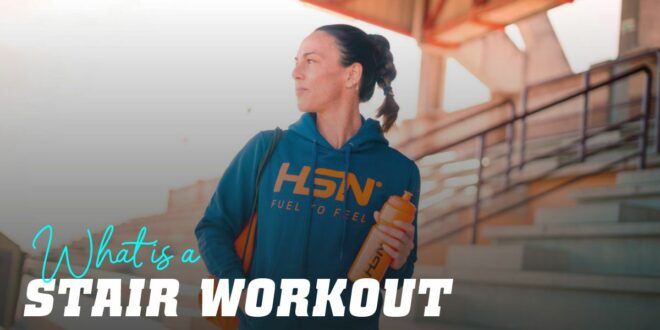

In this article, I’ll look in detail at what stair training is, the benefits of stairs training, and how to use it or implement it effectively in your routines.
It’s often difficult to find ways to vary certain routines or training sessions in order to maintain motivation and set ourselves new challenges with the same aim of improving our physical condition, cardio respiratory capacity and/or running with better technique.
Have you tried introducing stair training into your routine?
What is stair training?
As the name suggests, stair training involves using stairs to work on certain technical skills (cadence, running movement, coordination) or physical abilities such as improving cardiovascular capacity.
They can also be used as an implement to increase or decrease the difficulty of certain own-bodyweight exercises (e.g. push-ups, jump squats…).
Why do this kind of training?The benefits
Doing specific training sessions on stairs and/or combined with running, for example, will help to improve an athlete’s general fitness , and other more specific skills too.
Plyometrics Work
With a set of stairs, you can work on the plyometrics and reactivity of the lower limbs.
Strength Work
Good strength and explosiveness work can be developed when training on stairs with large heights between the steps.
Many exercises claim to be the best for glute strength, and one such exercise is stair training.
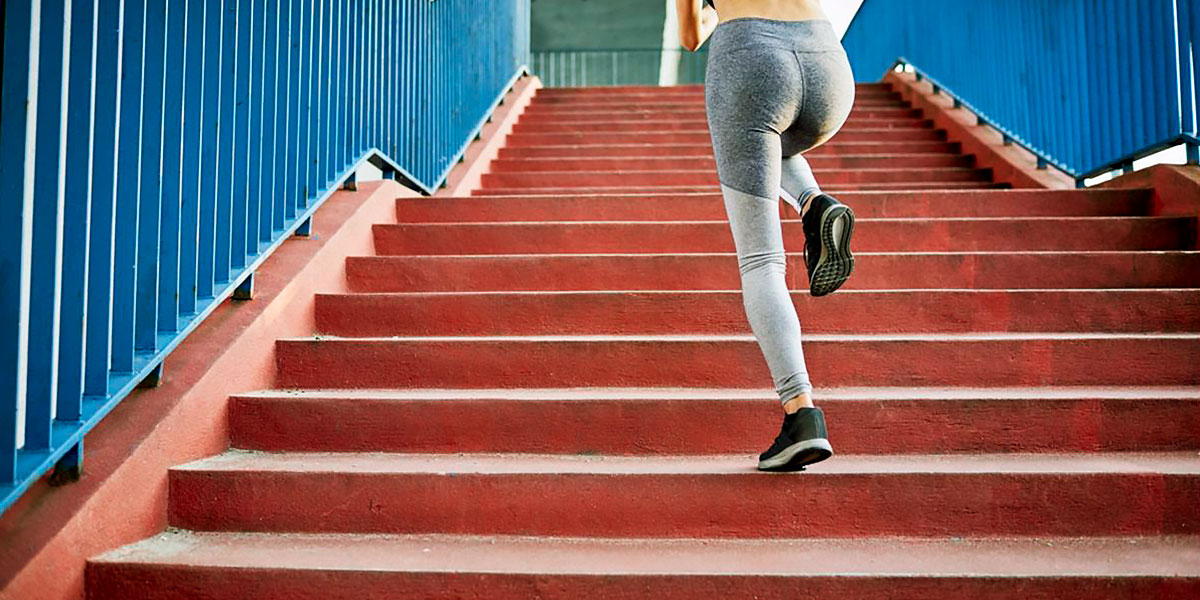
The greater the movement and the greater the hip flexion and posterior retrogression, the greater the gluteal involvement.
Cardiovascular Work
Stair training is a good tool for specific interspersed sessions to improve aerobic capacity.
Eccentric Work
Descending stairs in a controlled manner is a good exercise for eccentric work of the quadriceps.
Improved running technique
When the stairs aren’t very high, together with this plyometric work we can add improvement in running pattern technique, ensuring contact with the supporting foot is just below the hip, and also trying to minimise the contact time between steps.
Power Test on stairs
Stairs, for example, are used in the Margaria-Kalamen test to measure maximal muscle power (high-speed strength). In this test, a flight of stairs with 9 or more steps of about 18 centimetres in height and a flat area of about 6 metres in length is needed.
There’s also the YMCA Step Test, which measures a person’s cardiovascular functional capacity. It’s simple and widely used by those just starting out.
How does stair training work?
The essentials of stair training is climbing one step at a time at a steady pace.
- We can either climb a set amount of stairs or set a time limit.
- Once we’ve reached a set point, the next phase is to go down the steps.
Depending on the spacing of the steps, you could consider – to increase the intensity – going up (jumping) the steps two at a time.
This will give you an excellent power workout
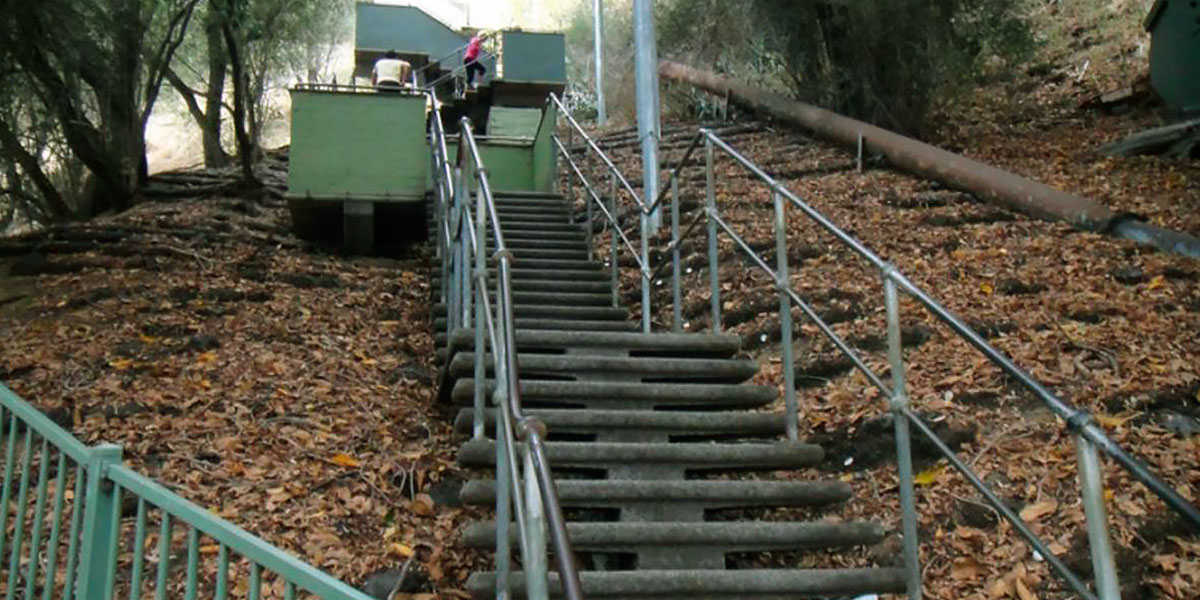
Before stair training, you’ll need to do some hip mobility exercises for greater flexion in each step.
Another variation on the training would be Step Jumps, with your feet together, or on one foot (for experienced athletes), jumping to and from a step.
Exercises
The first thing we have to determine is the type of exercise and benefit we’re wanting to develop, as well as the height of the stairs.
In any case, it’s important that there’s enough space between steps so that the foot can fit on in its entirety, always ensuring that the heel, in any type of step or jump, lands fully on the step.
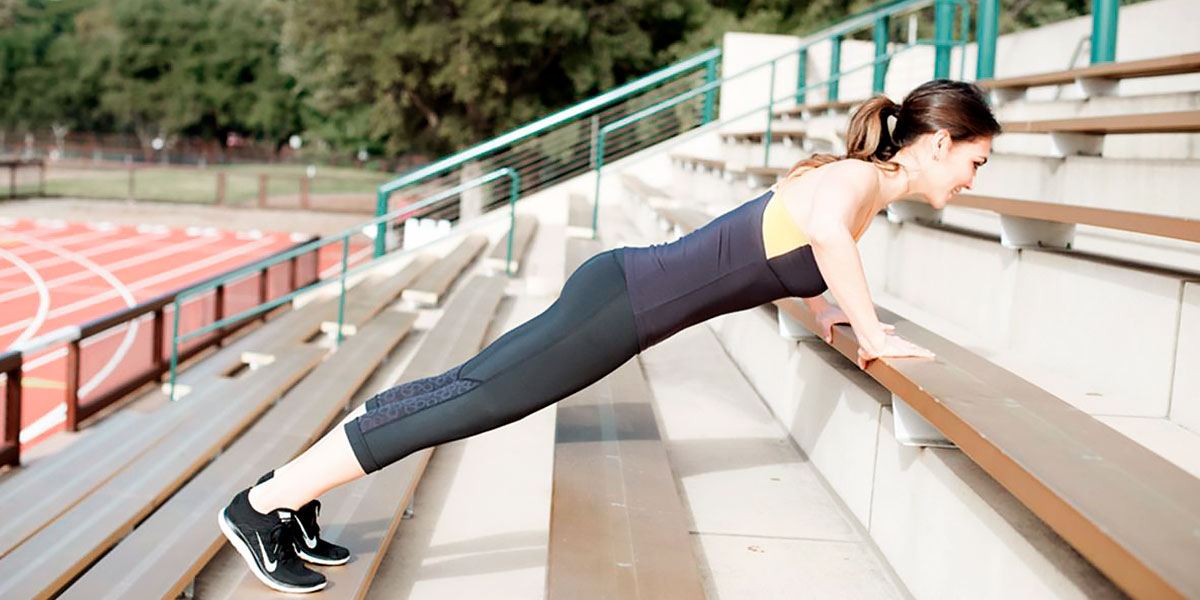
Stair push-ups.
Technique
- Foot reactivity-Plyometrics for running technique: from jumping with both feet together, to climbing one at a time while minimising the contact time between each support.
- To improve coordination: up and down in a controlled manner, hip mobility and hip flexors.
- Interval cardiovascular work: climbing the stairs as fast as possible and descending them while recovering in sets of 3-4 reps, for example.
Sprints
Of all the types of stair training we can do, this is the one that will give us the most power.
A good scheme to work with is as follows:
Warm-up -> complete 3 rounds of:.
- Walking up 20 steps and jogging back to the starting point.
- Jogging up 20 steps and again jogging back to the starting point.
Activation -> complete 3 rounds of:.
- Long strides (covering 2 or more steps), walking back
- Jumping 20 steps with both feet, walking back.
Active workout -> complete 5 rounds of:
- Sprinting up 20 steps and walking back
Bulgarian Squat
Place one foot on an upper step and perform knee bends.
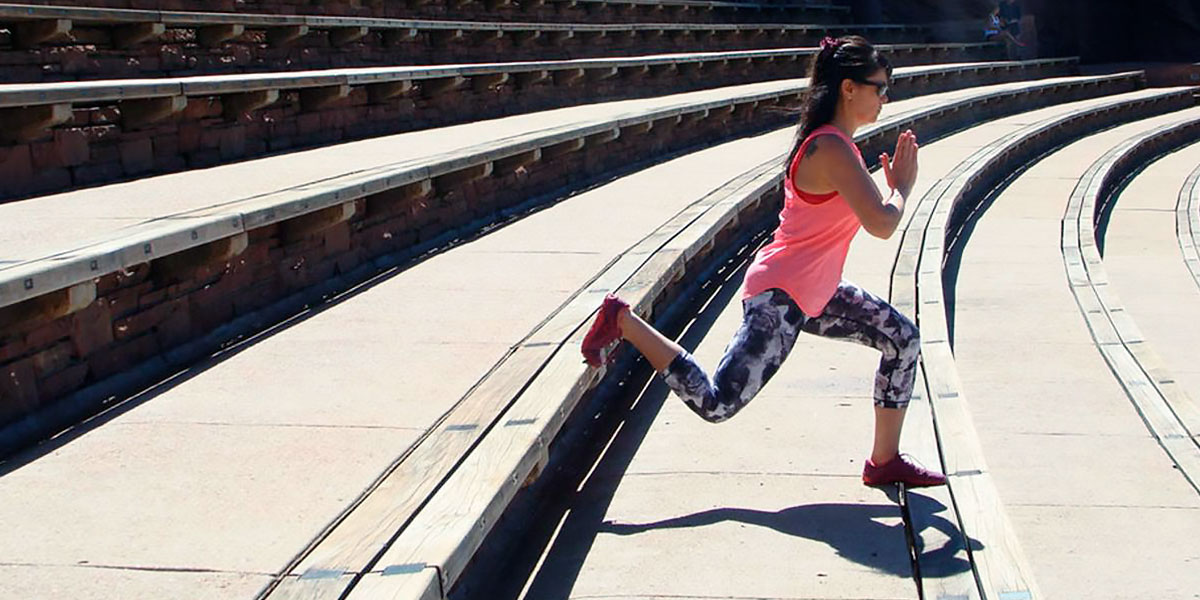
If the stairs have a higher profile, the gluteal involvement will be greater.
Push-ups
- Chest push-ups with hands: resting on a step with your feet at a lower height, detracting from the intensity of the push-up.
- Arms bending with hands on a step in a descending direction: feet resting on another step at a greater height from the head: thus increasing the degree of difficulty and intensity of the push-up.
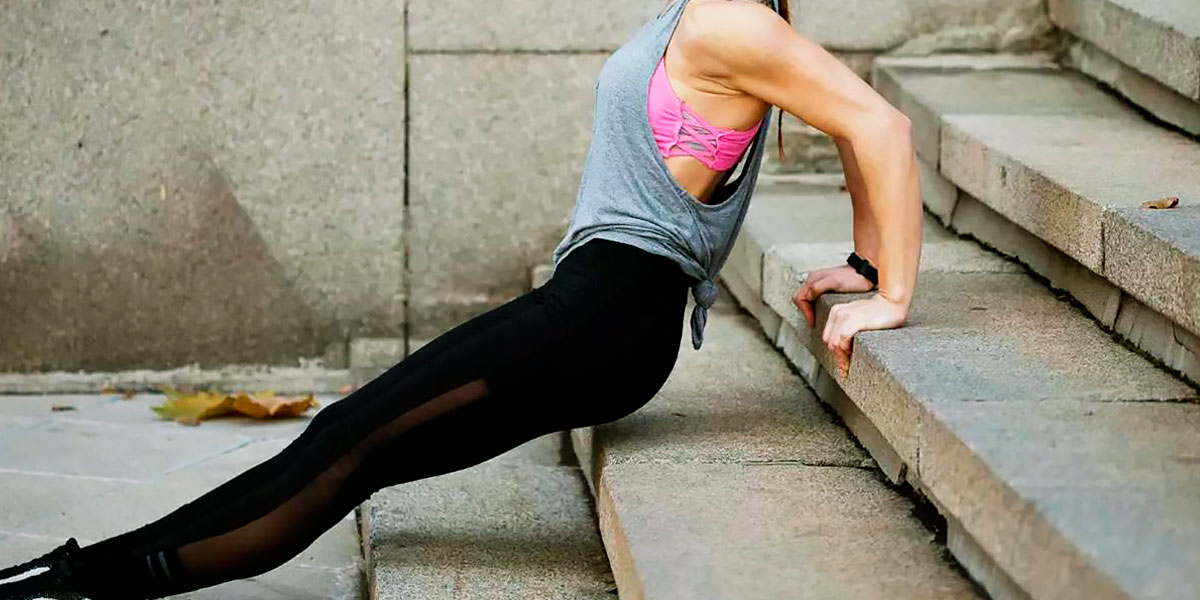
We can use as a support to perform the triceps dips.
Is it better to go running or to go up and down the stairs?
Obviously, it depends on the athlete’s end goal. But if they’re a runner, their main exercise should be running.
If you’re preparing for a half marathon, you’ll need to be doing running work, although at certain times of the season stair training can help you to work on certain technical running skills.
If you’re a runner, you can introduce stair work, depending on the time of the season (with more technical or more explosive work) to add a different stimulus to your training.
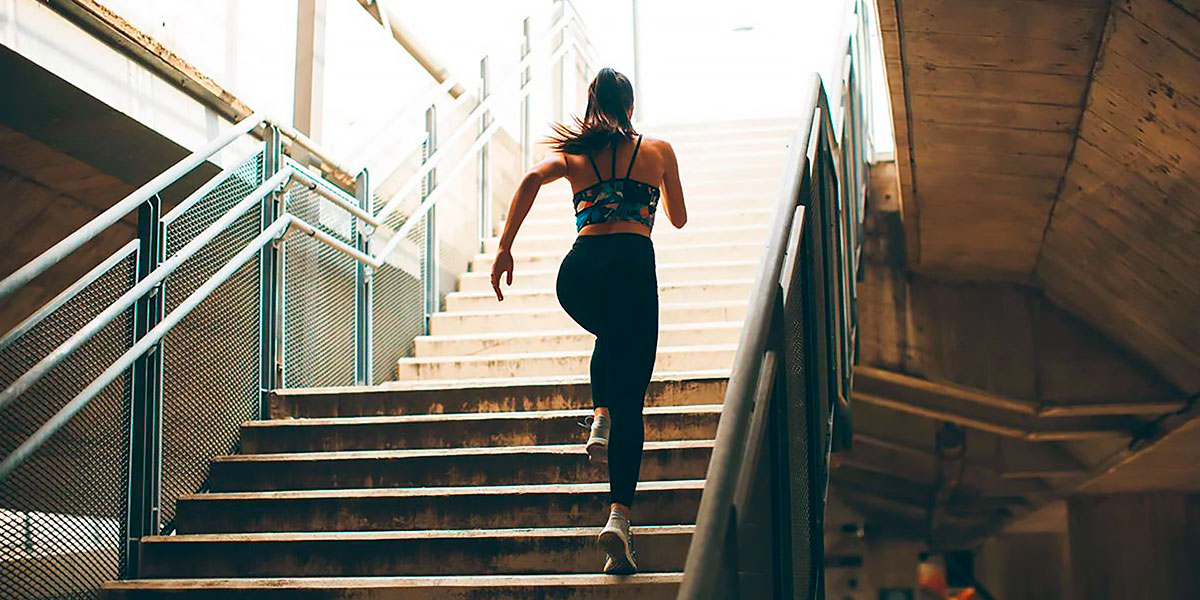
In other words, we can use it as just another tool.
Which sports are stair training good for?
According to everything we’ve look at above, and the benefits and versatility that we can find when training with stairs, it could be used for any sport. It can be considered as just another tool to add variety to training sessions, as long as it’s implemented aimed at developing qualities specific to the sport or the needs of the subject.
Advice
As with everything, look for good progression in the exercises.
- Find long flights of stairs that have a non-slip surface to prevent falls.
- Find stairs that have enough space between steps so that you can fully support the foot; otherwise, the variety of exercises will be limited.
- Start with low-profile stairs to familiarise yourself with them and to gain confidence and coordination.
- You can start climbing them without having to go at fast paces or speeds, working in pairs or in threes to improve strength and coordination.
Related Entries
- Do you know about the Vertical Jump? We can measure the power of the lower body. Visit this Post.
- We recommend the best exercises for the Glutes.
- Differences between the Bulgarian Squat and the traditional squat. Go now.