 Fitness, Nutrition, Health and Sports Blog In the HSNstore Blog you will find tips about Fitness, sport in general, nutrition, and health – HSNstore.com

In the following article, I want to explain what Functional Hypertrophy is, what benefits it will bring you, and the way to train it so your muscles “grow and develop” with this quality.
Almost everyone who hits the gym is probably after the same goal: hypertrophy. But do you really know what this means…? Maybe it sounds like “muscle growth,” “getting bigger muscles,” “bulking up,” … as more casual terms.
What is Muscular Hypertrophy?
Muscular Hypertrophy is the process that causes the growth in muscle size (cross-sectional area of muscle fibers or diameter). By generating a stimulus (weight training), we cause damage to muscle tissue, to which our body will respond with a reaction in the form of regeneration and synthesis of new fibers.
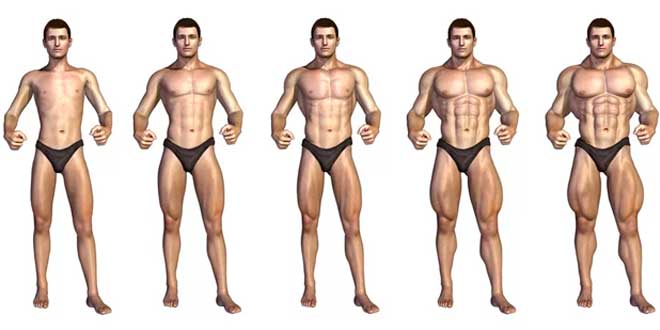
Weight training is super beneficial for health, both short and long term, not just for aesthetics, which is the first thing people notice, but also internally, improving hormone levels, insulin sensitivity…
Benefits of Hypertrophy
Muscle growth, from an athletic point of view, can be seen as essential for the athlete. In a way, bigger muscles are stronger muscles. So, the benefits that Muscular Hypertrophy will give us for possible transfer to other sports disciplines are:
- Increase in Strength
- Improved Stabilization
- Injury Prevention
- Joint Strengthening

So far so good, but now let’s dig a bit into how we can take this ability up a notch. That is, make the most of our own training not just for looks, but to squeeze out performance gains.
Muscle Fibers: types, quantity, transformation
Types
Muscle fibers can mainly be divided into two groups: type I or slow-twitch oxidative fibers, and type II or fast-twitch fibers, which are further split into “intermediate” or IIA (fast oxidative glycolytic fibers) and IIB (fast glycolytic fibers). Slow fibers are also called red (more capillaries and thus oxidative metabolism), while fast fibers are white.
What determines the amount of fibers we have?
The ratio of fiber types in a person depends on:
- What you were born with (genetics)
- “Fiber transformation,” induced by the type of training
Endurance Training
Endurance training causes a (quick) transformation of fast fibers to slow fibers, that is, from IIB to IIA and from IIA to I, without increases in strength or power. So if your goal is to train to favor mostly IIX fibers, you should try to cause as little muscle damage as possible, muscle trauma, but how? By opting for low volume and increasing explosive and intense activity.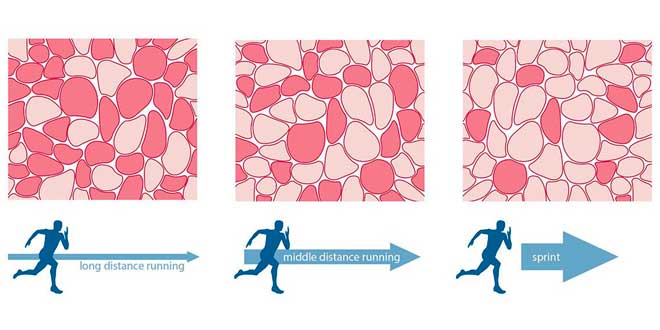
If we want to specify the type of conversion to cause in our fibers that can change, we turn to what’s called periodization. Periodization is a strategically planned timeframe to focus on a specific variable we want to highlight or emphasize.
What is Myofibrillar Hypertrophy?
It’s also called sarcomeric hypertrophy, due to the increase and strengthening of myofibrils. A myofibril is a component of the muscle cell. Inside the myofibril are substructures, myosin and actin, the elements that contract when they receive a neural impulse to exert force. Their mechanism is similar to how a velcro strip works, where each part is like a component of the system: the hook (myosin) and the loop (actin).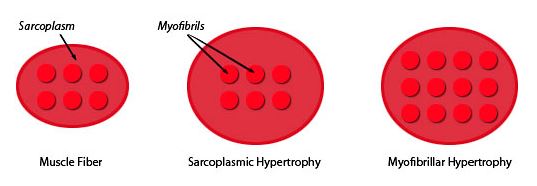
So, every time a contraction happens, myosin and actin bind, repeating this process depending on the force applied, recruiting more of these structures. The more myosin-actin sets activated, the greater the force the muscle tissue can exert.
What is Sarcoplasmic Hypertrophy?
While actin and myosin are responsible for tension and movement, the sarcoplasm is the fluid and energy sources surrounding the myofibrils in the muscle: water, glycogen, ATP, calcium, … everything non-contractile is stored in the sarcoplasm.
One effect of this hypertrophy type is the increase in size of blood capillaries that irrigate muscle tissue, known as capillarization.

Sarcoplasmic hypertrophy happens similarly to the previous one, through overcompensation mechanisms during recovery after depleting energy sources in training.
That’s why your body reacts by increasing the capacity to store these energy sources, “growing the warehouse,” like ATP and glycogen, to prepare for a possible “raid” later, meaning a new training session. In short, sarcoplasm volume increases, which means one of the biggest gains is water. Strength isn’t the main focus here, as aesthetics take priority. Typical of bodybuilders.
What is Functional Hypertrophy?
It’s muscle growth focused on sports performance
Here the goal isn’t just to “grow or develop muscles,” but literally to get stronger. Still, it can also give you an “aesthetic” look. This training also helps reduce or prevent injury risk.
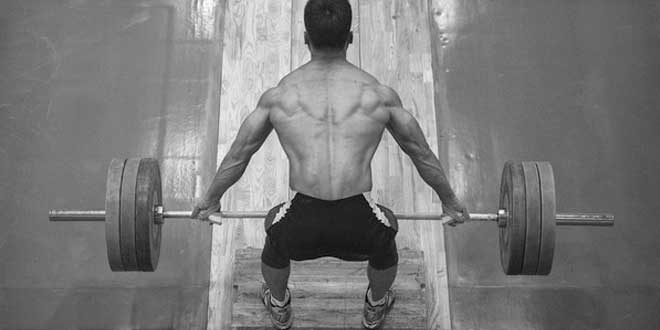
Olympic lifters are the clearest examples of this type of functional hypertrophy
What Are the Benefits of Functional Hypertrophy?
For athletes and non-athletes alike
This hypertrophy type aims to boost your physical and sports performance. Thanks to it, you’ll get stronger, not just physically but also in preventing possible injuries. This is because it trains type II fibers, which we’ve already seen. These are the fibers for strength, explosion, and power.
Transfer to other sports
Especially if you want to combine it with your main activity. Many endurance athletes can improve their performance this way. If you train for speed and quickness sports, your goal will be to maximize fast fiber training, including explosive movements and exercises.
Neuromuscular Strength
This is essential for daily strength performance. This type of strength involves the central nervous system and motor unit recruitment, which activate muscles to contract (movement). Training this way emphasizes neuromuscular signaling efficiency to generate greater contraction force.
Buffering the passage of time
Because of this, we’ll lose certain abilities and qualities over time, like strength and muscle mass… so to avoid these issues in the distant future, wouldn’t it be better to start training now to stay strong later? We’ll be the strongest grandparents in the retirement home! And our hips and menisci will thank us… (more muscle strengthening).
Why Not Train to Increase Functional Hypertrophy?
This time, contrary to excuses, I’ll specify why not to follow this training criterion
First off, everyone has their own goals and purposes, whether aesthetic or performance-related, either for self-motivation or sport needs, leaving weight training as a complement and tool to increase potential for later transfer.

How Does Functional Hypertrophy Affect the Body?
Training functional hypertrophy means a greater stimulus for the nervous system, as we seek maximum neuromuscular activation, so training, according to progression, will focus on lifting heavier weights each time.

Training under these hypertrophy guidelines will generate greater strength capacity for the individual, with the resulting neural adaptations
Exercises for Functional Hypertrophy
These are the basic or multi-joint exercises, because just by doing them, you engage most of the body’s muscles, directly and indirectly, performing an outstanding physical effort (greater efficiency) and triggering a hormonal environment that favors subsequent neural adaptations related to strength.
Squat
Squats are considered the “Queen” of the lower body. Remember, “every house starts with the foundation…”, and in our case, that’s the legs. By practicing squats, you’re on the right path to strengthening the whole structure.

Running speed is related to the strength transmitted to the lower body, and from there to ground contact. Training squats forces all involved muscles to work together for strength and explosion. So glutes, hamstrings, quads, and even calves get involved.
Bench Press
Bench press is another “big one.” It’s considered an exercise that develops the full potential of the upper body. It’s a horizontal pushing movement that works not only the chest but also all involved muscles, including stabilizers and secondary muscles: triceps, biceps, forearms, deltoids…
Deadlift
If the squat is the queen, the deadlift is the “King.” The moment you start exerting force to lift the bar, practically all your muscles (estimated over 90% directly and indirectly) activate: abs, almost all back muscles, quads, hamstrings, glutes, arms…

It’s probably one of the exercises that develops the most strength and yields the greatest gains. One downside, or why many people avoid it, is due to technique or thinking it’s very risky for the back. Obviously, with correct technique and unless your sports doctor advises against it for some condition, I see no reason not to include it in your routine.
Benefits of Functional Hypertrophy Exercises
- Increase in strength: just “pushing through” these exercises trains you for pure strength gains, squeezing and pushing yourself beyond previous limits
- Improved posture, meaning better stability by strengthening the abdominal area. This helps reduce back tension caused by bad posture
- Better grip strength, especially in forearms. No shopping bag or gas cylinder will resist you. This has real-life implications!
- Cardiovascular improvements, even though it’s a static exercise, putting your body under max tension makes your heart pump more blood to irrigate the working area
- Lower risk of back injury, since practicing these lifts properly adapts your back muscles for any effort
- Functionality and mobility of the lower body
- Increased bone mineral density and lower risk of fractures
- Strengthening of the “core” muscles, preventing possible problems and pain involving the lower back
- Increase in explosive speed during running, especially in short distances
- Improved vertical jump
- Performance boost for team sports
Related Posts
- Hypertrophy Routine.
- Functional Training, What It Is and Its Benefits.
- CrossFit or Functional Training.
- Women and Weight Training.
- Training Routines.
- Exercises to Develop Your Abs Through Hypertrophy.