Fitness, Nutrition, Health and Sports Blog In the HSNstore Blog you will find tips about Fitness, sport in general, nutrition, and health – HSNstore.com

Ever wondered what it means to be strong? Well, stick around because in this post we’ll break down the key points you need to get it.
Definition of Strength
Strength is basically defined as the ability to apply a load (Bompa, 1993).
However, a more precise conceptualization of “strength”, covering both its physical and mental aspects, presents considerable challenges compared to its physical (mechanical) definition, due to the extraordinary variety in types of strength, work, and muscle contraction, and the many factors influencing this complex (Weineck, 2005).
General and Specific Strength
Regarding distinctions, we can highlight General Strength, which is the strength of all muscle groups regardless of the sport practiced.
And Specific Strength, a typical manifestation of a particular sport modality (Weineck, 2005).

Manifestations of Strength
All manifestations of strength result from a specific application of force against a certain load.
Applied strength is the interaction between the external force represented by the load to be moved (whether body weight or another type of overload) and the internal force generated by skeletal muscles (Balsalobre-Fernández and Jiménez-Reyes, 2014).
Active Manifestation
It’s the tension generated by a muscle through voluntary muscle contraction (García, 2014).
- Maximum Strength: expresses the maximum force the neuromuscular system can exert in a maximal voluntary contraction. This can be shown statically or dynamically and expressed as relative or absolute strength.
- Explosive Strength: is the neuromuscular system’s ability to overcome resistance at the highest possible contraction speed.
- Strength-Endurance: is the ability to maintain a force at a constant level during the duration of a sports activity.
Reactive Manifestation
It’s the strength capacity a muscle performs as a reaction to an external force that modifies or alters its own structure.
It’s characterized by occurring after a stretch-shortening cycle or SSC:
- Elastic-Explosive Strength (Slow SSC): happens when during the braking action the agonist muscles of the movement are strongly stretched, acting like elastic springs that transfer the stored energy to the positive phase of the movement.
- Reflex-Elastic-Explosive Strength (Fast SSC): occurs when the pre-contraction muscle lengthening is limited in amplitude and the execution speed is very high.
Factors Influencing Strength Production
The ability to produce force or tension depends on 8 factors (García, 2014; Weineck, 2005; Bompa, 1993; PowerExplosive, 2016):
Structural Factor
Cross-Sectional Area
Key factor in muscle strength.
Anatomical Adaptation
Refers to training aimed at strengthening tendons and ligaments by following 4 basic laws (Flexibility, Muscle-Tendon Junction, Core, and Stabilizers).
Muscle Fiber Type and Arrangement
There are several types of muscle fibers (ST, FT IIA, and FT IIX), and depending on the predominant type, the ability to generate strength can vary.
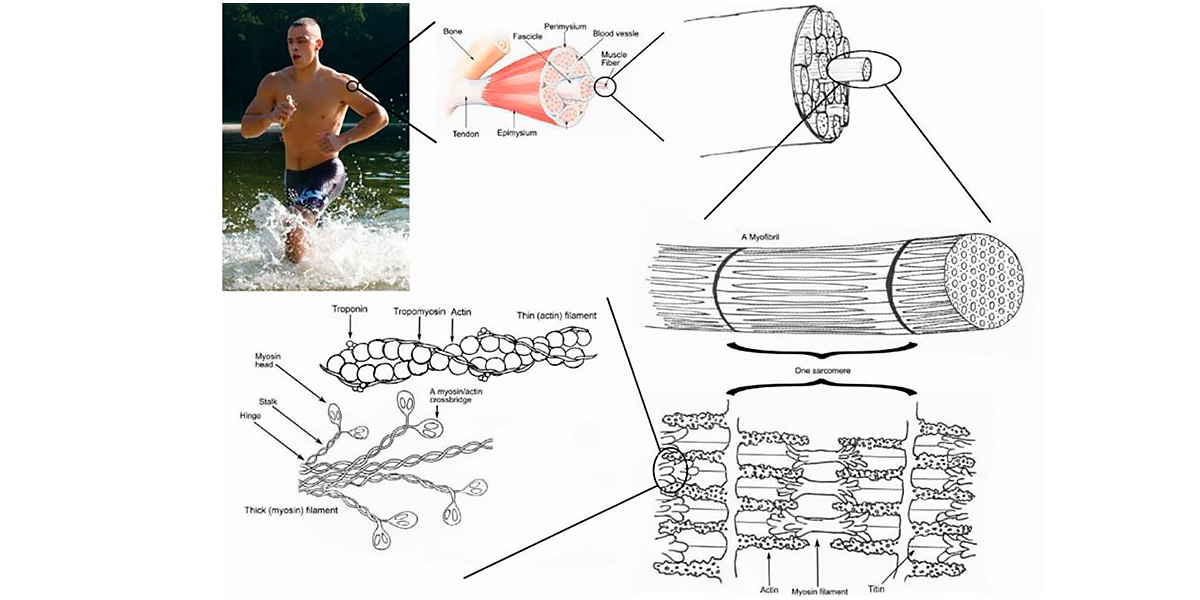
The longitudinal (fusiform) or oblique (pennate) arrangement of muscle fibers changes the ability to generate strength.
From a practical point of view:
- Oblique or pennate fibers are stronger given the same muscle volume.
- Longitudinal or fusiform fibers are somewhat faster.
- ST fibers have smaller diameter and high oxidative capacity.
- FT fibers have larger diameter and high glycolytic capacity.
Neuromuscular Factor
Which, how many, and at what rate muscle fibers are recruited by the nervous system.
Intra-Muscular Coordination
Represents the synchronization and recruitment of motor units.
Inter-Muscular Coordination
Ability of coordinated interaction between muscles involved in an action and/or agonists and antagonists.

Stretch Reflexes
Neural phenomena that allow the muscle to develop greater tension (Myotatic Reflex).
Inhibitory Mechanisms
They serve as a safety and protection mechanism for the muscle-tendon junction.
This mechanism sends information to the central nervous system about force levels (Inverse Myotatic Reflex).
Energy Factor
Maximum strength development relies on energy-rich phosphates (ATP, PC), since the moment of maximum force development happens in fractions of a second or a few seconds.

Mechanical Factor
Muscle Length
The tension a muscle can generate depends on the length it has at the moment of activation.
Muscle Elasticity
When an activated muscle-tendon system is stretched, it resists length change, but if the force is strong enough, it eventually deforms, storing elastic force inside.
Contraction Speed
The faster the muscle contraction, the less force we can apply to the resistance.
This theory is reflected in the force-velocity curve, which can be modified with training.
Levers
Force generated by levers can vary depending on each individual’s characteristics (proportions and muscle insertions).
Sex Factor
Hormonal differences (especially testosterone and estrogens) between sexes favor men having greater muscle mass and strength.

Psychological Factor
Motivation, attention, concentration, willpower, sacrifice spirit, fear, etc., are factors that affect nerve impulse discharge and motor unit recruitment.
The automated performance areas (up to 15 %) and physiological availability for performance (15-35 %) require low to moderate willpower efforts.
Mobilizing usual reserves (35-65 %) needs considerable willpower and is linked to relatively intense fatigue.

Environmental Factor
There are daily variations in performance capacity.
The evolution of this daily rhythm curve results from the behavior of all bodily functions.
Nutritional Factor
Optimizing the training-competition process clearly depends on achieving and maintaining a caloric surplus.
Interferences in Strength
“The combination of strength and endurance training in the same session (intra-session), on the same day (inter-session), or even on alternate days (intra-microcycle), is known as concurrent training.”
(Peña, Heredia, Aguilera, Da Silva & Del Rosso, 2016).
Regarding this, Docherty and Sporer (2000) proposed a theoretical model (figure 1) to analyze the interference phenomenon between endurance and strength training.
At the same time, a valid tool was obtained for achieving peripheral and central orientation goals.
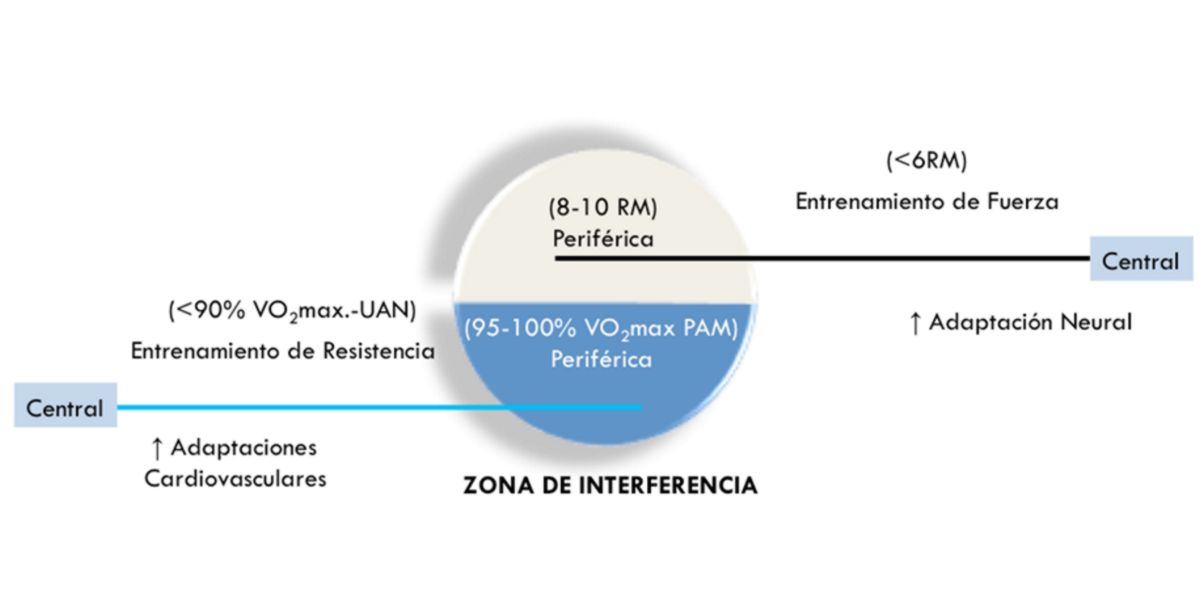
Figure 1. Concurrent training model (Docherty and Sporer, 2000).
However, during a concurrent training approach, compatible adaptations can be expected that produce less interference, allowing alternating training (Peña et al. 2016):
| Compatibility | Endurance Training | Strength Training | Interference |
| Maximum | Moderate-low intensity (aerobic threshold) | Neural orientation (no metabolic stress) | None |
| Intermediate | Moderate-low intensity (aerobic threshold) | Structural orientation (significant metabolic stress) | Low |
| Intermediate | Intensity near maximal aerobic power | Neural orientation (no metabolic stress) | Low |
Strength-Velocity Profile
“It’s the assessment of the manifestation of strength through the peak force achieved and the time needed to reach it in a dynamic action.”
(González-Badillo and Ribas-Serna, 2002).
Proper determination of the strength-velocity profile will provide two types of profiles (figure 2) or patterns (Morín and Samozino, 2016):
Vertical Profile
Provides info about the physical capacities to develop to improve ballistic pushing performance and about the athlete’s maximum strength and speed levels in the neuromuscular system.
Horizontal Profile
Provides information about specific sprint acceleration movement and about which physical or technical characteristics mainly limit each individual’s sprint performance.
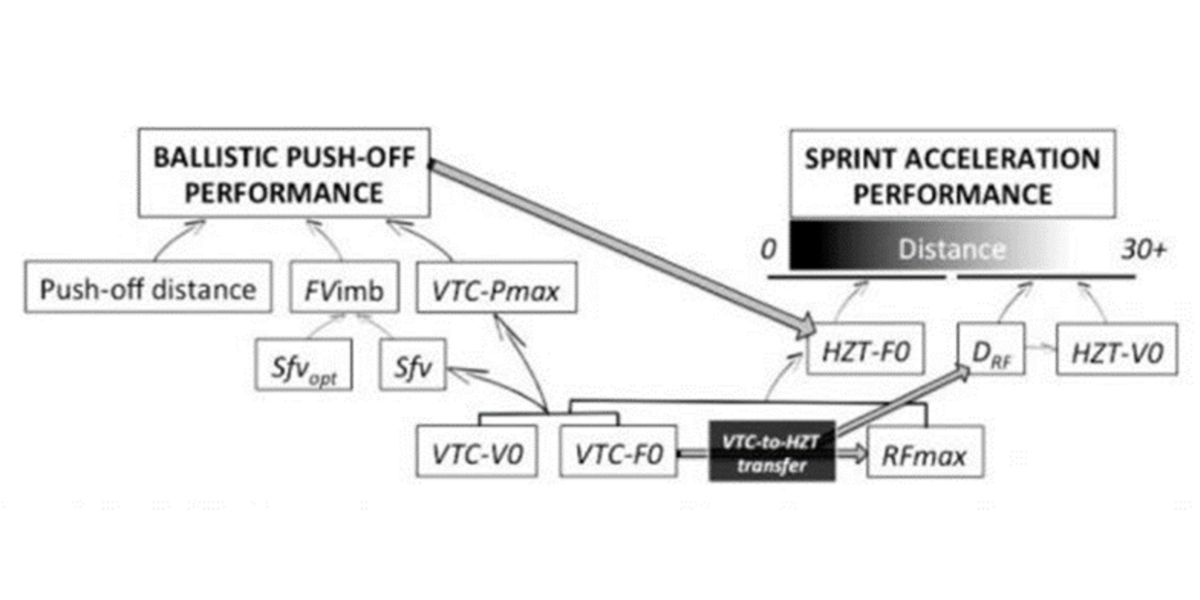
Figure 2. Decision tree to interpret the strength-power-velocity profile (Morín and Samozino, 2016).
Maximizing force production is defined by:
- correct determination of the strength-velocity profile; and
- optimization of its variables.
This methodology is effective for increasing power production capacity (Cross et al. 2017).
Basic Assumptions in Strength Programming
The basic assumptions of the adaptation process and training applicable to sports practice (González-Badillo and Ribas-Serna, 2002) are a series of essential elements during sports training.
| Genetic Adaptation Potential (GAP) | The subject’s possibilities in a specific sport or in developing a physical capacity. |
| Maximum Performance Capacity (MPC) | The best result or mark achieved by the subject (1RM). |
| Current Performance Capacity (CPC) | The percentage of MPC reached at a specific moment or day. |
| Adaptation Deficit (AD) | The difference between MPC and GAP, also called “Total Adaptation Reserve.” |
| Training Demand (TD) | Refers to the load or effort level a training session represents relative to CPC. |
| Current Performance Reserve (CPR) | The percentage of CPC not used in a training session. |
| Immediate Adaptation Reserve (IAR) | Understood as the margin for adaptation improvement or progression possibility an athlete has in a training cycle. |
Bibliographic Sources
- Bompa, T. O. (1995). Periodization of Strength. Argentina: Biosystem Educational Service.
- Weineck, J. (2005). Total Training. Barcelona, Spain: Paidotribo.
- Balsalobre-Fernández, C. and Jiménez-Reyes, P. (2014). Strength Training: new methodological perspectives.
- García, O. (2014). Fundamentals and Methods of Strength Training. (University of Vigo). Faculty of Education and Sport Sciences.
- Peña, G., Heredia, J. R., Aguilera, J., Da Silva, M. E. & Del Rosso, S. (2016). Concurrent Strength and Endurance Training: a Narrative Review – International Institute of Physical Exercise and Health Sciences for Trainers. International Journal of Physical Exercise and Health Science for Trainers, 1(1).
- Docherty, D. & Sporer, B. (2000). A Proposed Model for Examining the Interference Phenomenon between Concurrent Aerobic and Strength Training. Sports Medicine, 30(6), 385-394.
- González-Badillo, J. J. and Ribas-Serna, J. (2002). Bases of Strength Training Programming. INDE: Barcelona.
- Cross, M. R., Brughelli, M., Samozino, P., & Morin, J. B. (2017). Methods of power-force-velocity profiling during sprint running: A narrative review. Sports Medicine, 47(7), 1255-1269.
- Morin, J. B., & Samozino, P. (2016). Interpreting power-force-velocity profiles for individualized and specific training. International Journal of Sports Physiology and Performance, 11(2), 267-272.
Related Posts
- You can check out our strength routine at the following link.
- Wonder why women should train strength? Click here.