Fitness, Nutrition, Health and Sports Blog In the HSNstore Blog you will find tips about Fitness, sport in general, nutrition, and health – HSNstore.com

The Nutrition Guide for Beginners sums up concepts related to nutrition, applying a sports approach, and is offered quickly and concisely for those just starting out in fitness, as well as those who have been at it for a while…
Something that should be included in the gym registration should be a sheet with this info to avoid repeating it and so every user gets useful info 🙂
What’s Your Goal at the Gym?
Honestly, the main reason someone hits the gym is to improve their body composition. Probably, that person has had a sedentary lifestyle so far, little sport in their life, not much different from “soffing” or walking to the store…

So one day they decide to change this lifestyle and sign up at the gym. However, they think that just stepping into the gym will work a miracle. It’s not that simple
Why Start a Life with Healthy Habits?
Fat loss, muscle gain, improving performance… for all that, two things are key: the training goal itself, and of course, your nutrition plan. If you want to hit your goals, you gotta “combine” both.
By doing this, you won’t just reach your goal, but you’ll also improve on other levels:
- Better health, especially hormonally (better insulin response…)
- Improved body composition, and therefore, better self-esteem
- Confidence in yourself, being able to achieve a goal
- Efficiency when buying food, and thus, saving money
- Motivation to learn more and more about nutrition, which adds up to increasing your knowledge
You can become the best example for your family and friends
To start building this new “behavior profile” you need to know about food sources, what macronutrients are, how many calories you need…
Common Diet Mistakes
Among the most common mistakes are listening to a friend, who means well but lacks the right knowledge, or reading tons of posts online, which sometimes aren’t aimed at beginners but at more experienced folks…
- Since I read that to gain mass or volume (meaning muscle, which is what I want…) you have to eat a lot of calories, I just dive in, and since I’m training, of course I’ll burn those calories and won’t gain any fat… Weeks go by and the person starts looking more like a figure from a famous tire brand…
- Since you see your friend or someone they know doing that diet, your logic tells you to do the same, and if you follow the same instructions, soon you’ll look like them or even surpass them… Another little mistake.
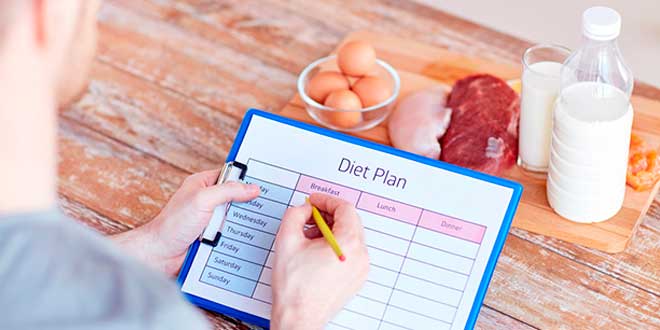
Losing fat is pretty tricky… or maybe not…
Macronutrients: Proteins, Carbs, and Fats
Let’s start with some basics about macronutrients and the amounts you need, the importance of calories in your diet, and how many you need depending on your goal…
I recommend you go step by step, and don’t move on without checking each link.
Basic Nutrition Concepts
Here’s a kind of FAQ on key points collected that can be pretty interesting for anyone wanting to change habits and understand how to do it.
Of course, there are more, but I focused on the basics and simplest stuff. Like I said before, my advice is to get professional help (after reading this post 🙂 ).
What Diet Should I Follow?
Diet is a word I don’t like to use (though I always end up using it), because it sounds strict and not very sustainable. Let’s think differently: how about the way you eat that meets basic nutritional health conditions. So you can erase the idea that diet = strict regimen, and think more like “lifestyle,” meaning your diet is part of your daily habits that are supposed to be healthy, or not?
If I say Paleo diet, Low-Carb,Ketogenic diet, Zone diet, Vegan diet, Intermittent Fasting…, you might think I’m joking… But I’m not. Those names refer to certain eating patterns, each characterized by meeting nutritional bases. Broadly, differences lie in the type and amount of macronutrients, when you eat them, and their source (animal or plant).
There’s no one diet that works 100% for everyone. Interestingly, each person who follows a diet seems to have it work for them… So my advice: get professional help if you’re lost
Personally, if I had to pick one, I’d go with the IIFYM or Flexible Diet. I think it’s a way easier system to handle, without extremes or having to “suffer” in some areas…Losing weight is not losing fat
Often the most common phrase in this topic is: I want to lose weight. But do you know what that really means? If you say lose weight, you don’t care where that “mass” comes from, whether muscle, fat, water, or glycogen. The important thing is the scale number going down… Epic fail! The goal should be different: aim to lose fat and keep muscle.
You know, ditch the scale… no, not really. You can keep it as a reference, but you’ll guide yourself by two “tools”: mirror and clothesTo lose weight I’ll eat less
By simplicity, the thermodynamics law “applies”… But, you also have to consider hormonal effects, that not all calories are equal, and many other factors. At first, it’s easy to lose a good chunk of “weight,” but calorie restriction has an expiration date… If you want to improve your Body Composition, you have to “play” with two variables: your energy balance and the breakdown of macronutrients.
It’s not good to stay on a low-calorie diet for a long time, your metabolism will slow down, hormones will get messed up, you’ll go through hunger and anxiety cycles… That’s not the way. You need to nourish yourself, and if dieting, do it smartly.I want to gain muscle and lose fat
Here’s the deal: doing both at the same time is almost impossible. It’s a calorie thing… If you want to gain weight (muscle volume, which is tough…), you need a calorie surplus, and if you want to lose fat, guess what… reduce calories. It’s so simple it seems not to be. There’s a curious case when someone who’s never really trained starts working out: “noob gains.” Quick body composition changes. But there’s a catch, they don’t last long. Soon you’ll “hit a plateau”…
So if you start from a condition, let’s say, not the best for “gaining muscle,” my advice is to “lower” your fat percentage first…
These gains are just your body adapting: protein synthesis, glycogen storage…, plus another important factor, your genetics- How to calculate calories Calories are the headache for anyone “going on a diet.” It’d be great to eat without doing math… But without experience, the first step is knowing how many calories you need based on your goal. I don’t think it’s wise to leave food amounts up to you at first… (some diets do something similar, as long as you hit the “macro” they say…)I think you need a “getting used to” period to know food amounts and get familiar with portions, and that means knowing calories for sure. Later you can go by “eyeballing” it
I have to eat a lot of protein to build muscle
“…The top macronutrient in fitness is protein…”.
They contain the amino acids that are the building blocks your body uses to rebuild and grow muscle tissue… But it’s not true you need huge amounts. Even if you think you need protein to gain muscle, at first you don’t need that much. The protein function is constructive, but proteins also play key roles in essential physiological processes. Your diet should include all macronutrients: carbs and fats too.
Click below to learn: How much protein do you need?I’m going to consume “Fit” products
This is very common. Going for “light” and low-calorie products with a pink label and big promises… You might get disappointed. It’s better to get the product (food) in its natural state (with properties intact), not processed, and sometimes with no added “extra sugar.” One reason is they can fill you up way less (fat naturally in yogurt VS sad low-fat yogurt…).
Try to base your diet on products that have been processed as little as possible…
I suggest easy “ideas” full of flavor, nutrition, and satiety from Snacks and Dinners, as long as you adjust amounts to your needs…I’ve been told not to eat Carbs after lunch
And the cutoff is 6 pm. This argument might have some validity when linking circadian rhythms and our food intake. But many also believe it because cutting carbs at dinner helps them lose weight. Makes sense, you’re cutting calories…
In my view, it’s better to have meals similar in calories and macros, no matter the time of day. But for athletes with high demands, it might make sense to concentrate most calories (usually carbs) around training, especially post-workout
I throw away the yolk and eat the white
Among nutritional myths is the “poor” egg. Definitely one of the most controversial. Back when doctors recommended max 2-3 eggs a week, forget it… But cereals and other carbs were “free to eat.” Funny how obesity started becoming “trendy” after those recommendations.
However, you don’t always have to throw away the yolk (where the fat and most nutrients are), it’s all about adjusting to your needs
On our blog, we’ve shared plenty of Pancake recipes (oat pancakes), where the main ingredient is oat flour with eggAnd I have to cut it out… Go ahead, do it. But know that not in the short term, but over time, keeping fat intake low can be harmful, especially hormonally. Essential fatty acids, as the name says, have valuable roles in the body, like regulating cholesterol, anti-inflammatory action… I recommend not eating less than 20% of total calories from fats.
When talking about cutting fats, focus on trans fats found in processed foods
I’ve been told I can eat whatever I want once a week
Known as a “Cheat Meal,” but what they might not have told you is it depends, especially on your goals… Being on a diet can be torture for many. The solution isn’t to binge occasionally on whatever you want. That’s not justified. Find a way of eating that doesn’t make you feel like you’re dieting.
The excuse is wrong: what you can do are controlled refeed days, but based on healthy foods, not junk
Skipping the diet, aka cheat day, is mostly an excuse
Related Posts
- Weight Training for Beginners
- Common Beginner Mistakes at the Gym
- Full Body Routine for Beginners
- Supplements for Gym Beginners