 Fitness, Nutrition, Health and Sports Blog In the HSNstore Blog you will find tips about Fitness, sport in general, nutrition, and health – HSNstore.com

- High-intensity interval training, better known as HIIT, has become of particular interest in both performance and fitness training programs.
- Other names concealing different formats: SIT, Sprint Interval Training; RST, Repeated-Sprint Training; AIT, Aerobic Interval Training, among others.
- The main difference between them is the duration and intensity of the intensive work intervals, although there is no universally agreed definition of the term.
- It is a particularly useful method for improving cardiovascular performance as well as body composition and other markers of health in all populations, including those with pathologies.
In this article, we look at the differences between HIIT (High Intensity Interval Training) and SIT (Sprint Interval Training)!
SIT vs HIIT differences table
| SIT | HIIT | |
| Intervals | Very short: 10-30″ | Short-Medium: from 30″ to 2′. |
| Intensity | Maximum: ALL OUT (> 100% FCmax) | Very High Intensity (> 95% FCmax) |
| Work Ratio: Recovery | 5-7 times, working time | 1:1, 1:2, 1:3 |
| Volume | Less than 12 repetitions/session | Between 12-20 repetitions/session (total time of high intensity work over 15-20′). |
| Objective | Development of anaerobic capacity and maximum and neuromuscular power. | Development of maximum oxygen consumption and aerobic power. |
What is SIT or sprint interval training?
Sprint interval training involves intense interval workouts that focus on raising your heart rate very fast and “maxing out” each movement until you feel completely fatigued.
It consists of very short sprints, at maximum intensity, known as “ALL OUT”.

SIT Training Routine
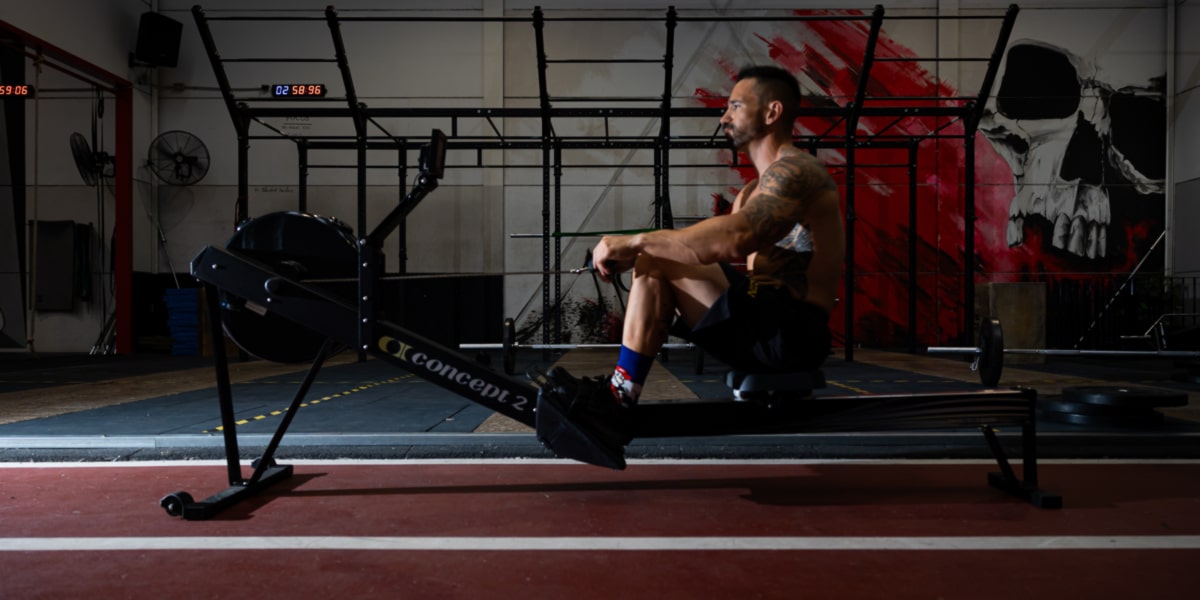
In this case, and by definition, running sprints are performed, but maximum intensity efforts can also be made with the cycle-ergometers (skierg, rowing, assault bike), which will allow reaching that maximum intensity, ALL OUT effort that is more difficult to reach with other types of exercise.
SIT workouts often “amplify” exercises more than HIIT workouts and incorporate movements such as jump squats to ensure maximum effort.
What is HIIT or high intensity interval training?
HIIT workouts typically include short sets of high-intensity, total-body movements, such as burpees, squats and mountain climbers, with short rest periods between each exercise.
It is the methodology of alternating intervals of high-intensity work with intervals of active or passive recovery.
HIIT training routine
Regarding the selection of exercises, it is advisable to use those that mobilise large muscle groups, such as jumps, displacements or the use of cycle-ergometers in order to facilitate reaching a high-intensity of perceived exertion.
The speed of execution can also be a variable that favours an increase in intensity.
Example of an exercise sequence:
- Squat Jumps.
- Push-ups.
- Mountain climbers.
- Sprint.
- Burpees.
- Ski jumps.
- Skierg
- Stationary bike.
- Rowing machine.
Which one is best for me?
The first thing to determine is the starting point in terms of fitness level and initial physical condition, in order to be able to adjust the duration of the intervals and the intensity.
In any case, this type of training is aimed at improving cardiovascular capacity and general fitness, so it is recommended to include at least 1-2 times per week of this type of training.
For those who are just starting out in training, the ideal is to start by doing intervals between 1-2 minutes at a high, but not maximum, intensity, with the same recovery time, in order to adapt to this structure before moving on to SIT, which is higher in intensity.
Regardless of the training method you choose, you will achieve improved metabolic function, improved cardiovascular fitness and overall fitness.
HIIT and SIT benefits
It is necessary to highlight the great benefits we find, based on scientific evidence, about this fractional intensity training structure.
- Improved Cardiovascular Performance (Maximal Oxygen Consumption and anaerobic threshold): It improves performance in many sporting disciplines and, according to studies, is very useful for different types of populations, both athletes and sedentary people (high adherence) or in patients with certain pathologies.
- Improved body composition: due to its efficiency in increasing energy expenditure also post-exercise (EPOC) and stimulating aerobic metabolism.
- Improved cardiovascular endurance: HIIT helps improve aerobic and anaerobic capacity, resulting in increased endurance and the ability to perform high-intensity physical activities.
- Time-saving: Due to the high-intensity and efficiency of the training, benefits can be obtained in a shorter period of time compared to longer duration and lower intensity workouts. But the most interesting thing is that this promotes adherence to exercise and the possibility of quality training in a short period of time.
- Beneficial use in the treatment, control and prevention of certain cardiometabolic pathologies. Scientific evidence in recent years shows improvements in various health markers in subjects with both cardiovascular (heart failure; hypertension; coronary heart disease) and metabolic (type II diabetes; obesity; metabolic syndrome) pathologies.
Supplements for high-intensity training
We recommend the following products in your arsenal to get the most out of this type of training and optimise recovery:
Related Entries
- Tips for training in short time.
- What is the Best Fat-Burning Workout?
- Burpees Types.
- HICT: High Intensity Circuit Training.