 Fitness, Nutrition, Health and Sports Blog In the HSNstore Blog you will find tips about Fitness, sport in general, nutrition, and health – HSNstore.com


Today we’re diving into why, if you want to optimize hypertrophy, it’s key to train each muscle according to its fiber composition
>How many times have you heard phrases like “my calves don’t grow because of my genetics”? Well, that’s not entirely true… sure, genetics play a big role, but training specificity matters even more.
Muscle group and fiber type
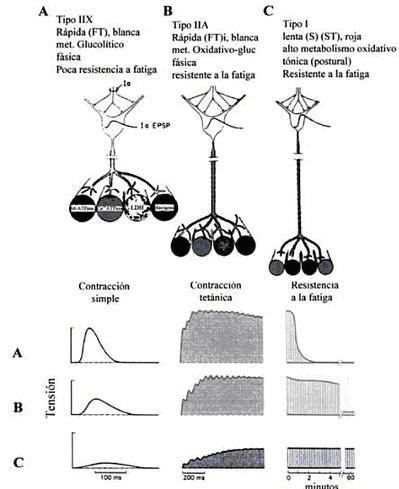
Beyond just liking the activity or health reasons—which should be the main drivers for working out—if you want muscle gains, you’ve got to consider the fiber type that dominates each muscle (check out the fiber types overview of fiber types in the human body).
Not all muscles respond the same way to a training style or rep range. For example, training movements that mainly target calves isn’t the same as training traps.
Here’s the percentage of fibers that dominate the main muscles worked in strength training.
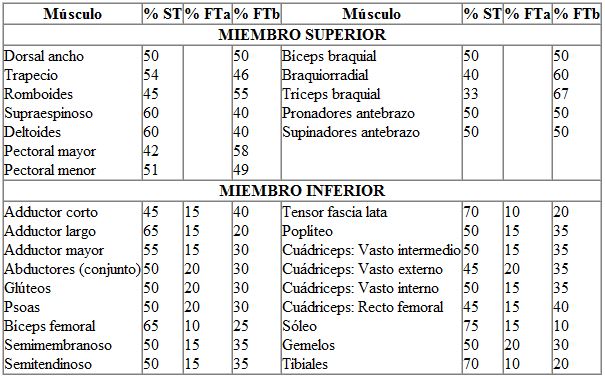
- ST = Slow-twitch fibers (type I)
- FTa = Fast oxidative-glycolytic fibers (type IIa)
- FTb = Fast glycolytic fibers (type IIb)
How to train each muscle or fiber type?
- Muscles with ST fiber dominance will respond better to slower reps (e.g., 3 seconds eccentric + 2 seconds concentric + 1 second pause). They also do better with higher rep counts.
- Muscles with FTa fiber dominance will respond better to medium-high tempo reps (e.g., 3 seconds eccentric + 1.5 seconds concentric + 0.5 seconds pause). They also do better with moderate rep ranges.
- Muscles with FTb fiber dominance will respond better to explosive reps (e.g., 3 seconds eccentric + 1 second concentric + 0 seconds pause). They also do better with lower rep counts.
If a muscle has a balanced mix of ST and FT fibers, it’ll respond similarly to both types of training. But remember, FT fibers have a larger cross-sectional area than ST fibers, so if you want to build muscle mass, you should focus on rep ranges closer to FTb.
Sources
- Benito, P. J. Basic concepts of resistance training: from bodybuilding to wellness. Editorial Kinesis, Colombia (2008).
- Mishchenko VS, Monogarov VD. Physiology of the athlete: scientific bases of preparation, fatigue, and recovery of functional systems in high-level athletes. Editorial Paidotribo, Barcelona (1995).
- Bosco, C. Muscle strength: methodological aspects. Volume 307 of Sports Performance. INDE, 2000
Related posts