Fitness, Nutrition, Health and Sports Blog In the HSNstore Blog you will find tips about Fitness, sport in general, nutrition, and health – HSNstore.com

Have you ever tried to lose weight and failed? What if I told you that there is a scientific explanation for the rebound you experience after a period of restrictive dieting?
The one responsible for the miracle diets that make you lose 5, 10 or 50kg but make you fail in the end, as you regain and often even exceed your initial fat percentage, has a name:
It’s called the proteinstats.
What are proteinstats and how do they work?
This concept refers to our body telling us how much muscle mass is normal for us to have because of our genes and lifestyle.
And if this is compromised, it complains and forces a return to a normal state.
Somewhat like a thermostat is used to keep the temperature of the house in a normal range.
Here is an example:
- Let’s say you are a 50-year-old woman who does not exercise and follows a normal diet with an overweight physical condition, classic Western, but not obese.
- In March you think about losing some fat because it’s getting warmer and as well as wanting to be in good health, you also want to look great on the beach.
- You search on the internet and instead of finding the HSN Blog with quality information, you find the salad diet website, which promises you to lose a huge amount of fat in a short time. Let’s go for it!
The amount of weight you will lose over weeks of maintaining an extensive physical exercise protocol (often walking for several hours a day) and a restrictive diet (whether it’s the cucumber diet, the Atkins diet, the Zone diet, or whatever name they come up with for a new eating pattern that cuts out fat, sugar or X food), will be significant, however…
What happens then?
Who is to blame for this?
It is the misinformation that made us follow an inadequate diet and training protocol, however it is the proteinstats that have been responsible for making this rebound a reality.
Given that a very restrictive diet associated with a low protein intake, together with training without intensity, but with a high energy expenditure, produces a great loss of muscle mass;
Proteinstats are activated!!
You go back to eating like you used to and you don’t work out.
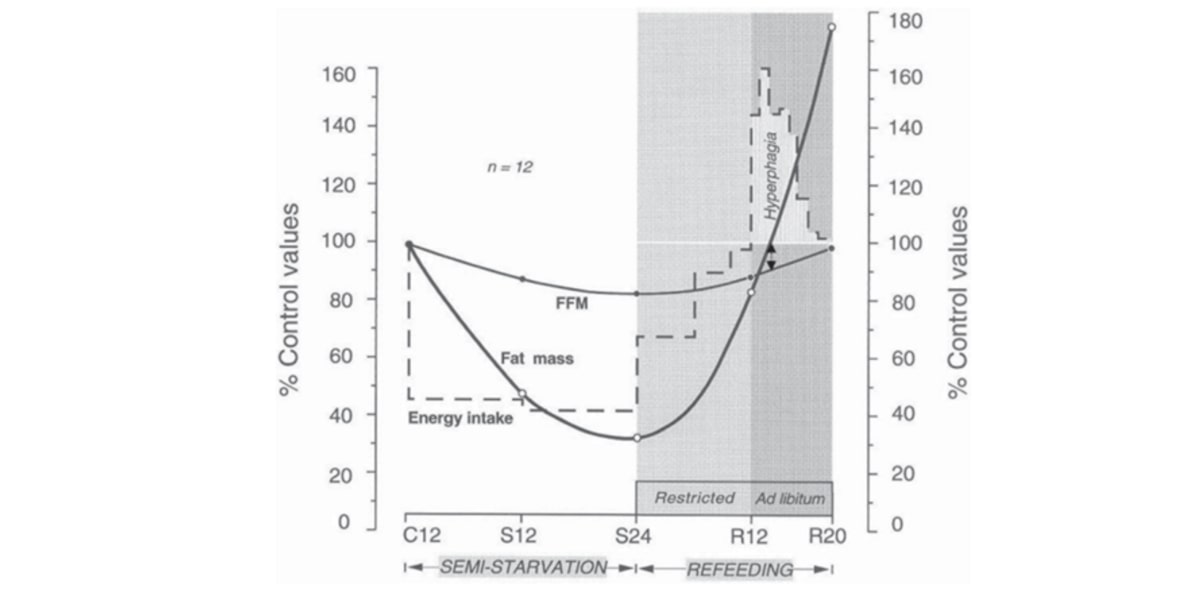
And when the diet is over or you reach your goal, it’s time to act, and a series of mechanisms are triggered that contribute to you developing hyperphagic behaviour. In other words, what we know as “I devour everything”, because your body wants to recover the muscle mass you have lost:
Recovering muscle mass is a slow process… And even more so if you don’t work out…
And while it is possible, it is generated through hypercaloric intake sustained over time.
Since muscle mass is hard to regain, while fat comes back easily, by the time we have regained our pre-diet state (i.e. 20% of the muscle mass we lost), we have regained 60% of the fat we lost and also, as a bonus we have gained 40% more fat than we had initially.
Unbelievable, isn’t it?
Tips for keeping the proteinstats in balance
Calm down, reading this scares anyone, so… Do I have to be on a diet for the rest of my life? Of course not.
You have to make a smart diet, and improve your eating habits, in general.
- Strength training: it is essential to maintain a good muscle metabolism and promotes that you do not lose muscle mass during a process of dietary restriction.

Many people believe that weight training is not for them (“…How can I do weights when I’m 50 years old? Walking is enough…”).
This is a huge mistake.
- Eat satiating foods: foods that are nutritionally rich (but not calorie-dense): Fruits, vegetables, nuts, whole grains, legumes…
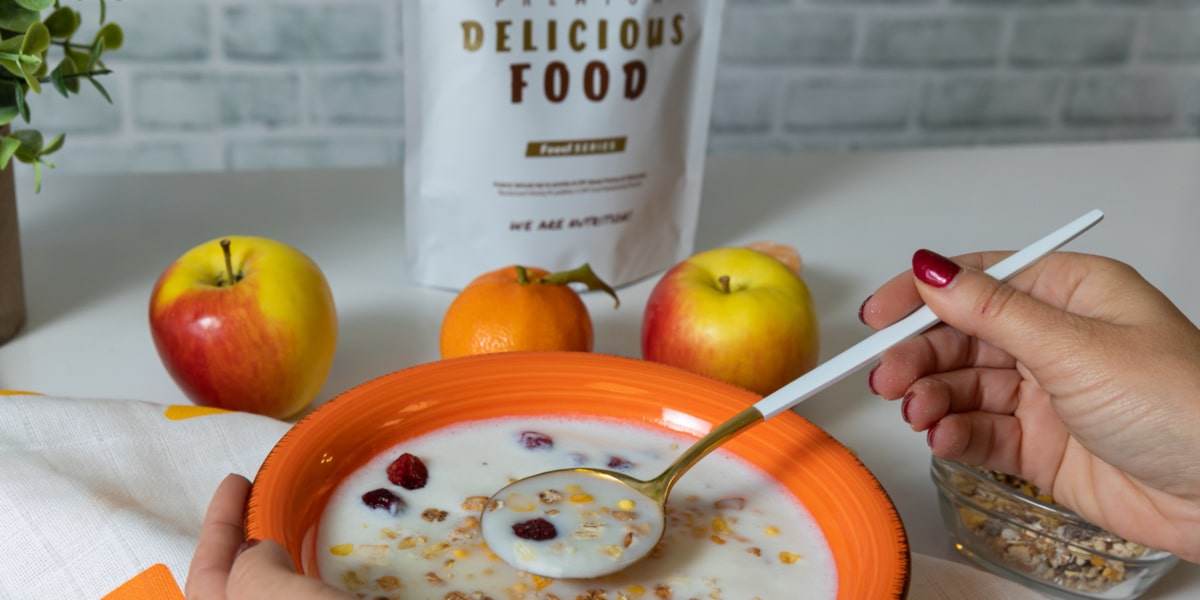
Restrictive diets are never a really good option for maintaining an adequate weight, because although they cause great weight loss, they are not sustainable in the long term.
- Intermittent fasting: this can have a positive effect on appetite control, especially if you are physically and mentally active during your fasting period.
- No food is consumed for 16 hours during the day;
- During the following 8 hours the food is concentrated in 2 meals.
- Increasing protein intake: this is one of the most important keys, along with strength training.

Evopro by SportSeries is a versatile protein, denser than regular whey and with a wide and delicious range of flavours.
Muscle mass is strictly dependent on protein metabolism insofar as protein is the main structural component of muscle mass. Therefore, protein intake must be sufficient during a period of weight loss in order to allow your body to maintain your muscle mass as much as possible.
HSN protein supplements you may be interested in
Protein is not a supplement as such, as it does not complement the intake of anything.
However, this is entirely possible, since:
- Protein powder is highly satiating, especially when the type of protein consumed has organoleptic properties that make it denser, such as casein.
- Protein powder has flavours that are not normally found in weight loss diets. How many custards have you eaten on the chicken diet? Well, with protein powder you can enjoy this flavour in a healthy way.
- Protein powder is a much lower calorie option when it comes to providing protein-rich, low-fat foods than other common options such as many meats and fish.
- You can find an extensive catalogue of proteins at HSN: https://www.hsnstore.eu/sports-nutrition/proteins .
Try them out and keep your proteinstats in tune!
Bibliographical references
- Machado, A. M., Guimarães, N. S., Bocardi, V. B., da Silva, T. P. R., Carmo, A. S. do, Menezes, M. C. de, & Duarte, C. K. (2022). Understanding weight regain after a nutritional weight loss intervention: Systematic review and meta-analysis. Clinical Nutrition ESPEN, 49, 138–153.
- Brocchi, A., Rebelos, E., Dardano, A., Mantuano, M., & Daniele, G. (2022). Effects of Intermittent Fasting on Brain Metabolism. Nutrients, 14(6).
- Joanisse, S., Lim, C., McKendry, J., Mcleod, J. C., Stokes, T., & Phillips, S. M. (2020). Recent advances in understanding resistance exercise training-induced skeletal muscle hypertrophy in humans. F1000Research, 9(141).
- Cannon, B., & Nedergaard, J. (2009). Thermogenesis challenges the adipostat hypothesis for body-weight control. Proceedings of the Nutrition Society, 68(4), 401–407.
- Dulloo, A. G., Jacquet, J., Montani, J. P., & Schutz, Y. (2015). How dieting makes the lean fatter: From a perspective of body composition autoregulation through adipostats and proteinstats awaiting discovery. Obesity Reviews, 16(S1), 25–35.
Related Entries
- How to avoid the rebound effect? We tell you in this post.
- What they never told you about protein shakes: read article.