 Fitness, Nutrition, Health and Sports Blog In the HSNstore Blog you will find tips about Fitness, sport in general, nutrition, and health – HSNstore.com

- The main causes of the rebound effect are loss of muscle mass and associated metabolic changes, changes in the hormones that regulate appetite, the nutritional approach used and a return to previous lifestyle habits.
- To avoid the rebound effect, it is important to increase energy flow and energy expenditure through physical activity and exercise, and to perform strength exercises to maintain or increase muscle mass.
- Changes in lifestyle habits are necessary to maintain a healthy lifestyle and prevent weight regain.
- There is no perfect diet to prevent the rebound effect, but it has been shown that a low-fat diet can be more effective in preventing weight regain than a low-carbohydrate diet.
Losing weight is a common goal for many people, but maintaining that weight loss over the long term is a much more difficult task. This is the problem of the rebound effect, also known as weight regain.
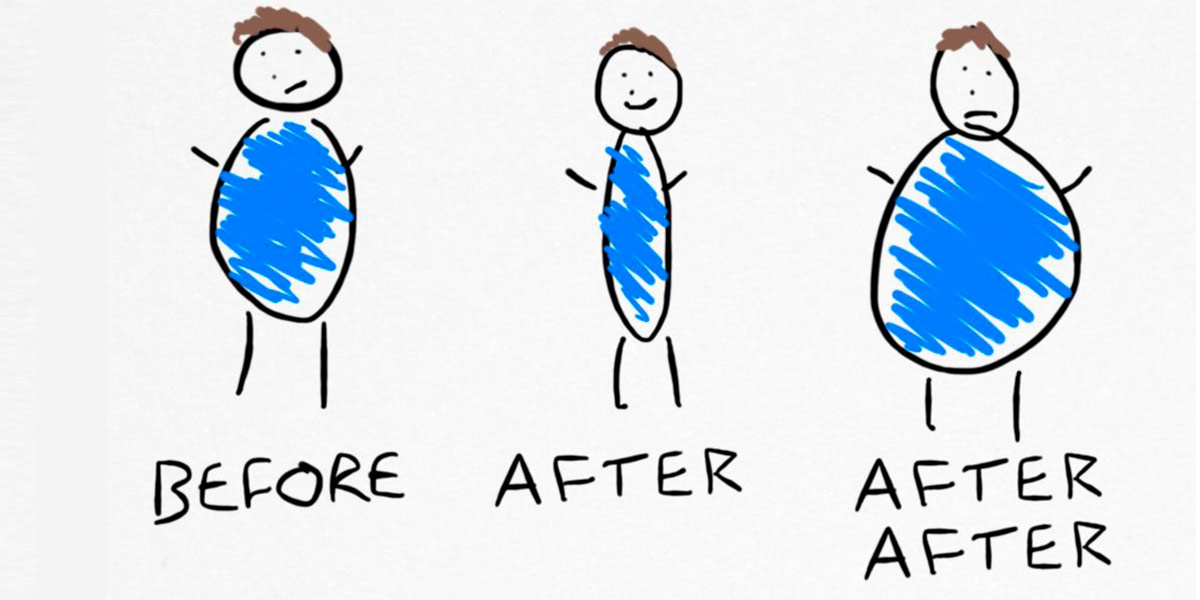
After losing weight, many people find it difficult to keep it off and eventually regain the lost weight. Why does this happen and how can it be avoided?
Most important causes
There are many, some preventable and some not so much. Let’s take a look at the 5 most important ones.
1. Muscle mass loss and associated metabolic changes
In all weight loss, a portion is fat-free mass, i.e. muscle and bone. About a quarter of the weight lost is fat-free mass, which can have an impact on the body’s daily energy expenditure.
Muscle is one of the most energy-consuming tissues, so it is important to minimise the loss of muscle mass during fat loss in order to maintain the body’s functionality and physical activity.
2. Physiological changes in hormones regulating hunger-satiety processes
The control of food intake is regulated by signals in the arcuate nucleus, cerebral cortex and limbic system. There are anorectic and orexigenic peptides that affect appetite.
After significant weight loss, anorexigenic hormones decline while orexigenic hormones increase, which can make it difficult to maintain the lost weight.
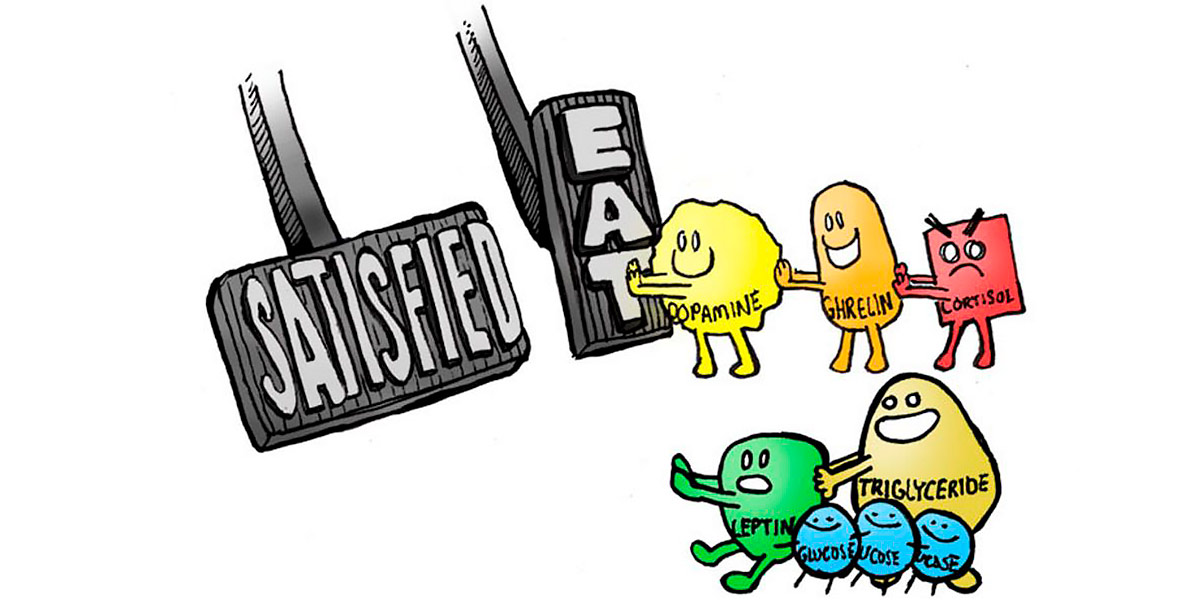
Complicated, isn’t it? If you want to know how these hormones work, click here.
3. Nutritional approach used
There is no strong evidence that a low-carbohydrate diet is better in the long term for maintaining weight loss, but there are studies that show the opposite.
In a JAMA study, most subjects lost 10-15% of their body weight after following a low-fat or low-carbohydrate diet for 4 weeks.
Interestingly, total energy expenditure and resting energy expenditure decreased more in the low-fat group than in the low-carbohydrate group, suggesting that a low-fat diet may be more effective in preventing weight regain.
4. Back to previous lifestyle habits
Along with biological and physiological factors, other behavioural and environmental factors are important in weight loss. It is essential to have a change in habits for a targeted weight loss intervention to be successful.

If new habits are not acquired after dieting, intermittent fasting or intense exercise, the effort may be in vain.
5. Non-dietary factors
Chronic stress and lack of sleep can cause weight gain and may contribute to the rebound effect after weight loss. Some physiological factors can further drive weight gain, which may result in even greater weight gain than before the initial weight loss.
How to avoid the rebound effect
Now that you know what can cause the rebound effect, we provide you with these tools so that, if you have recently lost weight, you can implement them in your daily life and avoid regaining the weight you have lost. Here are these 6 tips:
1. Increase energy flow
The concept of “energy flow” refers to the movement of calories ingested and expended in the body. Total daily energy expenditure is divided into four factors: GER, NEAT, PEE and thermogenesis. When a lot of weight is lost, GER often decreases, which makes it difficult to maintain the lost weight in the long term, especially if caloric intake does not decrease adequately.

Increasing energy expenditure through physical activity and exercise is an effective solution for maintaining a healthy weight in the long term.
2. Strength exercises
Strength training is beneficial for maintaining lost weight by increasing or maintaining muscle mass and contributing to resting energy expenditure.
It improves insulin sensitivity and regulates appetite.
If you want to get started with strength training, there is some useful information on our blog to help you get started.
3. Include satiating foods
Making good food choices can make it easier to keep the weight off.
It is difficult to eat 3000 calories from healthy foods such as boiled potatoes, green leafy vegetables, meat, fish, eggs, pulses or rye bread, while it is easy to consume 3000 calories in the form of unhealthy foods such as fudge, pizza and bacon sandwiches.
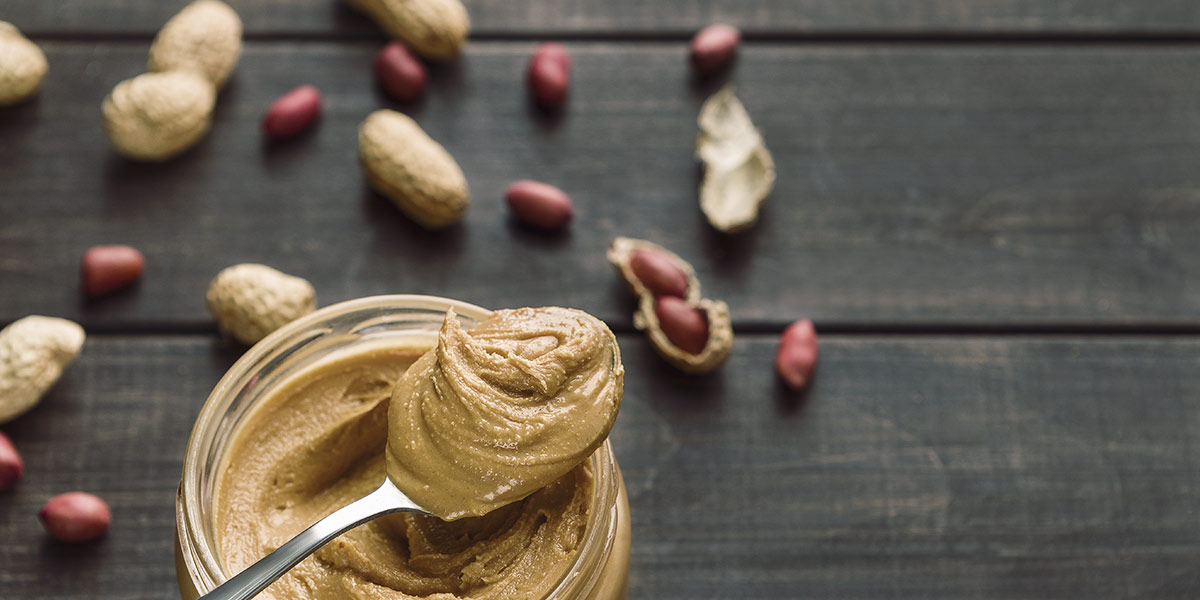
Therefore, food choices are essential to maintain a healthy weight.
4. Increase the intensity of training
Increasing the intensity of training has a time-limited anorectic effect, but it also increases the EPOC effect or excess post-exercise oxygen consumption, which means that there is an increase in energy expenditure for several hours after exercise.
This helps to ensure that energy intake does not exceed expenditure in the long term.
5. Consume more protein
Protein is an important ally in combating hunger and maintaining weight loss. Losing control over what you eat can affect your energy balance for a whole week, so it is important to increase the amount of protein in your diet and eat it at every meal to improve satiety and control over your eating.
6. Intermittent fasting
Intermittent fasting can help in maintaining lost weight if it fits into your lifestyle. Eating a large number of calories in a few meals based on real, quality food can be more difficult than in several meals.
7. Take weight control supplements
Taking weight control supplements can be an effective strategy for achieving your weight management goals and improving your overall health.
Conclusions
The environment in which we live is one of the most powerful factors in preventing weight regain.
If we live in an obesogenic environment, the best thing to do is to get away from it.
To maintain the lost weight, it is necessary to exercise and increase the intensity of training, as well as to make a good choice of satiating foods with more fibre and protein.
It is also important to take care of mental health, as obesity is a chronic problem that lasts for many years if not treated properly.
Bibliographic sources
- Wing RR, Hill JO. Successful weight loss maintenance. Annu Rev Nutr. 2001.
- MacLean PS, Bergouignan A, Cornier MA, Jackman MR. Biology’s response to dieting: The impetus for weight regain. American Journal of Physiology – Regulatory Integrative and Comparative Physiology. 2011.
- Ebbeling CB, Swain JF, Feldman H a, Wong WW, Hachey DL, Garcia-Lago E, et al. Effects of dietary composition on energy expenditure during weight-loss maintenance. JAMA [Internet]. 2012;307(24):2627–34.
- Greenway FL. Physiological adaptations to weight loss and factors favouring weight regain. International Journal of Obesity. 2015.
Related Entries
- Living in an obesogenic environment can condition our habits. Read more
- Can you burn the same fat on a high-fat or high-carbohydrate diet? If you want to know the answer, click here