 Fitness, Nutrition, Health and Sports Blog In the HSNstore Blog you will find tips about Fitness, sport in general, nutrition, and health – HSNstore.com
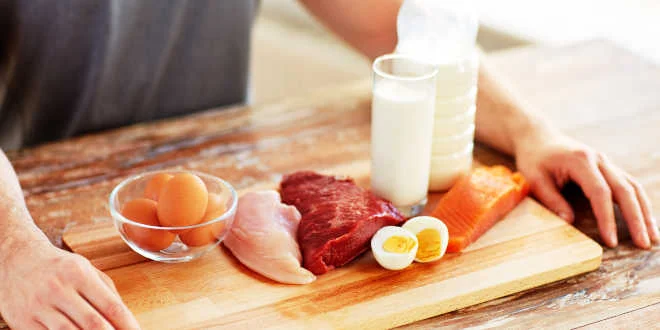

Protein intake has become one of the most influential factors for the scientific community when we talk about body composition
Greater muscle mass during a low-calorie diet (1) or a reduction in appetite (2) (and therefore calories consumed) are some of the positive effects shown by increasing protein intake in the diet.
Still, the topic of proteins is very broad and debated, raising questions like:
- How many grams of protein is optimal,
- What type of protein we should consume and, the one that creates the most disagreement,
- How to split protein intake across different meals.
The myth of absorbing 30g per meal
As many of you know, the protein we eat through food is digested in our digestive tract, resulting in amino acids or di- and tripeptides (bonds of two or three amino acids).
If you remember my article about peptides, I mentioned that hydrolyzed protein intake has a faster absorption rate than other proteins since di- and tripeptides are absorbed through a different type of receptor (specifically via PEPT1) (3), avoiding saturation of the common sodium-dependent receptors.
Obviously, gastric emptying has a big impact on the absorption speed of different amino acids
This phenomenon has made many obsess over finding the fastest way to take their post-workout shake, a topic I recently covered.
Nutrient absorption
Nutrient absorption by our body is a very efficient process
We’re talking about absorption close to 95% (6), with the remaining 5% usually used by our bacterial flora or expelled with the feces.
A clear example is seen when comparing the effects of eating one meal a day versus 3 (4).
Amino acid absorption
In the case of amino acids, a large part is retained (around 30-50%), with preference for two amino acids in particular: Glutamine and Aspartate (the form in which aspartic acid can be found).
When our body doesn’t get proteins or glucose intake is very low, our intestinal cells start releasing amino acids to be used (5), preventing the need to break down muscle mass.
Relax, losing muscle is harder than you think…
As I mentioned above, our body is one of the smartest machines out there, and the intestine is no exception.
When protein intake is very high, amino acid absorption is limited (due to saturation in transport into cells), increasing the amount of amino acids flowing into the colon.
As you can guess, reducing protein intake to one meal isn’t ideal for people with damaged intestinal mucosa, as it will make proper amino acid absorption harder.

Diagram of the amino acid “pool” at the intestinal level
Protein utilization
Having covered absorption, now comes utilization (which is why I stressed the difference earlier). Amino acid utilization depends largely on two factors:
- The protein quality
- The type of protein (fast VS slow)
Protein quality
In the first case, protein quality will determine the greater or lesser retention of amino acids at the intestinal level, with a classic example being the comparison between soy VS casein or Whey Protein – The Whole Truth About Whey Protein.
When comparing both proteins, soy protein is converted into urea, while casein tends to increase protein synthesis, reducing urea production (9).
Although both proteins reduce protein breakdown (commonly known as catabolism), the biological value of the protein will determine the greater or lesser protein synthesis at the muscle (and systemic) level, with proteins like WHEY being superior to plant-based ones like soy.
Type of protein
In the second case, the speed of the protein also influences amino acid utilization. As most of you know, WHEY protein is a fast protein, so it spikes amino acid levels in the bloodstream, unlike a slow protein like casein, which releases amino acids much more gradually.
So, if someone consumes little protein, casein will be better for them by maintaining a positive nitrogen balance for longer hours (10), as shown in the image below.

Casein keeps leucine levels up longer. Chart adapted by S.Espinar from Boirie et al.
However, we have to be aware that nobody eats just one meal a day (except some who practice intermittent fasting), so this isn’t a real situation.
Conclusions
In summary, most experts agree that the higher the presence of amino acids in the blood, the greater the muscle protein synthesis and, therefore, the greater the muscle mass gained
Which is partly true:
- It’s true that amino acid presence at the muscle level is a key factor for muscle growth, but it’s not the most important
- What some studies (11) show is that the amount of intracellular amino acids has no relation to greater protein synthesis (yes, you read that right) because they saturate easily
Origin of the Myth
The amount at which this “anabolic environment” is maximized is approximately 30g
That’s why it’s confused with absorption and has given rise to the myth that we can only absorb 30g of protein per meal, something disproved by this article.
In fact, putting most protein in one meal can be an option for older people, since it’s been observed that consuming 80% of protein in one meal improves muscle mass (12).
This should not be extrapolated to healthy or athletic populations, hence my recommendation to split protein intake into at least 3 meals (for convenience), possibly increasing it for satiety reasons (don’t forget protein is the most satiating macronutrient).
Cheers!
Sources
- Effects of high-protein diets on fat-free mass and muscle protein synthesis following weight loss: a randomized controlled trial. Pasiakos SM
- A high-protein diet induces sustained reductions in appetite, ad libitum caloric intake, and body weight despite compensatory changes in diurnal plasma leptin and ghrelin concentrations. David S Weigle
- PEPT1-mediated uptake of dipeptides enhances the intestinal absorption of amino acids via transport system b. Wenzel U1, Meissner B, Döring F, Daniel H.
- Impact of Reduced Meal Frequency Without Caloric Restriction on Glucose Regulation in Healthy, Normal Weight Middle-Aged Men and Women. Olga Carlson, Bronwen Martin, Kim S. Stote, Erin Golden.
- Effect of physical activity and fasting on gut and liver proteolysis in the dog. Halseth AE1, Flakoll PJ, Reed EK, Messina AB, Krishna MG, Lacy DB, Williams PE, Wasserman DH.
- Increased intestinal amino-acid retention from the addition of carbohydrates to a meal. Deutz NE1, Ten Have GA, Soeters PB, Moughan PJ.
- Absorption Kinetics of Amino Acids, Peptides, and Intact Proteins. Gabriella A.M. Ten Have, Marielle P. K.J. Engelen,Yvette C. Luiking, and Nicolaas E.P. Deutz
- The protein sparing function of the gut and the quality of food protein. P. B. SOETERS
- Casein and soy protein meals differentially affect whole-body and splanchnic protein metabolism in healthy humans. Luiking YC1, Deutz NE, Jäkel M, Soeters PB.
- Slow and fast dietary proteins differently modulate postprandial protein accretion. Boirie Y1, Dangin M, Gachon P, Vasson MP, Maubois JL, Beaufrère B.
- Human muscle protein synthesis is modulated by extracellular, not intramuscular amino acid availability. Bohe J, Bajo A , Wolfe RR , Rennie MJ .
- Impact of protein pulse feeding on lean mass in malnourished and at-risk hospitalized elderly patients: a randomized controlled trial. Bouillanne O1, Curis E, Hamon-Vilcot B, Nicolis I, Chrétien P, Schauer N, Vincent JP, Cynober L, Aussel C.
Related Posts
- What’s the Best Protein?
- How Much Protein to Take for Strength and Endurance Training?
- Whey Protein – The Whole Truth About Whey Protein
- Explore the Key Phases of Protein Synthesis.