 Fitness, Nutrition, Health and Sports Blog In the HSNstore Blog you will find tips about Fitness, sport in general, nutrition, and health – HSNstore.com

When we talk about health problems, it’s easy to spot the ones that dominate today’s society, since we see them everywhere in the media: obesity, hypertension, diabetes, or the well-known cholesterol, are some of the conditions that pop up in every dinner conversation because everyone has a family member dealing with them.
Digging a bit deeper into all these issues, we could say they share a common factor, which is always involved to some degree. That factor is none other than insulin.
How to Boost Insulin Sensitivity
This hormone is released by the pancreas in response to certain foods entering our body, or in other words, you could say insulin signals the body that nutrients are available.
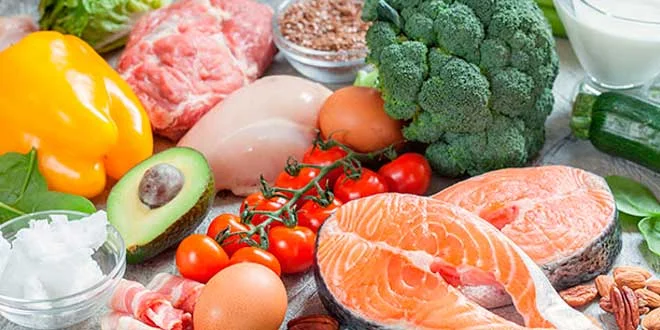
Lower insulin stimulation will improve our sensitivity to this hormone. To keep insulin from spiking, our diet should be low in carbs and higher in fats.
How Insulin Works
When we follow diets high in high glycemic index carbohydrates, insulin is constantly stimulated by glucose entering our system.
Once secreted into the bloodstream, tissues properly absorb these nutrients so they don’t linger too long in the blood, which is known as “having good insulin sensitivity”.
Disease Indicator
When we check blood tests, some people show glucose levels above normal. This could be due to a disease affecting the pancreas’s ability to release hormones (Type I Diabetes), or it could be because insulin isn’t effective.
In this case, the pancreas has to release more insulin to get glucose into cells. If this goes on chronically, the pancreas “wears out,” leading to Type II diabetes.

If diets are more moderate in carbs and higher in fats, insulin isn’t as heavily called upon, so its sensitivity and effectiveness improve.
Insulin Resistance
Obesity means storing fat in our adipose tissue, and this buildup is largely because our insulin isn’t working properly, blocking nutrients from reaching peripheral tissues like muscle or liver.
People with insulin resistance usually also suffer from obesity and as a result, hypertension.
Let’s see what some scientific studies say about insulin:
High-Carb Diet VS High-Fat Diet
Study I
A study published by the New England Journal of Medicine applied a high-carb diet and a high-fat diet, mainly monounsaturated fats, to 10 randomly selected patients on insulin therapy.
The group on the high-fat diet (50% fat and 35% carbs) lowered their blood glucose levels, reduced insulin requirements, triglycerides, and low-density lipoproteins (LDL), while increasing high-density lipoproteins (HDL).
Study II
The Journal of the American Medical Association published another study in 1994 where one group followed a high-carb diet (55% carbs and 30% fat) and another a high-fat diet (40% carbs and 40% fat). Both groups had non-insulin-dependent diabetes mellitus.

High-Fiber, Low-Carb Diet
Another study with healthy young adults aged 21 to 28 showed that a high-fiber, low-carb diet improved carbohydrate metabolism by increasing insulin sensitivity.
Alkaline Diet
Still, some studies propose more traditional diets to reduce obesity and improve health, like one published by the Cuban Journal of Biomedical Research. This 2007 study applied a Ma-Pi 2 macrobiotic vegetarian diet to improve physical and health status in 25 adults with type II diabetes.

The results were positive, showing reductions in waist circumference, glucose levels, total cholesterol, triglycerides, etc.
Conclusions
As we’ve seen from these articles, it’s been proven for over 20 years that diets high in fats and low in carbs offer greater health benefits.
Frequent insulin stimulation is what causes this resistance.
So, if we want to keep insulin working well and effective, we should keep it minimally involved in metabolic processes and maintain it at low levels, so when we really need it, it can perform at 100%.

Usually, it’s believed that to lose body fat, we must avoid insulin at all costs.
Personally, I think these articles show our body behaves differently. Our body uses as energy the substrates most abundant in our diet.
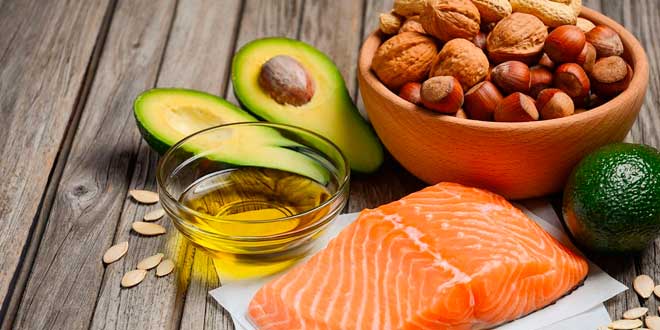
If we provide fats, insulin levels stay low, so our body will largely ignore carbs and use fatty acids as energy. Obviously, the source of these fatty acids matters a lot, since unlike most carbs, fat metabolism varies by saturation level, which is why monounsaturated fats are especially recommended.
Sources
- A. Garg, A. Bonanome, S.M Grundy, Z.J. Zhang, R.H. Unger. Comparison of a High-Carbohydrate Diet with a High-Monounsaturated-Fat Diet in Patients with Non-Insulin-Dependent Diabetes Mellitus. The New England Journal of Medicine. September 29, 1988; 319:829-834.
- A. Garg, J.P. Bantle, R. Henry, A.M. Coulston, K.A. Griver, S.K. Raatz, L. Brinkley, Y.I. Chen, S.M. Grundy, B.A. Huet and G.M. Reaven. Effects of Varying Carbohydrate Content of Diet in Patients With Non—Insulin-Dependent Diabetes Mellitus. The Journal of American Medical Association. May 11, 1994, Vol 271, No. 18
- C. Porrata, A. Abuín, A. Morales, R. Vilá, M. Hernández, J. Menéndez, M. E. Díaz, M. Mirabal and M. Pianesi. Therapeutic effect of the Ma-Pi 2 macrobiotic diet in 25 adults with type 2 diabetes mellitus. Cuban Journal of Biomedical Research. Jun 2007. Vol. 26, No. 2
- J.W. Farquhar, A. Frank, R.C. Bruto, and G.M. Reaven. Glucose, insulin, and triglyceride responses to high and low carbohydrate diets in man. The Journal of Clinical Investigation. Oct. 1966; 45(10): 1648–1656.
- M. Parillo, A.A Rivellese, A.V Ciardullo, B. Capaldo, A. Giacco, S. Genovese, G. Riccardi. A high-monounsaturated-fat/low-carbohydrate diet improves peripheral insulin sensitivity in non-insulin-dependent diabetic patients. Institute of Internal Medicine and Metabolic Diseases, University “Federico II,” Naples, Italy. December 1992. Vol. 41, No. 12, pp. 1373-1378
- N.K. Fukagawa, J.W. Anderson, G. Hageman, V.R. Young, and K.L. Minaker. High-carbohydrate, high-fiber diets increase peripheral insulin sensitivity in healthy young and old adults. The American Journal of Clinical Nutrition.
Related Posts
- Insulin and Obesity
- Insulin Resistance and Whey