 Fitness, Nutrition, Health and Sports Blog In the HSNstore Blog you will find tips about Fitness, sport in general, nutrition, and health – HSNstore.com

- Protein synthesis is a process by which new proteins are assimilated and produced in the body.
- The resulting proteins are essential for achieving training goals and maintaining a balanced diet, helping to improve physical performance and overall well-being.
- During the first stage, called transcription, DNA is converted into messenger RNA (mRNA), which carries the instructions for making proteins.
- The second stage takes place in the cell’s cytoplasm, where mRNA guides ribosomes to build proteins from amino acids.
What is protein synthesis?
Protein synthesis is a process by which cells produce new proteins. It happens in two steps: first, DNA is converted into messenger RNA (transcription), and then that messenger RNA directs the construction of the protein (translation).
Stages of protein synthesis
In most respects, the process of protein synthesis in eukaryotic cells follows the same steps as in prokaryotes. However, there are specific differences that need to be highlighted in its two phases: transcription and translation.
Transcription Phase
The first step in protein synthesis is called transcription, where DNA is transcribed into messenger RNA (mRNA). This process is essential for protein production to begin.
During transcription, the instructions encoded in DNA are converted into a sequence of RNA nucleotides. mRNA contains the information necessary for protein synthesis, including the “message” sent by genes to ribosomes.
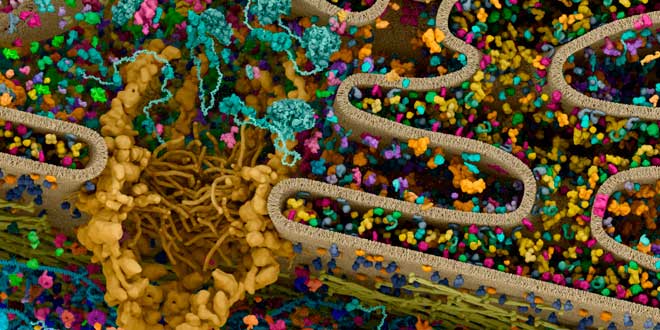
As a result of transcription, most genes are converted into mRNA. However, some genes are transcribed into other types of RNA, such as ribosomal RNA (rRNA) and transfer RNA (tRNA), which are also important for protein synthesis. The importance of these two types of RNA in the process is equal to that of mRNA.
The transcription process is different in prokaryotic cells compared to eukaryotic cells.
The transcription phase in prokaryotic cells is different from that in eukaryotic cells. The first notable difference lies in the fact that the first product of protein synthesis in this type of cell is ‘normal’ mRNA, i.e. mRNA that does not need to undergo any post-transcriptional modification.
In this sense, in eukaryotes the first product is referred to as primary transcription and requires this modification to be carried out.
Translation stage
Protein synthesis is a two-step process, and the second step is called messenger RNA (mRNA) translation. This stage occurs in the cytoplasm, where mRNA copied from DNA binds to ribosomes.
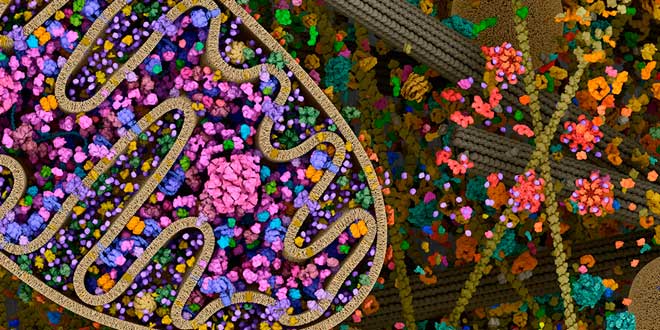
Ribosomes have binding sites that allow the binding of mRNA and tRNA molecules. Each tRNA carries a specific amino acid, determined by its structure. The tail end of the tRNA binds to the amino acid, while the head has an anticodon that recognises the corresponding codon in the mRNA. Thus, the tRNA binds to the mRNA, and all tRNAs with the same anticodon sequence carry the same amino acid, ensuring consistency in protein synthesis.
Termination of translation occurs when the ribosome reaches a termination codon (UAA, UAG or UGA).
In prokaryotic cells, specific release factors (LFs) recognise these codons: FL-1 for UAA and UAG, and FL-2 for UGA and UAA. Upon binding, the nascent protein is released from the ribosome. A third FL, FL-3-GTP, releases FL-1 or FL-2 as GTP, which is converted to GDP. In eukaryotic cells, a single release factor, eFL, recognises all three codons, and a second factor, eFL-3, performs similar functions to FL-3 in prokaryotes.
Cellular machineries involved in the second stage of protein synthesis
The translation process requires the participation of three different types of RNA molecules. Each one has its own function:
- Messenger RNA. The mRNA acts as an intermediary between the DNA of the genetic material and the areas where proteins are produced, i.e., the ribosomes, which are located in the cytoplasm.
- Various ribosomal RNA (rRNA) molecules. They are involved in the formation of different subunits of ribosomes.
- Multiple transcribed RNA (tRNA). Molecules that act with each type of amino acid.
Recommendations to regulate protein synthesis
- Eat a balanced diet rich in high-quality protein, including animal and plant-based sources.
- Exercise regularly, combining endurance training and aerobic activities.
- Eat protein after exercise to promote recovery and protein synthesis in the muscles.
- Get proper rest, as recovery and tissue repair occur mainly during sleep.
- Maintain adequate hydration. Water is essential for metabolic and cellular functions, including protein synthesis.
Conclusions
Protein synthesis is a fundamental process in all living things and is of particular relevance in the field of fitness and nutrition. This cellular process consists of two main stages, transcription and translation.
There are differences in protein synthesis between prokaryotic and eukaryotic cells, but in both cases, it is necessary to understand this process in order to optimise our strategies in terms of nutrition and physical activity.
To optimise protein synthesis, it is recommended to maintain a balanced diet rich in high-quality protein, to exercise regularly, and to consume protein after exercise.
Related Entries
- Learn how the process of transcription starts in protein synthesis.
- Are there differences between animal and plant-based proteins?
- Is it better to take protein or amino acids for sports performance?
- Find out all the functions of proteins.
- Why do you need protein?