 Fitness, Nutrition, Health and Sports Blog In the HSNstore Blog you will find tips about Fitness, sport in general, nutrition, and health – HSNstore.com
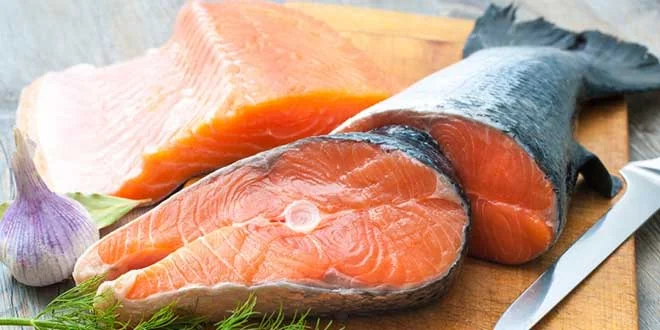

How much protein does fish have? We answer and analyze this fantastic protein source and exceptional nutritional contribution
Fish is an amazing protein source, and it’s exceptional as a nutritional contribution. In fact, oily fish is a source of essential fatty acids Omega 3, with important benefits for our brain, cardiovascular system, and nervous system.
Why eat fish?
Despite its nutritional benefits, fish is still a less consumed protein source than meat or others like eggs or dairy, and it really should be a dish present several times a week in our diet
Fish includes a protein percentage similar to what you’d find in meat like chicken, turkey, or beef, plus essential minerals and vitamins like iodine or vitamin D, which play a key role in maintaining overall health.

So, it’s a food to include in your fitness diet
Types of Fish
There are different types of fish, but basically, we can split them by their fat content, forming two groups:
- Oily Fish (sardines, tuna, swordfish, salmon, herring…)
- White Fish (grouper, hake, cod, sole…)

In oily fish, which is fattier, we mainly find the highest Omega-3 content
As we know, this type of fatty acid is essential, meaning our body can’t synthesize it, and it has a list of highly important properties to guarantee our health.
Fish and Omega-3
Eating fish rich in omega-3 gives us a bunch of health benefits like these:
- Support for maintaining the cardiovascular system, reducing the risk of platelet buildup and blood vessel blockage (thrombosis) due to excess triglycerides, plus regulating cholesterol
- Neurological development
- Cognitive support (reducing depressive symptoms, improving mood…)
- Reducing inflammation (less post-workout pain, pain caused by conditions like arthritis…)
- Support for autoimmune diseases

Let’s analyze how much protein fish has as well as the nutritional info*, selecting some of the most used types or at least, my personal favorites 🙂
How much protein does oily fish have?
A fish serving can range between 150-300g, which would equal 30-60 g of very good quality protein, along with, as we’ve seen, the added value of Omega-3 fatty acids.
Regarding the amino acid breakdown, tuna shows the leanest profile, providing almost 10 g of EAAs or Essential Amino Acids, which is pretty solid.
It also offers, per 100 g serving, more than 4 g of BCAAs and almost 3.5 g of Glutamine, and if we use the typical serving sizes usually consumed in diets, we’d get high amounts of these amino acids, around 6 to 12 g of BCAAs, and about 5 to 10.5 g of Glutamine.
These two amino acid types are considered, within the sports field, especially competition, as key tools to improve muscle recovery and regeneration, plus creating a hormonal environment more favorable for protein synthesis.
So, we’re looking at an incredible contribution, making it a perfect post-workout meal or a delicious and nutritious dinner.
| Per 100g | Salmon | Tuna | Swordfish |
| EAAs (Essential Amino Acids) | 8649mg | 9908mg | 8391mg |
| BCAAs (Branched-Chain Amino Acids) | 3690mg | 4181mg | 3541mg |
| Glutamine | 2830mg | 3489mg | 2956mg |
Amino Acid Table
Oily Fish Nutritional Info
In the next table, we see the Omega-3 content of salmon, one of the best sources of this nutrient. It also has the highest calorie count, although as we see in the fat breakdown, most are unsaturated.
| Per 100g | Salmon | Tuna | Swordfish |
| Calories | 142kcals | 108kcals | 121kcals |
| Proteins | 20g | 23g | 19,8g |
| Carbohydrates | 0g | 0g | 0g |
| Fats | 6,3g | 1g | 4g |
| Saturated | 1g | 0,9g | 1,1g |
| Monounsaturated | 2,1g | 0,2g | 1,5g |
| Polyunsaturated | 2,5g | 0,3g | 0,9g |
| Omega-3 | 2018mg | 243mg | 825mg |
| Omega-6 | 172mg | 8mg | 29mg |
How much protein does white fish have?
Protein-wise, white fish is on the same level as oily fish
The difference lies in a lower calorie count, as it has less fat. Still, we see, for example, tilapia (practically the same as hake), in its EAA content, essential if your goal is to improve body composition, meaning significantly reduce body fat % and maintain muscle mass.
On the other hand, if your goal is to increase lean muscle mass, with about 20% protein per 100 g serving, white fish is a healthy option, plus it has less fat.
| Per 100g | Sole | Tilapia | Cod |
| EAAs (Essential Amino Acids) | 7988mg | 8346mg | 7587mg |
| BCAAs (Branched-Chain Amino Acids) | 3371mg | 3503mg | 3202mg |
| Glutamine | 2813mg | 3213mg | 2672mg |
Amino Acid Table
White Fish Nutritional Info
Looking at the next table, we see the difference in calories and Omega-3 concentration between white and oily fish, especially salmon.
| Per 100g | Sole | Tilapia | Cod |
| Calories | 91kcals | 96kcals | 82kcals |
| Proteins | 18,8g | 20,1g | 17,9g |
| Carbohydrates | 0g | 0g | 0g |
| Fats | 1,2g | 2g | 1g |
| Saturated | 0,3g | 0,8g | 0,1g |
| Monounsaturated | 0,2g | 0,7g | 0,1g |
| Polyunsaturated | 0,3g | 0,5g | 0,2g |
| Omega-3 | 253mg | 220mg | 221mg |
| Omega-6 | 8mg | 210mg | 6mg |
Heavy Metals in Fish
One important point when eating any food is knowing if it contains any contaminants, due to how it’s sourced or, as in this case, farmed.
Fish can contain traces of heavy metals, and that’s something we’ve all heard. But what we didn’t know is that there are ways to avoid this contamination and keep eating fish safely.
This is thanks to the mineral selenium, which tends to bind with mercury or other metals like it, forming a bond or chelation, allowing it to be excreted and not absorbed by the body.
*http://nutritiondata.self.com
Protein Comparison: Fish VS Whey Protein
We often associate certain supplements, like WPI or Whey Protein Isolate, with “not being food,” and maybe that’s a wrong way to think.
WPI is a protein source, just like any other, like fish, but it has a bunch of properties and features that let us get protein in a super convenient way, anytime, anywhere, and under any circumstance.
This would be the case for a post-workout meal or breakfast… To each their own, but personally, I wouldn’t eat fish for breakfast, and I’d probably go for a shake with a handful of nuts or peanut butter on whole grain bread.
Or maybe after a tough leg workout, I wouldn’t feel like eating salmon (and I really like it), and instead, I’d have a cold vanilla shake. Fish is better with a full salad for dinner 😉
So, here’s a comparison, in protein equivalent, of one of the best-selling proteins: Evolate 2.0, alongside one of the fish we analyzed earlier, Tuna. This analysis considers the fish in its natural form, not canned.
To reach this protein value, we consider 100g of fresh tuna, as seen before. Both sources have almost identical calories and protein content, with Omega-3 being the main difference here. Regarding the amino acid profile, Evolate has nearly 12g of EAAs, plus 5.5 g of BCAAs and over 4 g of Glutamine per serving.
Fish Oil Supplements
Obviously, these supplements don’t provide protein (though some are starting to…), but they do give us essential micronutrients, Omega-3
Some people see them as a more effective way to add Omega-3 to their diet, either because they don’t like fish, have concerns about contamination, or for economic reasons… Still, you can take fish oil supplements and keep eating natural sources just fine. Just take a break from the supplement on days you eat fish.
Sources
- David Coil, PhD, Director, Bretwood “Hig” Higman, PhD, Executive Director, Elisa Mader, Kendra Zamzow. Mercury-hg-selenium-fish-consumption-debate.pdf
Related Posts