Fitness, Nutrition, Health and Sports Blog In the HSNstore Blog you will find tips about Fitness, sport in general, nutrition, and health – HSNstore.com

Although vitamin D is commonly linked to multiple benefits, they all stem from its one essential biological function:
- Regulating calcium and phosphorus metabolism in the body.
This central role supports benefits in bone, muscle, nervous, and immune health. In this post, we explain how it works, why it’s important, and how to ensure you get enough to keep your body balanced.
1 Strengthens bones
The relationship between vitamin D and calcium is truly “frame-worthy”. No wonder, since vitamin D is responsible for making sure calcium gets absorbed through the intestines.
Together with vitamin K2, it plays a crucial role in bone metabolism, mainly in building bone mass and maintaining a strong bone structure. A deficiency increases the risk of osteoporosis and bone fractures, so if you want to avoid that, vitamin D supplements can do a lot for you.
2 Protects against colds
Low vitamin D levels increase the risk of catching colds and respiratory tract infections by 40%. And it’s not just us saying this — a study of about 19,000 people showed average 25 (OH) vitamin D levels between 10 and 29 ng/ml.
This link is even stronger in asthma patients, although a direct connection hasn’t been proven yet. Still, its role in preventing colds is well established.
3 Reduces risk of diabetes
Vitamin D protects insulin-producing cells in the pancreas while boosting insulin sensitivity, helping sugar get transported to cells much faster through the bloodstream. Overall, it helps lower the risk of developing diabetes.
4 Boosts mental performance
Need to focus better or process info faster? Team up with vitamin D products, as studies show people with higher levels achieve significant gains in intellectual performance.
5 Shields against other diseases like cancer
We’ve already mentioned that this nutrient acts as a powerful protective shield. It can regulate various genetic functions that help reduce cancer cell growth.
This means people with high vitamin D levels cut their chances of certain cancers, like colon or breast cancer, by 40-50%.
Why? Because vitamin D can counteract cell degeneration and thus prevent tumor formation. Even low vitamin D levels (400 IU) can reduce breast cancer risk by up to 24%.

Types of Vitamin D at HSN
Vitamin D comes in different forms:
- As vitamin D3 (cholecalciferol): considered the active form of vitamin D and the variety included in almost all supplement formulas on the market.
- As vitamin D2 (ergocalciferol): mainly found in some mushrooms as ergosterol and acts as a provitamin D. Under UV sunlight, vitamin D2 (ergocalciferol) is produced in the skin.
- Vegan vitamin D3: used in supplements (and AEMPS-regulated medicines) mainly sourced from fatty fish and lanolin.
At HSN, we’ve developed vegan vitamin D3 products with different dosages:
- 25 mcg (1000 IU) as a base supply of this vitamin, following American DRIs recommending between 15-20 mcg for adults. Generally used in summer.
- 100 mcg (4000 IU) as a “loading” supplement to normalize 25-OH-D3 levels during months with less UV exposure (fall/winter).
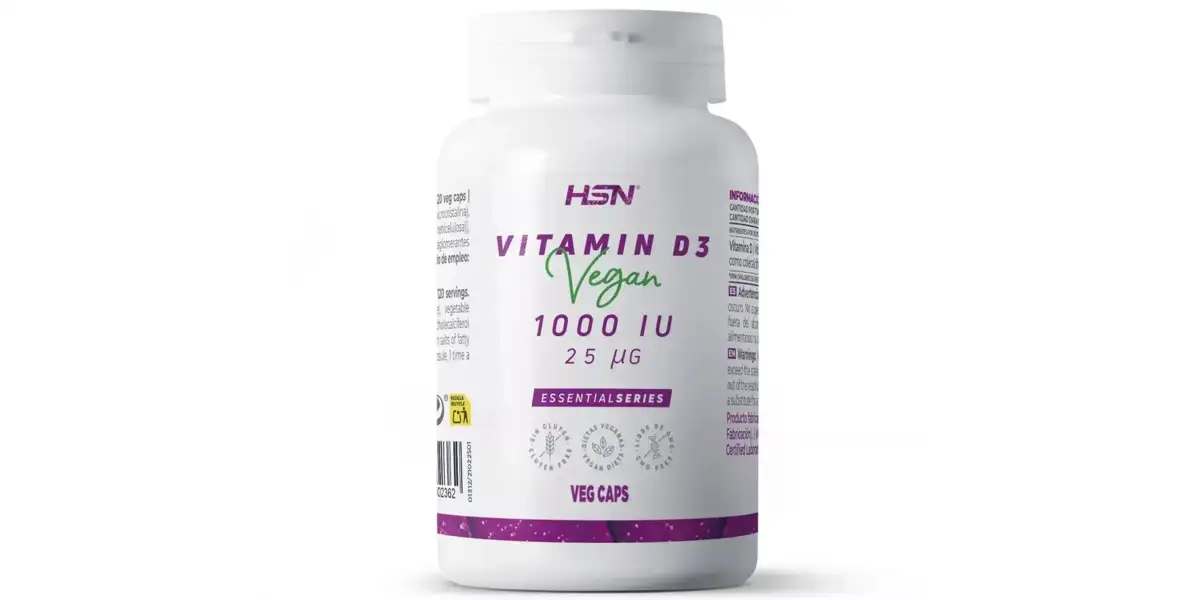
Vegan Vitamin D3 EssentialSeries
Also, our new vitamin D3+K2 product is vegan-friendly, containing vitamins from non-animal sources, derived from lichen and Nattō respectively.
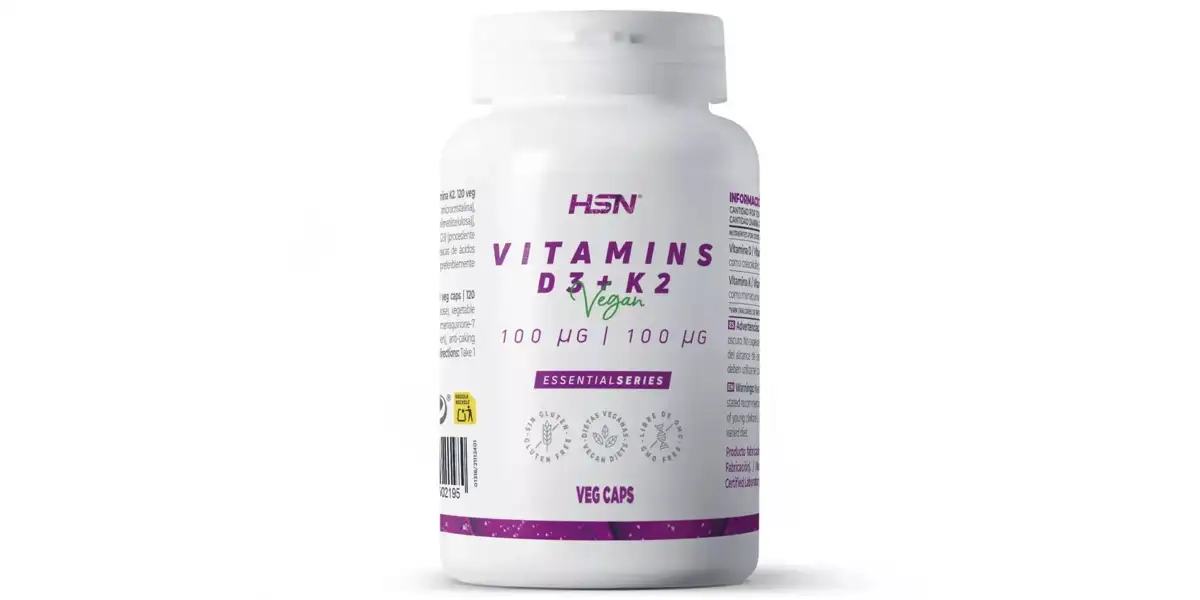
Vegan Vitamin D3+K2 EssentialSeries
Always look for quality products and a company like HSN that gives you peace of mind for the best purchase. We recommend visiting the HSN online store to buy the best supplements of this key nutrient.
Related Posts
- Discover how to identify and prevent vitamin D overdose
- Vitamin D and sports
- What are the benefits of vitamin D3 combined with K2?
- Benefits of calcium and vitamin D
- Learn how exercise influences your immune system
- How vitamin D influences your testosterone
Bibliographic Sources
- Jablonski, N. G., & Chaplin, G. (2000). The evolution of human skin coloration. Journal of Human Evolution, 39(1), 57–106. https://doi.org/10.1006/jhev.2000.0403
- Cicarma E, Porojnicu AC, Lagunova Z. Sun and sun beds: inducers of vitamin D and skin cancer. Anticancer Res. 2009; 29 (9): 3495-500.
- Laura Tripkovic, Louise R Wilson, Kathryn Hart and others. Daily supplementation with 15 μg vitamin D2 compared with vitamin D3 to increase wintertime 25-hydroxyvitamin D status in healthy South Asian and white European women: a 12-wk randomized, placebo-controlled food-fortification trial. The American Journal of Clinical Nutrition.
- Jo EK. Innate immunity to mycobacteria: vitamin D and autophagy. Cell Microbiol. 2010; 12 (8): 1026-35.
- Hossein-nezhad A, Spira A, Holick MF. Influence of vitamin D status and vitamin D3 supplementation on genome wide expression of white blood cells: a randomized double-blind clinical trial. Boston University Medical Center
- Zittermann A, Mushroom S, Hoffmann H. Vitamin D and airway infections: a European perspective. Eur J Med Res. 2016; 21: 14.