Fitness, Nutrition, Health and Sports Blog In the HSNstore Blog you will find tips about Fitness, sport in general, nutrition, and health – HSNstore.com

How important is vitamin D for athletes and does it affect their performance? Can vitamin D deficiency lead to injury? I try to explain in the following article how an athlete, particularly in an indoor sport such as basketball, should take care of vitamin D levels. Make sure and take note of the recommendations on vitamin D and basketball that I give you here.
Vitamin D and sport
Vitamin D is an essential micronutrient, which, although we can synthesise in the skin from sunlight, would not be enough to reach the necessary requirements.

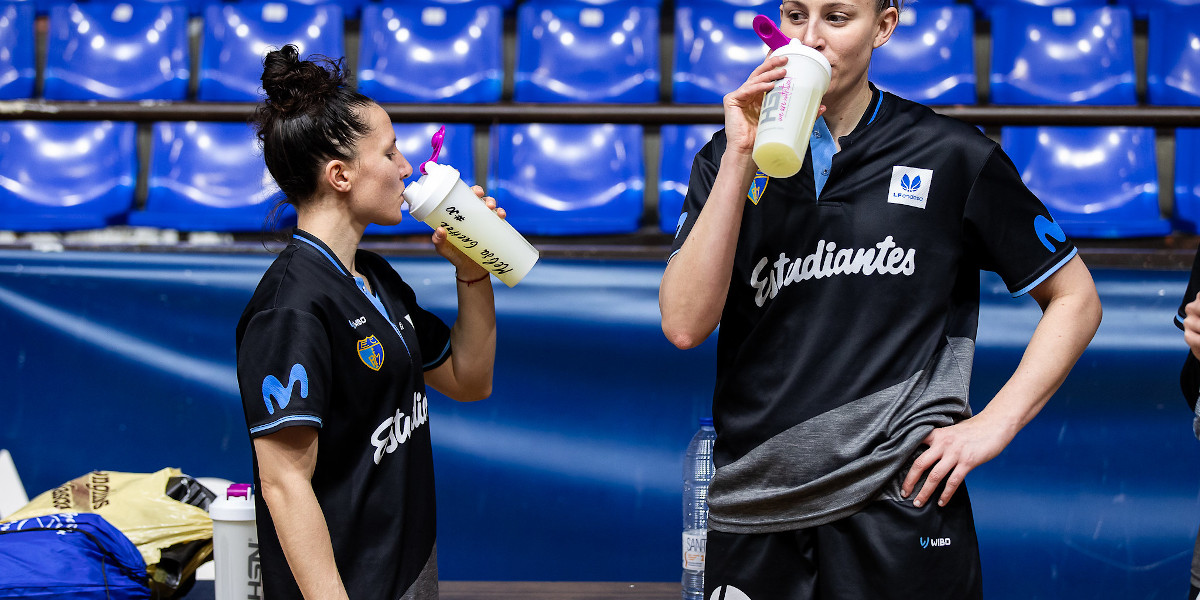
Where do you play basketball – indoors or outdoors? It may be a clue to your Vitamin D levels.
In addition to being a micronutrient, it’s a prohormone. This vitamin is fat-soluble and is found dissolved in the fatty part of some foods (Ching et al, 2017).
It is especially found in fish, eggs and whole dairy products.
Why is vitamin D important for athletes?
All its functions are considered essential for everyone, but especially for athletes, people with greater nutritional needs.
Review the main roles of vitamin D in the body:
- Its main role is the regulation of calcium homeostasis together with parathyroid hormone, which is essential for bone development.
- It also has other roles in protein synthesis, in the immune system, and in the reduction of the inflammatory response, cardiovascular functions, cell growth and in the nervous system with its neuroprotective effect.
Relationship with sports performance
Vitamin D deficiency, as we’ll see below, leads to low or non-existent performance, which is why it’s important to establish correct monitoring of these levels.

Vitamin D for the performance of sports professionals.
In addition to avoiding vitamin D deficiency problems, several studies have found positive results with good vitamin D levels and supplementation with vitamin D products.
For example, in a study of 61 athletes, a positive correlation was found between improved muscle performance in vertical jumps and 10-metre sprint times and supplementation with 5,000 IU of vitamin D for 8 consecutive weeks (Close et al, 2013).
Another observational study indicates that athletes with the highest vitamin D levels were associated with fewer injuries (Todd et al, 2015).
In basketball studies in particular, vitamin D has been attributed an important role in performance, as participants with higher vitamin D levels were more likely to be drafted into the NBA (Grieshober et al 2018).
Despite the number of studies that suggest that vitamin D can improve athletic performance, there is still much research to be done.
Vitamin D deficiency in athletes
How does such a deficit affect the athlete? It can affect muscle function, recovery time and inflammatory processes, as well as strength-to-power ratios (Dahlquist et al, 2015).

It depends on variables such as the geographical area where the athlete lives, latitude, hours of sunshine, hours of sun exposure, pollution, time of year, diet, skin colour, etc. (Puente et al, 2020).
In this regard, there is a link between vitamin D deficiency and common colds, infections, gastroenteritis, as well as a high incidence of respiratory pathologies (Ksiazek et al 2016).
Recommended levels
There is no consensus among researchers on vitamin D levels for optimal health (Chiang et al, 2016), although there is consensus on what levels begin to be considered deficient and are associated with the most problematic pathologies.
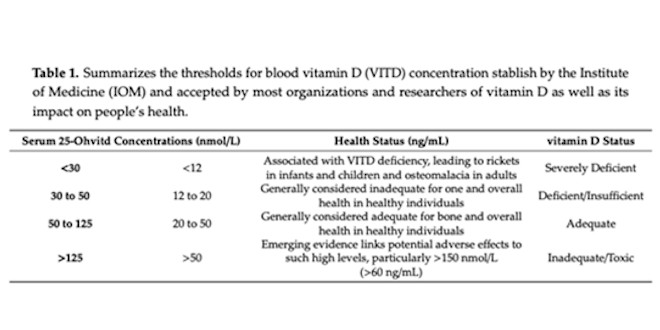
Illustration 1 Puente et al, 2020.
Are basketball players the most affected?
Like other indoor sports (with low or no sun exposure), basketball is one of the most affected sports.
There is a study, carried out on 279 NBA players over 4 years, where the results showed that:
- In 90 players (32.3%) the levels were deficient, in 58 players (47%) they were insufficient and in 58 players (20.8%) they had sufficient levels. So, of a total of 221 players, (79.3%) were vitamin D deficient or insufficient (P.Fishman et al 2016).
Seasonality and vitamin D
As mentioned above, latitude and seasonality affect vitamin D levels, as the tilt of the earth and the incidence of the sun’s rays influence the type of sun exposure (Ann R. Webb and Ola Engelsen).

The amount of sunshine needed to achieve good vitamin D levels will also depend on weather conditions and skin colour (Terushkin et al 2010).
The seasonal variation in vitamin D levels is reflected in outdoor sports such as football.
A study of 20 English Premier League players living at a latitude of 53°N showed that vitamin D levels decreased between August and December, leading to deficits in the winter months.
As a result, vitamin D supplementation in Premier League players during the winter months would be advantageous for maintaining muscle function, among other sporting functions (Morton et al, 2012).
Does vitamin D protect athletes from injury?
It does protect against various injuries and prevent underperformance. Good vitamin D levels promote good performance. On the other hand, insufficiency and deficiency cause various problems and unnecessary risks for athletes.

HSN Supplements, count on the best help for your performance.
Vitamin D supplementation
Vitamin D supplementation plays a key role for athletes in the winter months.
How are these vitamin D supplements taken? The most convenient format is in pearls, as opposed to drops or capsules.
And the type? Colecalciferol (D3) is better than the ergocalciferol form (D2).
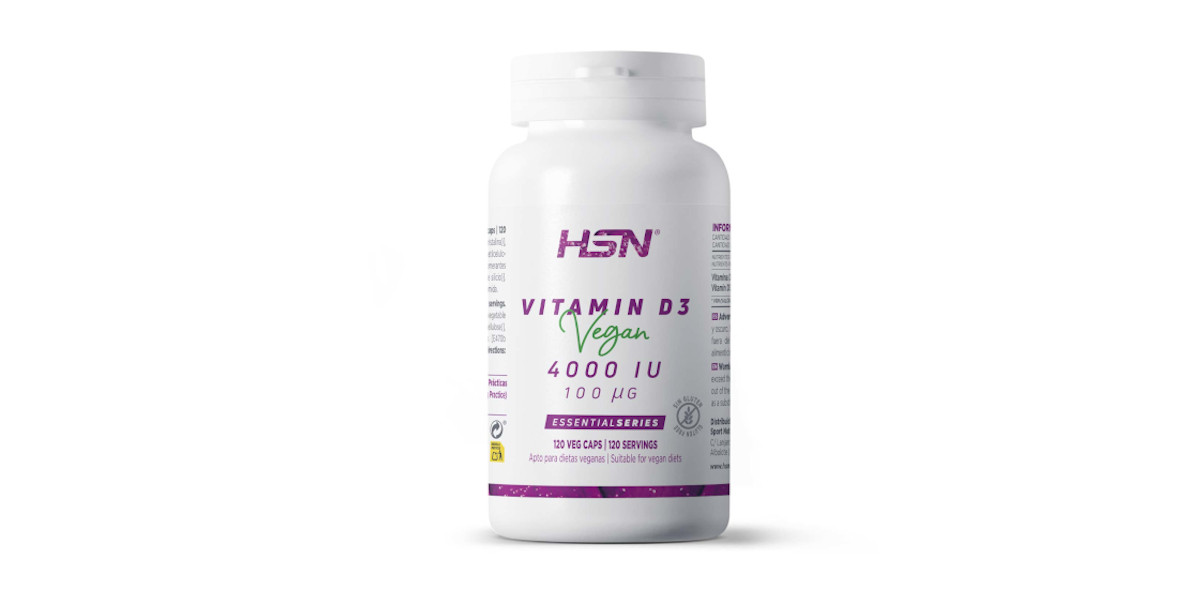
Choose from the Vitamin D options available in the HSN catalogue.
In the case of the HSN supplement in pearls: Vitamin D3 4,000 IU, it’s accompanied by oils rich in PUFAs (polyunsaturated fatty acids). This is a supplement with a high nutritional quality, accompanied by these fats, which improves the absorption of the fat-soluble vitamin.
The Movistar Estudiantes men’s and women’s squads use this product, also available in a vegan option, to ensure optimal levels of Vitamin D and obtain the best sports results.
Bibliographical sources
- Chinag CM, Ismael A, Griggis R, Wemm S. Effects of Vitamin D Supplementation on Muscle Strength in Athletes: A Systematic Review. Journal of Strength and Conditioning Research 2017.
- Base de datos de la composición de alimentos BEDCA.
- Close, G.L.; Russell, J.; Cobley, J.N.; Owens, D.J.; Wilson, G.; Gregson, W.; Fraser, W.D.; Morton, J.P. Assessment of vitamin D concentration in nonsupplemented professional athletes and healthy adults during the winter months in the UK: Implications for skeletal muscle function. J. Sports Sci. 2013, 31, 344–353.
- Jason A Grieshober; Nima Mehran; Christos Fotopolis. Vitamin D Insufficiency Among Professional Basketball Players: A Relationship to Fracture Risk and Athletic Performance. Orthop J Sports Med 2018 May.
- Todd, J.J.; Pourshahidi, L.K.; McSorley, E.M.; Madigan, S.M.; Magee, P.J. Vitamin D: Recent advances and implications for athletes. Sport Med. 2015, 45, 213–229.
- Wicinsk M, Adamkiewicz D, Adamkiewicz M, Sniegocki M, Podhoreck M, Szychta P, Malinowski B. Impact of Vitamin D on Physical Efficiency and Exercise Performance – A Review. Nutrients 2019, 11, 2826.
- Dahlquist, DT, Dieter, BP, and Koehle, MS. Plausible ergogenic effects of vitamin D on athletic performance and recovery. J Int Soc Sports Nutr 12: 33, 2015.
- Ksiazek, A.; Zagrodna, A.; Dziubek, W.; Pietraszewski, B.; Ochmann, B.; Slowinska-Lisowska, M. 25 (OH)D3. Levels Relative to Muscle Strength and Maximum Oxygen Uptake in Athletes. J. Hum. Kinet. 2016, 50, 71–779.
- Matthew P.Fishman; Stephen J. Lombardo; F Daniel Kharrazi. Vitamin D Deficiency Among Porfessional Basketball Players. July 2016.
- Puente, M; Collado L, Ciudad MJ, Cuadrado M. Role of Vitamin D in Athletes and Their Performance: Current Concepts and New Trends. Nutrients 2020, 12, 579.
- Terushkin, V, Bender, A, Psaty, EL, Engelsen, O, Wang, SQ, and Halpern, AC. Estimated equivalency of vitamin D production from natural sun exposure versus oral vitamin D supplementation across seasons at two US latitudes. J Am Acad Dermatol 62: 929.e1–929. e9, 2010.
- James P. Morton; Zafar Igbal; Barry Dust. Seasonal variation in vitamin D status in professional soccer players of the English Premier League. Applied Physiology, Nutrition and metabolism. 4 may 2012.
Related links you shouldn’t miss out on:.
- Go here to find out more about vitamin D levels and performance in the world of sport.
- Do you know what correct nutrition entails for a professional basketball player? Read this complete post from inside the Movistar Estudiantes locker room…
- …and read about all the HSN sports supplements used by the orange ball professionals too, by clicking here.