Fitness, Nutrition, Health and Sports Blog In the HSNstore Blog you will find tips about Fitness, sport in general, nutrition, and health – HSNstore.com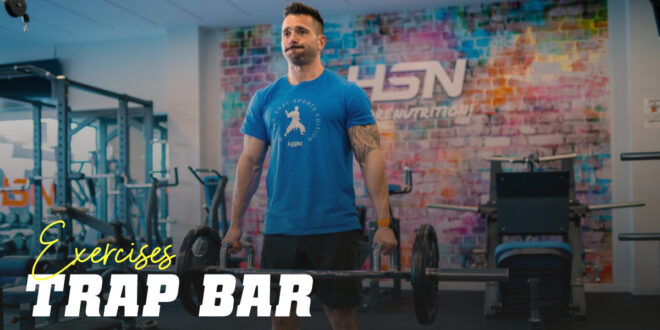

Today we’re going to look at a great training tool: the trap bar, sometimes called the hex bar. If you want to know what it’s used for, and what its benefits are, stay until the end!
What is a trap bar?
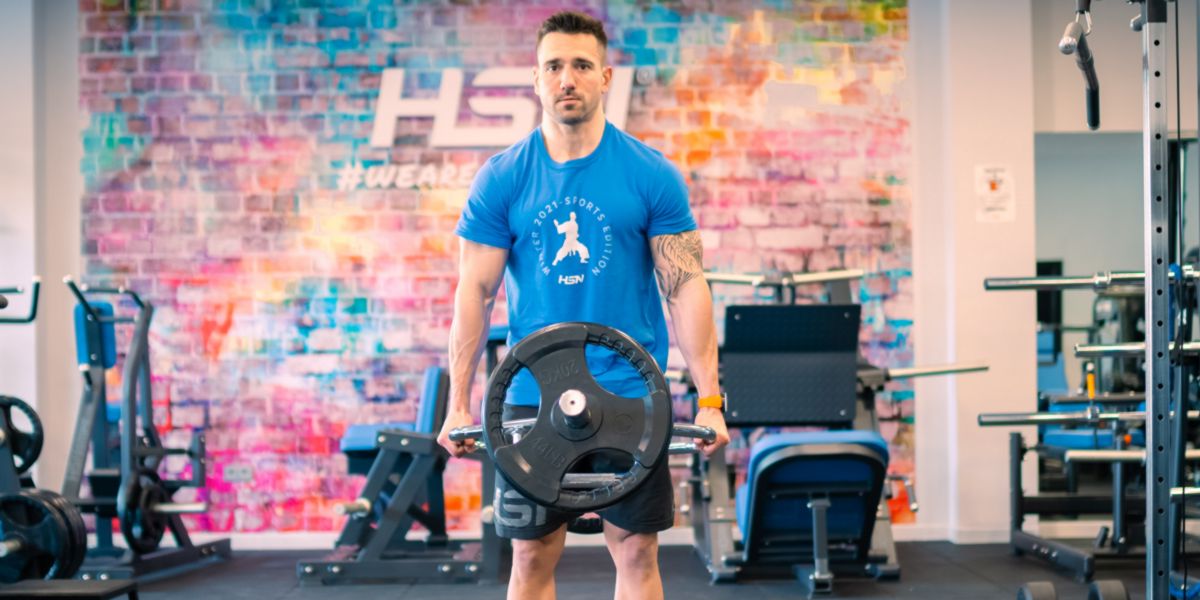
The trap bar or hex bar owes its name to its shape and has a diamond-shaped outer perimeter and two parallel handles on the inside.
When the bar is placed on the floor and you look down at it, it forms a hexagon.
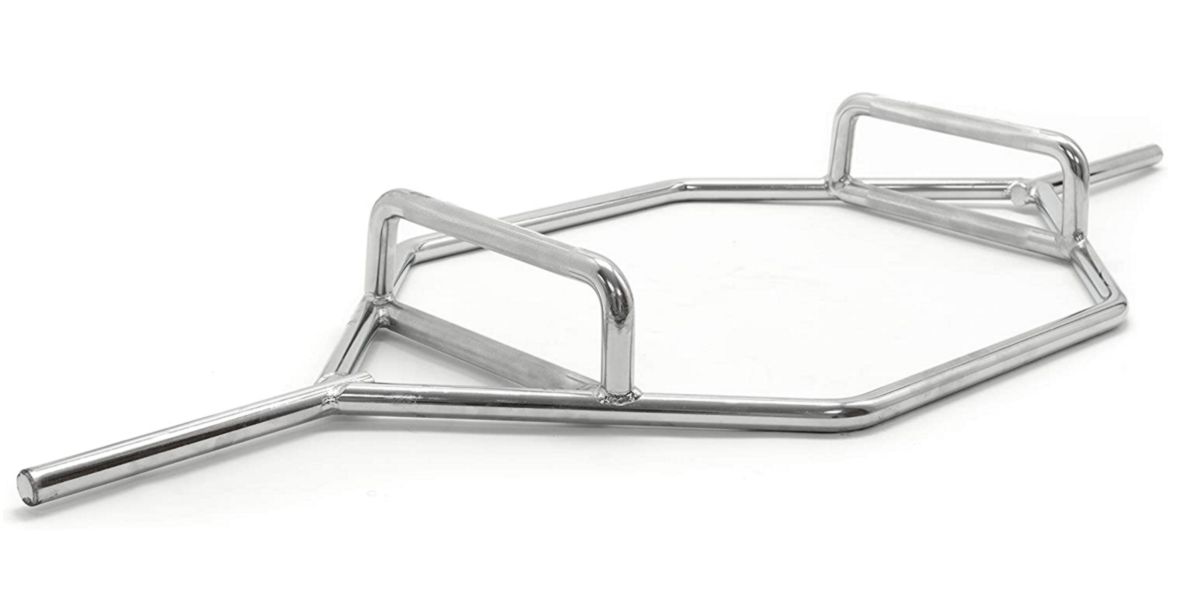
The hex bar is an excellent alternative to traditional bars for doing deadlifts without the risk of back injuries.
Some trap bars are constructed with two grip points, one higher than the other; while the rest come with the grip at the same height. As we’ll see below, for the former, the exercises differ.
The hex bar was created by Al Gerard, a powerlifter from North Carolina who suffered from a painful lower back.
Hexagonal bar to prevent back pain?
The hexagonal bar distributes weight more in-line, falling more on the body’s natural centre of gravity, eliminating stress on the lower back.
It means the lower back is no longer the weakest link when exercising.
This subtle change results in more productive muscle development and an excellent strength training exercise.
Al Gerard was his own witness to the strength gains. Soon, bodybuilders and other lifting enthusiasts began to adopt this extremely useful training tool in their workouts.
- Subjects performing deadlifts with the hex bar lifted 20 kilograms more than with a straight bar.
- Researchers concluded that the hex bar deadlift results in greater overall strength by distributing the weight more evenly.
Differences between traditional deadlifts and the trap bar
Grip
When using a straight or conventional bar and working with deadlifts, we can use 2 types of grip:
- Double Overhand.
- Mixed.
With the hexagonal bar, only a neutral grip is possible, which tends to be “more natural”.
Movement pattern
The main difference lies in the movement pattern:
- Deadlifts with a hexagonal bar are more knee dominate.
- Deadlifts with a conventional bar are more hip dominate.
Lower risk of injury
The main benefit is the reduction of stress in the lower back that occurs with the straight bar when performing the deadlift, something that many people suffer from as a result of not maintaining back neutrality.
Technique
On the other hand, the hexagonal bar requires less technical efficiency than the straight bar – it’s easier to learn how to do deadlifts with the trap bar.
Benefits of the hexagonal bar
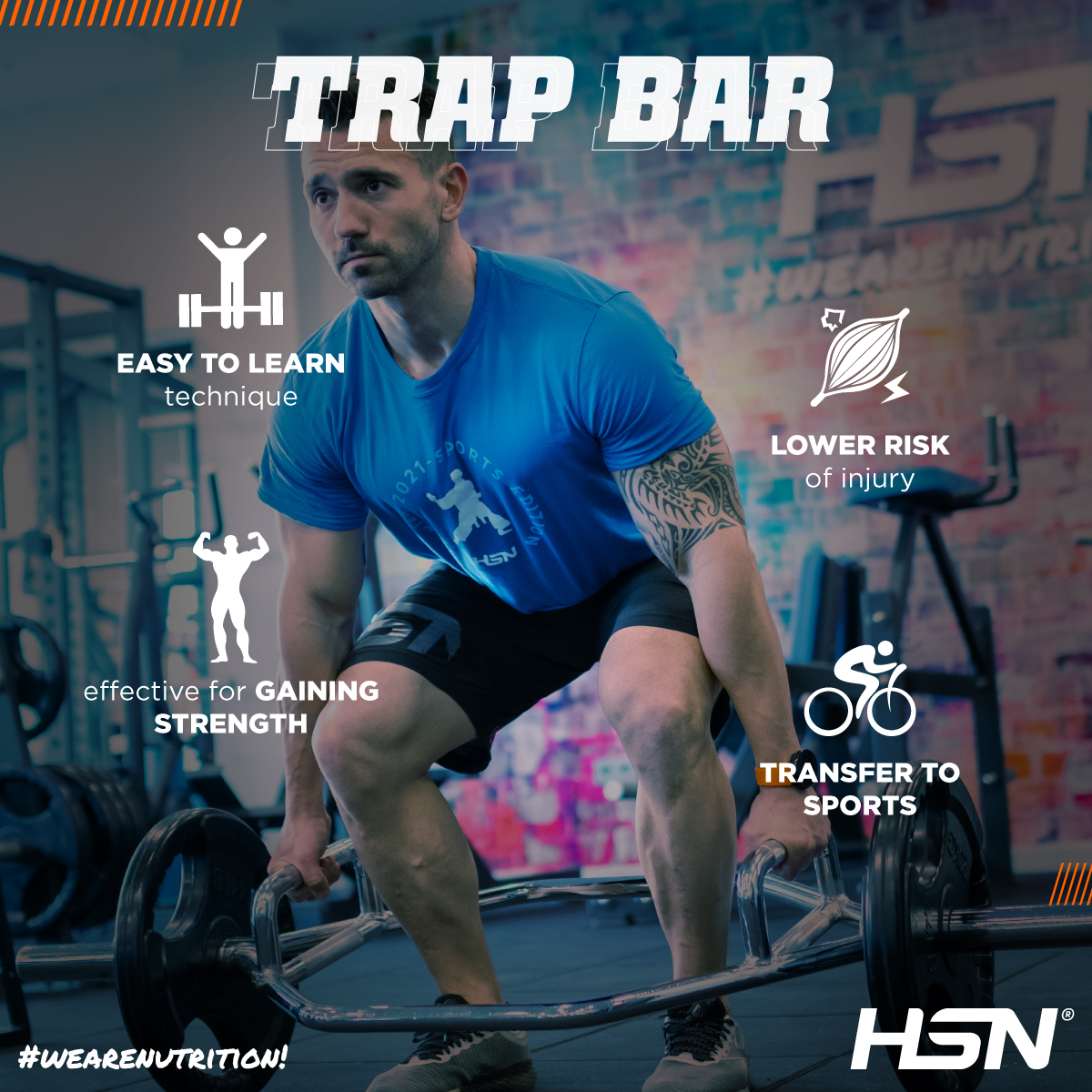
- It’s easier to learn the technique, requiring less mobility than when using a conventional bar, and it’s also more comfortable and natural.
- It’s safer, as it reduces lumbar tension; there’s also no risk of injuring the biceps with the mixed grip, and it’s favourable for those who aren’t able to control correct deadlift execution.
- There’s greater balance. Performing a conventional deadlift puts you more off balance, as the bar is positioned in front, the trap bar allows you to put yourself in the centre of mass.
- It’s more effective, i.e. we can load more weight to the bar (and due to the previous point, more safely) and therefore “build more strength”.
- It enhances conventional deadlift training, “we gain strength from the start” and start from a movement deficit.
- There’s application and transfer for the vertical jump, as there’s greater activation of dominant knee muscles (it’s more similar to the “high bar” squat movement).
What weight should you lift with the trap bar?
As a side note, I’m going to say here that if your aim is to compete in powerlifting, the trap bar shouldn’t be the focus of your training, far from it, but maybe an auxiliary variant to consider.
With the trap bar you can lift more load compared to a straight bar due to the lower moment of force that is generated on the hip, knee and ankle. This also implies that our torso must also bear or support this greater load.
Because the range of motion is more balanced, the lifting speed is also usually affected, making it possible to generate more power on the hexagonal bar.
This motivates many athletes to use the tool in their gym sessions.
What exercises to do with trap bar
Here are 7 exercises to do with the hexagonal bar:
Trap Bar Deadlift
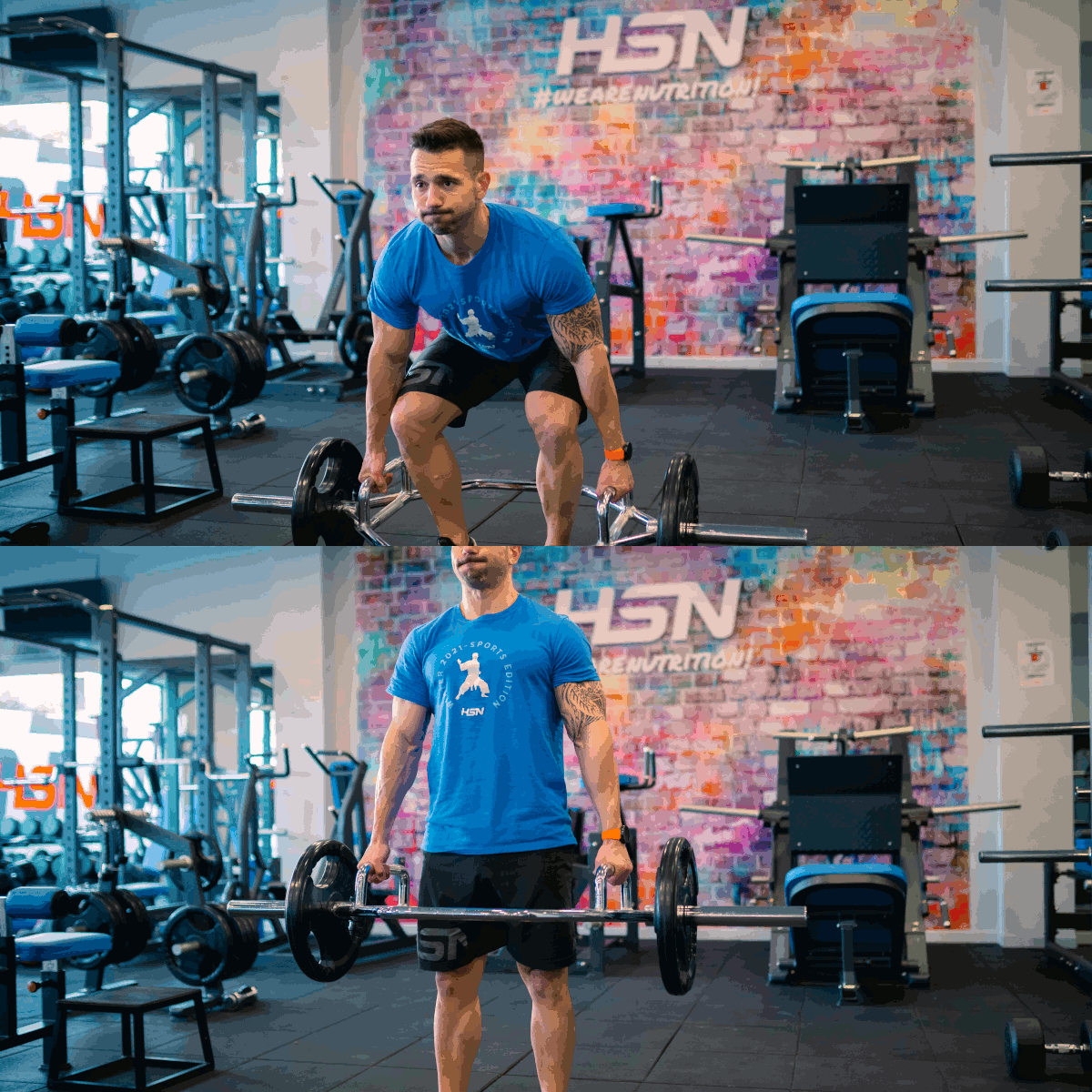
The basic Deadlift exercise performed using the hexagonal bar.
Trap Bar Squat
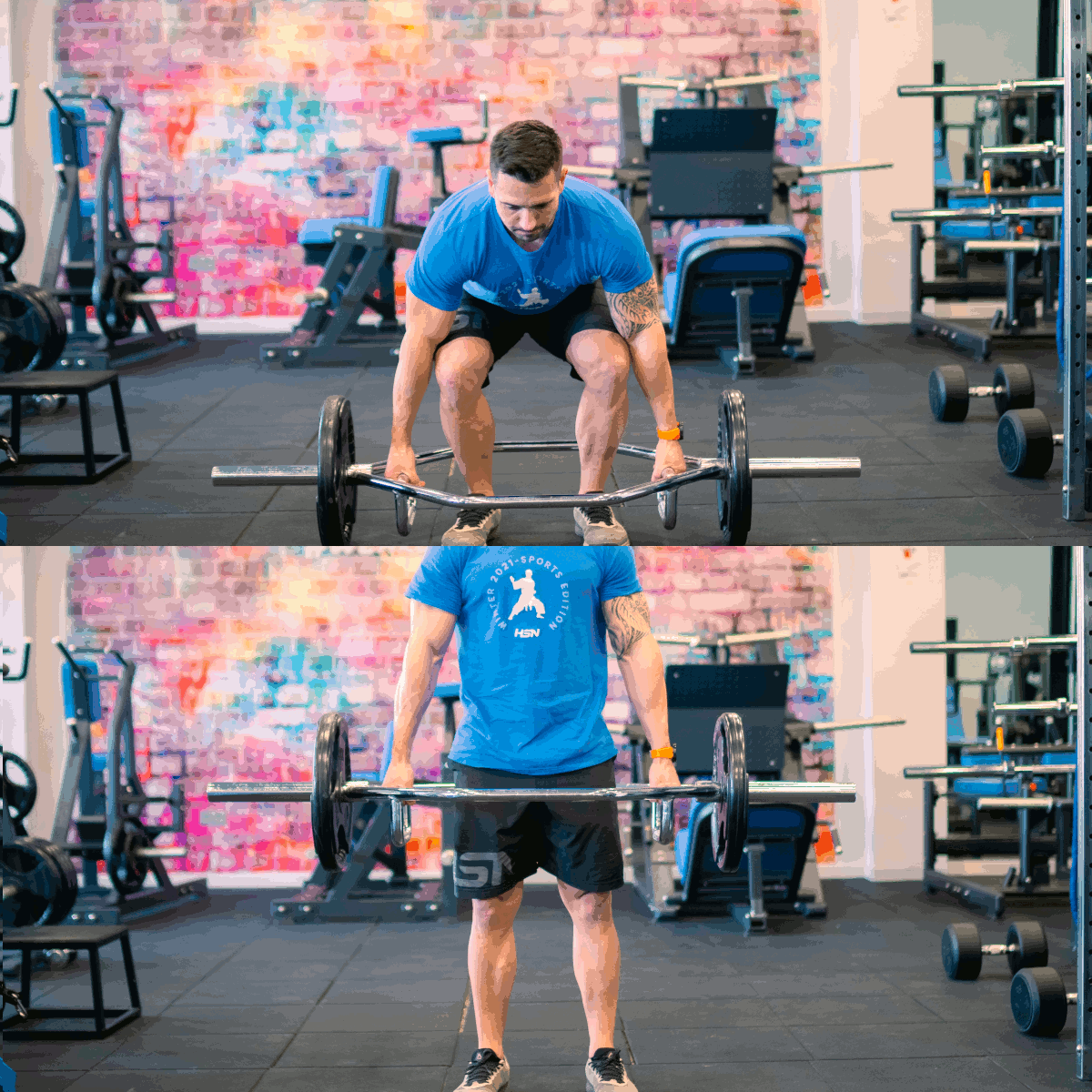
A variant of the previous exercise, where we start from a lower position, adapting similarity to the deep squat position.
Trap Bar Jump Squat
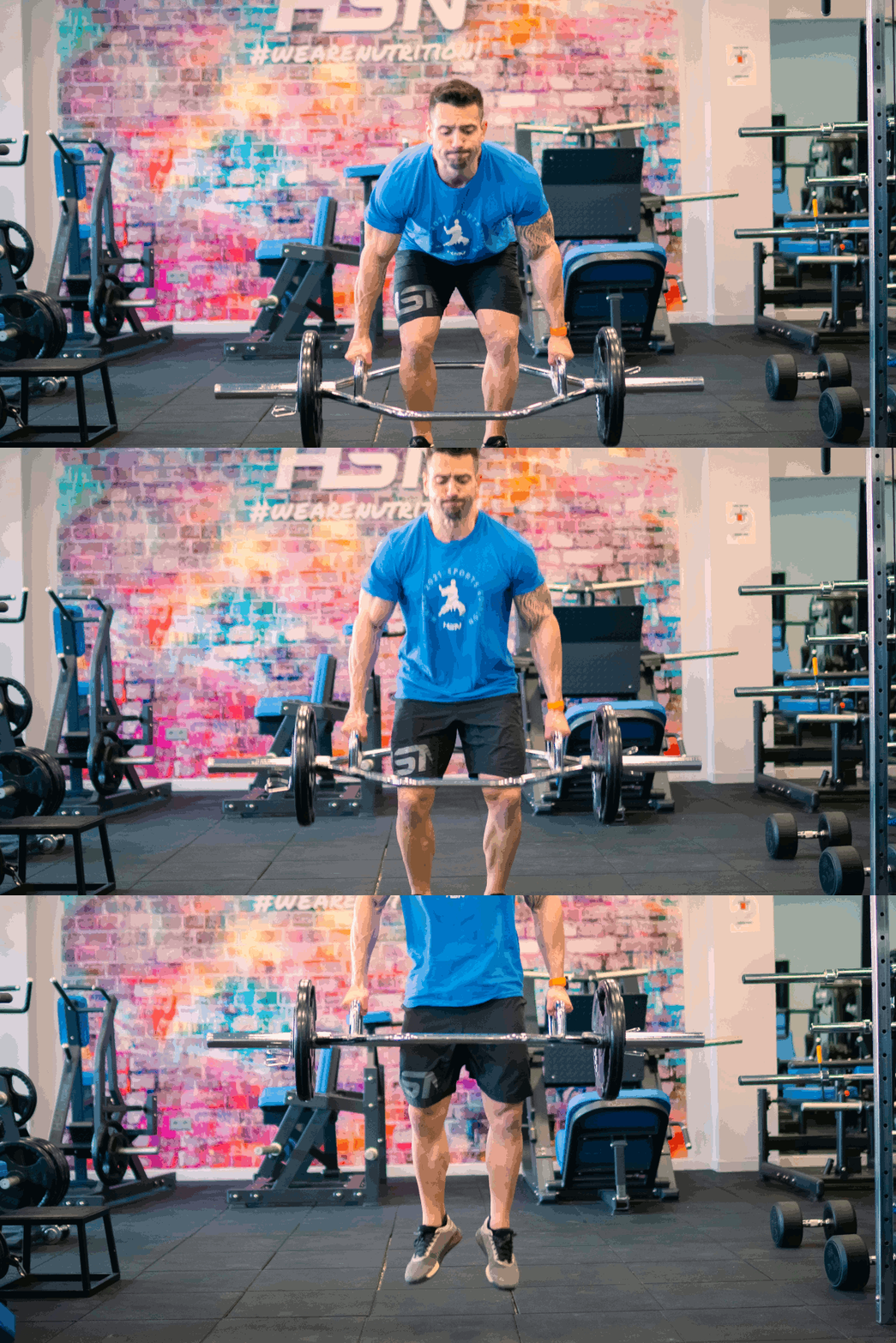
A power exercise
Trap Bar Farmer Carry
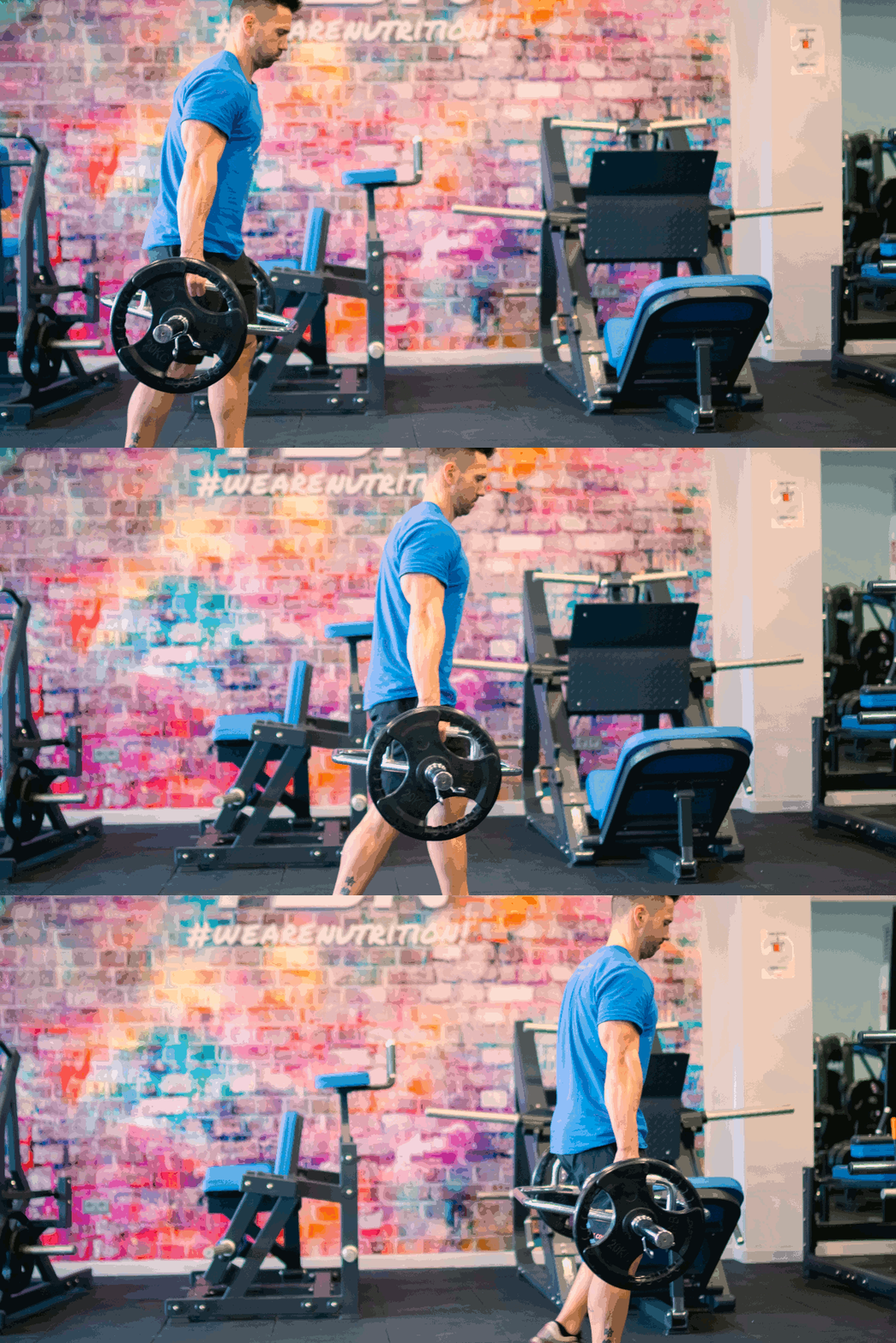
An exercise to strengthen the core.
1-Handed Trap Bar Farmer Carry
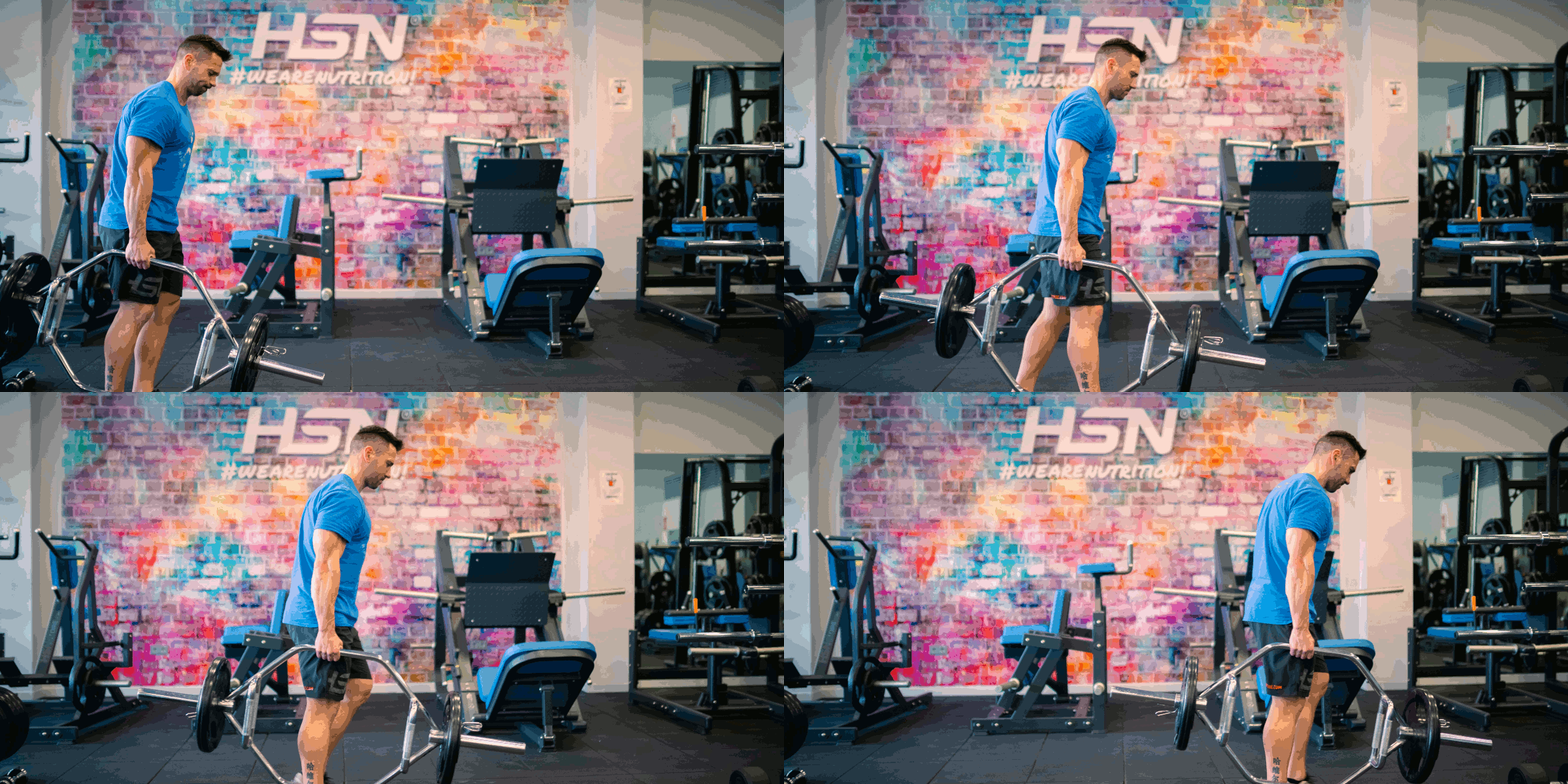
A one-sided variant of the previous exercise.
Trap Bar Row

An upper body pull exercise.
Trap Bar Floor Press

A variant of the well-known “floor press” but adopting a neutral position on the grip.
Tips for using the hexagonal bar
To correctly execute the deadlift:
- Place yourself inside the “hexagon” and centred.
- To start the movement, you should go from a position similar to the squat position at the bottom (we’ve already seen that if you’re looking for a more hip dominant movement, you use the bar at the highest grip, if your bar allows it).
- Grip the handles in the central area.
- Pull your shoulders back and down.
- Keep your chest up and your gaze towards the horizon.
- Breathe in and keep the core area active.
- Start the take-off with a strong grip and with the aim of “pushing off the ground with your legs”.
- Extend the hips while maintaining tension in the glutes.
- Avoid hyperextension.
Here’s a video of a 10x 180kg deadlift with the hex bar:
Trap Bar Routine
I propose as an example the following routine to work with this bar, being able to add complementary work with other elements.
Day 1
Strength
- Trap Bar Deadlift::climbing 6by6 until reaching a weight we can’t move more than 4 reps.
- Trap Bar Farmer Carry::Complete 5 Rounds of 10mts out + 10mts back, using 60% of the last weight achieved in the first exercise.
Day 2
Power
- Trap Bar Squat::climbing 12by12 until we reach a weight that we can’t move more than 10 reps
- Trap Bar Jump Squat::EMOM 6min 6 reps with 30% of the last weight used in the previous exercise
Day 3
Hypertrophy
- Trap Bar Floor Press::climbing 12by12 until we reach a weight that we can’t move more than 10 reps
- Trap Bar Row::climbing 12by12 until we reach a weight we can’t move more than 10 reps
- 1-Handed Trap Bar Farmer Carry::Complete 10 Rounds of 10mts out (right hand) + 10mts back (left hand), using 50% of the weight used on the day in exercise 3
Bibliographic References
- Paul A Swinton, Arthur Stewart, Ioannis Agouris, Justin W L Keogh, Ray Lloyd. A biomechanical analysis of straight and hexagonal barbell deadlifts using submaximal loads.
Related Entries.
- The Deadlift Guide.
- The best Exercises to develop the Back at this link.