Fitness, Nutrition, Health and Sports Blog In the HSNstore Blog you will find tips about Fitness, sport in general, nutrition, and health – HSNstore.com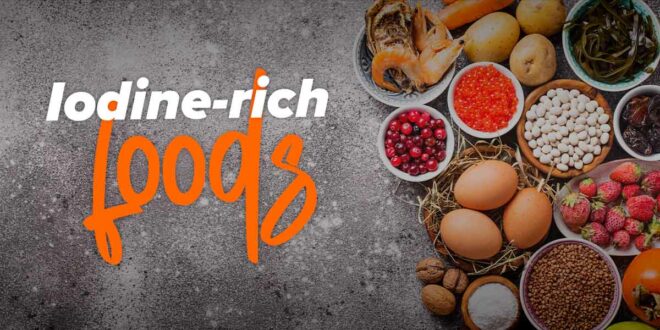

Minerals are inorganic elements present in foods that play an important role in regulating our body’s metabolism, making them indispensable for the maintenance of our health, as our body cannot create them by itself.
Minerals include iodine, which is a halogen found in the form of iodine salts in rocks, which after weathering are dispersed into the environment, retained in plants that are subsequently consumed by herbivores for grazing, and in the sea.
In the human diet, we consume iodine salts as a result of this whole food chain process.
Iodine is efficiently absorbed in the gut, although there are certain nutrients that may interact with its absorption, especially humic acids present in harder waters.
Among the many functions of iodine is its relationship with thyroid function, which in turn conditions organic aspects such as:
- Mitochondrial energy metabolism.
- Cellular oxidation.
- Thermoregulation.
- Macronutrient metabolism.
- Nitrogen retention.
Making iodine an important element in early growth, development and maturation of organs, hence also its emphasis on consumption during pregnancy for the health of the foetus.

In general, iodine, and for simplicity’s sake, is essential for maintaining good health.
Iodine deficiency causes an elementary disturbance in the functioning of the thyroid gland known as hypothyroidism.
Meanwhile, excessive iodine intake can lead to overstimulation of the gland causing it to produce excess thyroid hormones, a condition known as hyperthyroidism.
Table of iodine-rich foods
| Food group | Average amount of iodine in 100g |
| Cereals and pulses | 1.30 µg |
| Nuts | 0.55 µg |
| Vegetables, fruits and others | 1.05 µg |
| Meat | 1 µg |
| Fish and seafood | 40.75 µg |
| Chicken and eggs | 3.1 µg |
| Dairy | 11. 7µg |
Foods containing iodine
Fish, molluscs and crustaceans
Marine species are the food group with the highest iodine content. This is because the sea ends up containing large quantities of this element, which are retained in the species that live in this environment and which we then consume in our food.
Seaweed
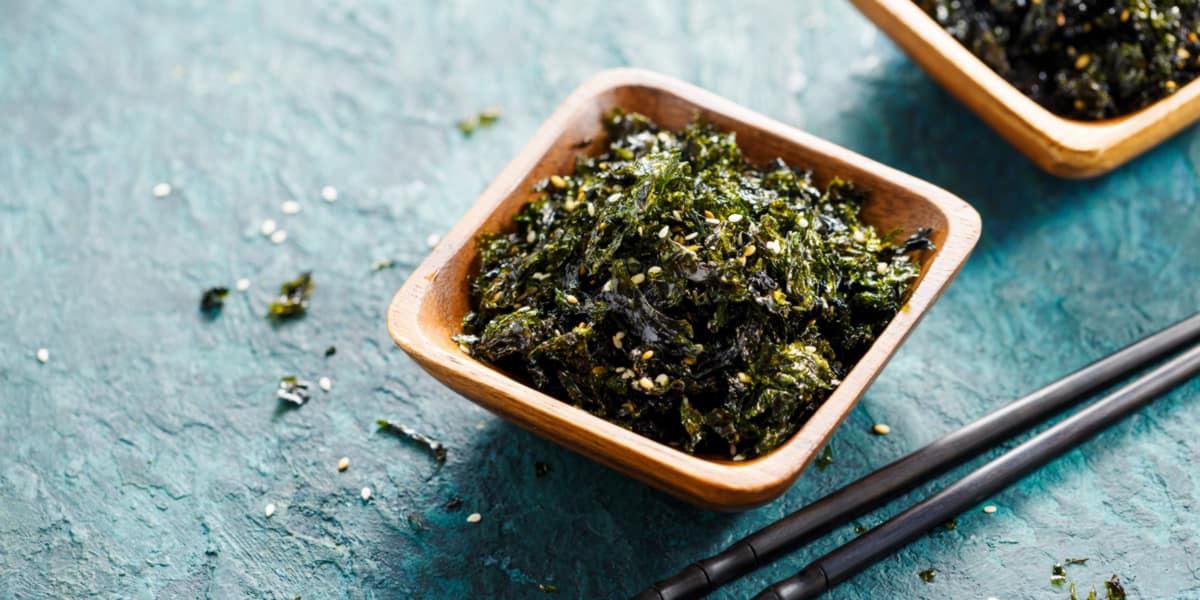
Special mention should be made of seaweed as the group of marine species with the highest iodine content.
Although the consumption of seaweed is not so widespread in the West, in Eastern countries it is a daily foodstuff. You can buy it in Asian markets, and the following seaweeds stand out: Kombu, nori and wakame.
Salt
Table salt is currently the food that governments have chosen as the winner to be fortified with iodine, so sea salt is marketed (as an alternative at least) iodised.
Water
Drinking water contains iodine salts, mostly from the sanitising solutions and iodophors with which it is treated.

This is an indirect form of nutritional fortification as it partly prevents iodine deficiency since we all drink water.
What is the daily requirement of iodine?
Adequate daily intakes of iodine, as established in the reports determining the needs of the European population by the European Food Safety Authority, are as follows:
| Age | Adequate intake (µg/day) |
| 7-11 months | 70 |
| 1-3 years | 90 |
| 4-6 years | 90 |
| 7-10 years | 90 |
| 11-14 years | 120 |
| 15-17 years | 130 |
| ≥18 years | 150 |
| Pregnancy | 200 |
| Breastfeeding | 200 |
Such quantities may be difficult to consume for people who do not eat meals, or consume bottled water.
Iodine supplements in HSN
People suffering from hypothyroid conditions due to chronic iodine deficiency, goitre, or who for any other reason require additional iodine intake (e.g. if recommended by a doctor during pregnancy), may resort to iodine-based supplements.
Iodine tablets are available from HSN to supplement your diet:
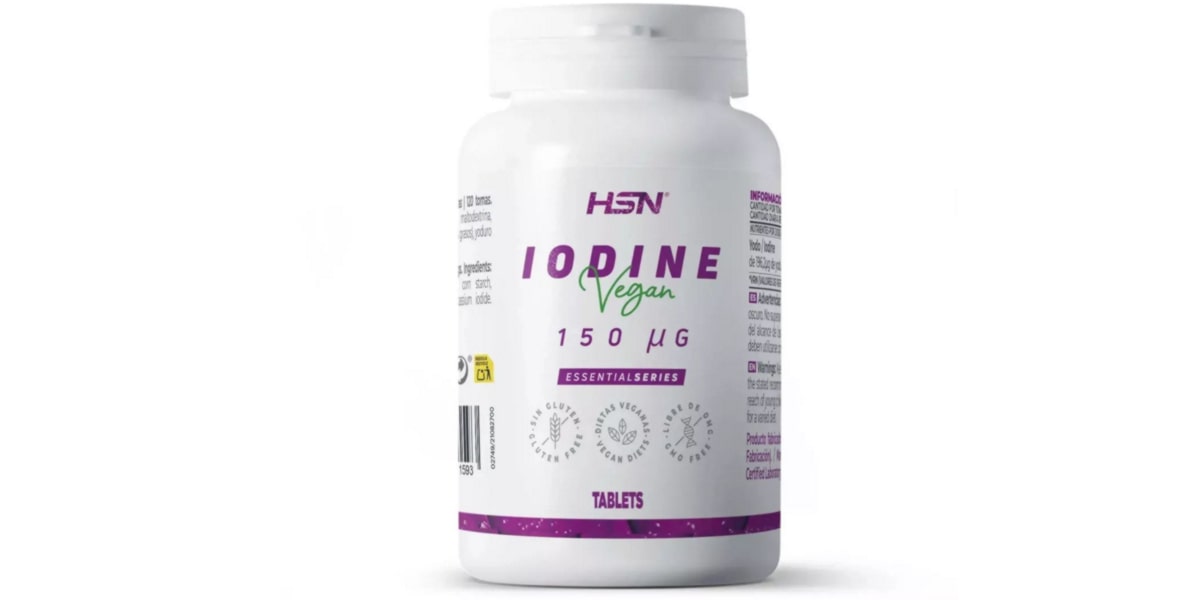
Iodine 150mcg by EssentialSeries is a food supplement in tablet form that provides a high concentration of potassium iodide salt, a highly bioavailable source of iodine, ideal for conveniently increasing iodine intake through food.
If you are pregnant, your doctor may recommend using a multimineral with iodine to meet your increased nutritional requirements.
- We recommend you: https://www.hsnstore.eu/brands/essential-series/prenatal-care
Related Entries
- Kelp, a supplement for your metabolism. Read Post.
- Foods Rich in Zinc.