Fitness, Nutrition, Health and Sports Blog In the HSNstore Blog you will find tips about Fitness, sport in general, nutrition, and health – HSNstore.com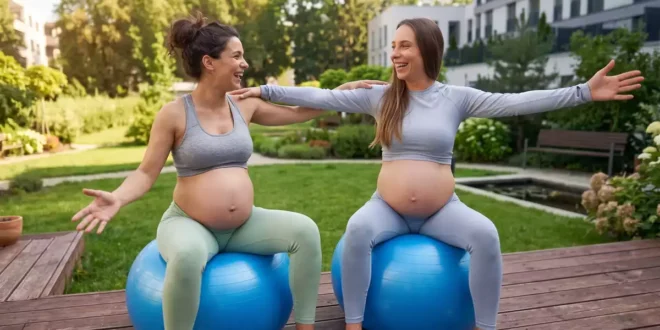

Staying active during pregnancy is one of the best decisions you can make to successfully cope with the significant anatomical and physiological changes the female body undergoes. However, for exercise to be truly beneficial, it must be carefully adapted to the demands of each trimester and the individual condition of the mother-to-be.
In this context, the Pilates ball, fitball or pregnancy ball has become the number one tool recommended by midwives and obstetric specialists. Its versatility makes it possible to work on joint mobility, muscle tone and postural control through exercises with very low impact on the joints.
Its unstable surface requires continuous proprioceptive micro-adjustments that strengthen the deep stabilising muscles without causing spikes in intra-abdominal pressure. Provided the pregnancy is uncomplicated and there are no obstetric contraindications, moderate-intensity physical activity is considered safe.
Remember to check any exercise routine beforehand with the healthcare professional supervising your pregnancy.
Benefits of Using a Fitball During Pregnancy
Regular use of a Pilates ball during pregnancy offers unique biomechanical advantages compared with fixed surfaces:
- Promotes dynamic pelvic mobility: Circular and lateral movements help mobilise the sacroiliac joints and pubic symphysis, supporting pelvic mobility.
- Helps relieve pressure on the lumbar spine: Sitting on an elastic surface distributes loads more evenly, helping to reduce pressure on the intervertebral discs associated with increased lumbar lordosis.
- Strengthens the transverse abdominal muscle: The instability of the fitball naturally and safely activates the transversus abdominis (our “natural abdominal belt”), which plays an important role in supporting the growing uterus and managing abdominal wall function.
- Conditions the lower body: It allows you to perform assisted squat variations while reducing balance demands and joint stress on the knees and ankles.
- Facilitates postural relief positions: It promotes pelvic floor relaxation and helps lengthen the spinal erector muscles during periods of greater fatigue.
An excellent ally when preparing for childbirth: Sitting on a fitball during the final weeks of pregnancy and during labour can help you adopt comfortable upright positions, using gravity while helping to relieve the sensation of pelvic pressure.
Step-by-Step Pregnancy Ball Exercises for Each Trimester
The progression of the routine is not intended to increase load or intensity, but rather to adapt movement patterns according to abdominal growth and the physiological changes that occur at each stage of pregnancy.
Use the “talk test”: you should be able to maintain a fluent conversation while performing each exercise.
1. Pelvic Mobility and Figure-Eight Movements to Prepare for Childbirth
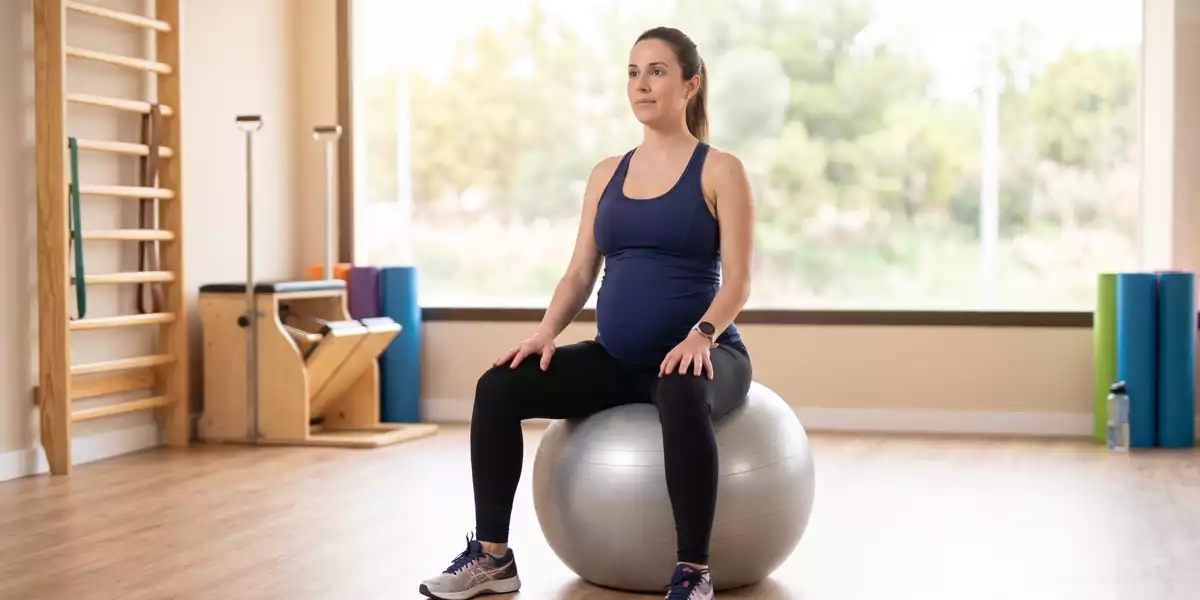
This biomechanical exercise is particularly useful for promoting pelvic mobility and developing greater awareness and control of the pelvis in preparation for childbirth.
- Sit in the centre of the ball with your spine upright and shoulders relaxed.
- Place the soles of your feet flat on the floor, hip- or shoulder-width apart to ensure a stable base.
- Begin with slow, smooth circular movements of the pelvis to the right (5-8 repetitions), then change direction.
- Next, draw a horizontal figure eight with your hips, smoothly linking one loop to the other.
Obstetric focus: Mobilising the pelvis helps maintain pelvic mobility and promotes good alignment. Although useful as part of childbirth preparation, it should be incorporated as a general mobility exercise rather than regarded as an isolated method for inducing labour.
2. Wall Squats with a Ball
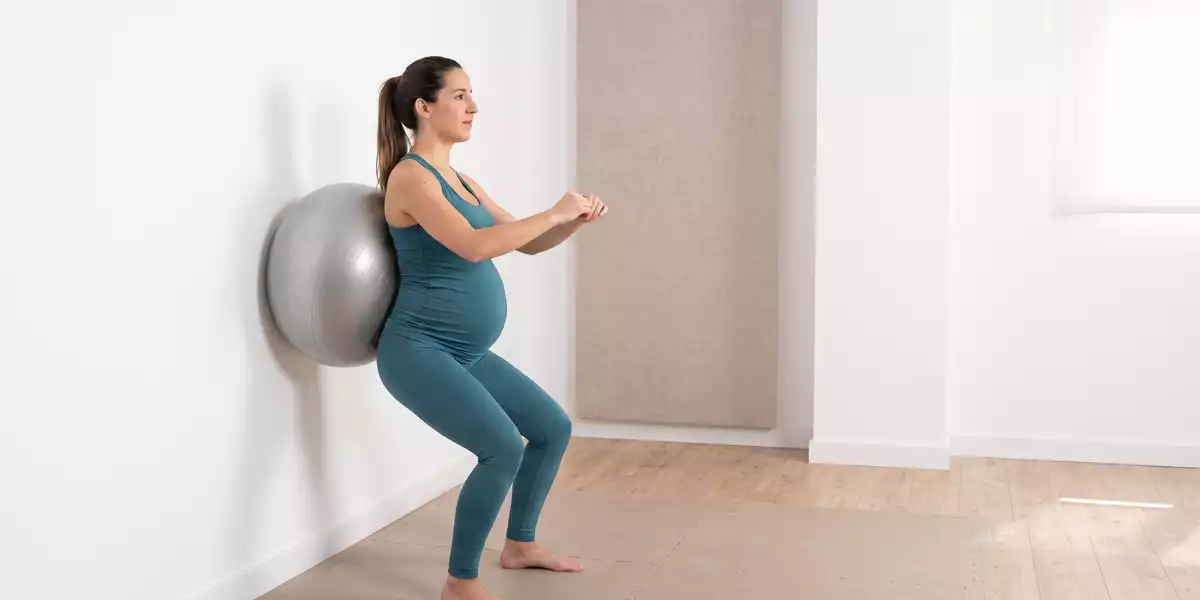
A fundamental exercise for working the quadriceps and glutes while providing support for the lower back and maintaining good biomechanical control.
- Place the ball between the wall and your lower/mid back.
- Position your feet slightly forward, a few centimetres ahead of your knees.
- Keeping your torso upright and your abdominal muscles gently engaged, bend your hips and knees while allowing the ball to roll along the wall.
- Lower yourself only as far as feels comfortable (approximately 45° to 60° of flexion), without aiming for maximum depth.
- Push firmly through your heels to return to the starting position.
Training guideline: Perform 2 to 3 sets of 8 to 12 controlled repetitions, breathing continuously and avoiding the Valsalva manoeuvre (do not hold your breath).
3. Cat-Camel Stretch with Fitball Support
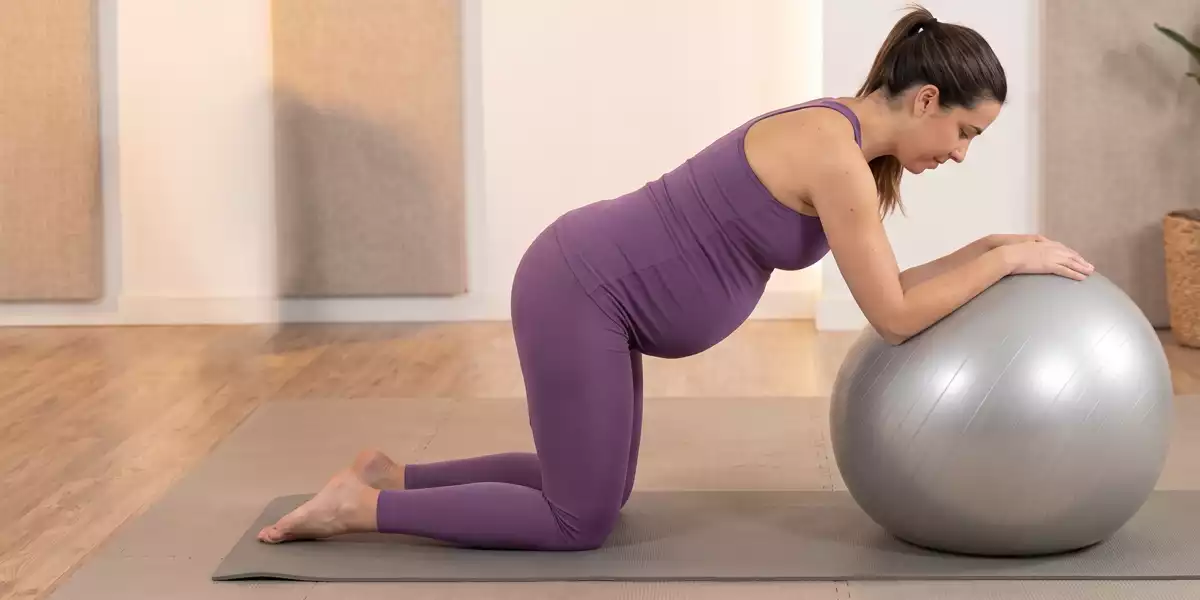
Designed specifically to mobilise the spine and help relieve lower-back discomfort, which is common during the second and third trimesters.
- Get into a quadruped position on an exercise mat, resting your forearms or hands on the Pilates ball in front of you.
- From a neutral position, take a deep breath in.
- As you exhale, gently tilt your pelvis backwards, progressively rounding your lower and upper back while allowing the ball to roll slightly forwards.
- As you inhale, return to the neutral position without forcing lumbar hyperlordosis (avoid excessively arching your lower back).
Symptomatic relief: This gentle mobility exercise may help relieve pregnancy-related lower-back discomfort and tension. Perform 8 to 10 slow, controlled repetitions.
When to Avoid Using the Ball
Although fitball exercises can generally be performed safely during an uncomplicated pregnancy, there are warning signs that mean you should stop exercising immediately:
- Dizziness, feeling faint or severe headache.
- Shortness of breath unrelated to exertion (breathlessness before exercise).
- Acute pain in the pelvic or abdominal area or chest.
- Painful or regular uterine contractions.
- Leakage of amniotic fluid or vaginal bleeding.
Postural precautions: As pregnancy progresses, prolonged exercise while lying flat on your back may cause discomfort or affect venous return in some women. If you feel dizzy, nauseous or unwell in this position, change position and follow the recommendations of the healthcare professional supervising your pregnancy.
Ultimately, the Pilates ball is an excellent tool for enjoying an active and healthy pregnancy, always based on one fundamental principle: exercise should continually adapt to the pregnant woman’s condition, never the pregnancy to the exercise.
Related Posts
- Benefits of Folic Acid During Pregnancy
- How to Relieve Gas During Pregnancy
- How to Relieve Nausea During Pregnancy with Ginger
- Best Vitamins for Pregnancy