 Fitness, Nutrition, Health and Sports Blog In the HSNstore Blog you will find tips about Fitness, sport in general, nutrition, and health – HSNstore.com

Blindfold Yoga is an increasingly widespread technique in the world of yoga. It consists of performing postures (asanas) and sequences (vinyasa-krama), using a blindfold to block vision.
In India, yogis practised meditation with their eyes closed in order to concentrate inward and reach a state of calm and balance.
So Blindfold Yoga has its origins in the classical yoga tradition.
Eventually, this practice came into the realm of physical yoga.
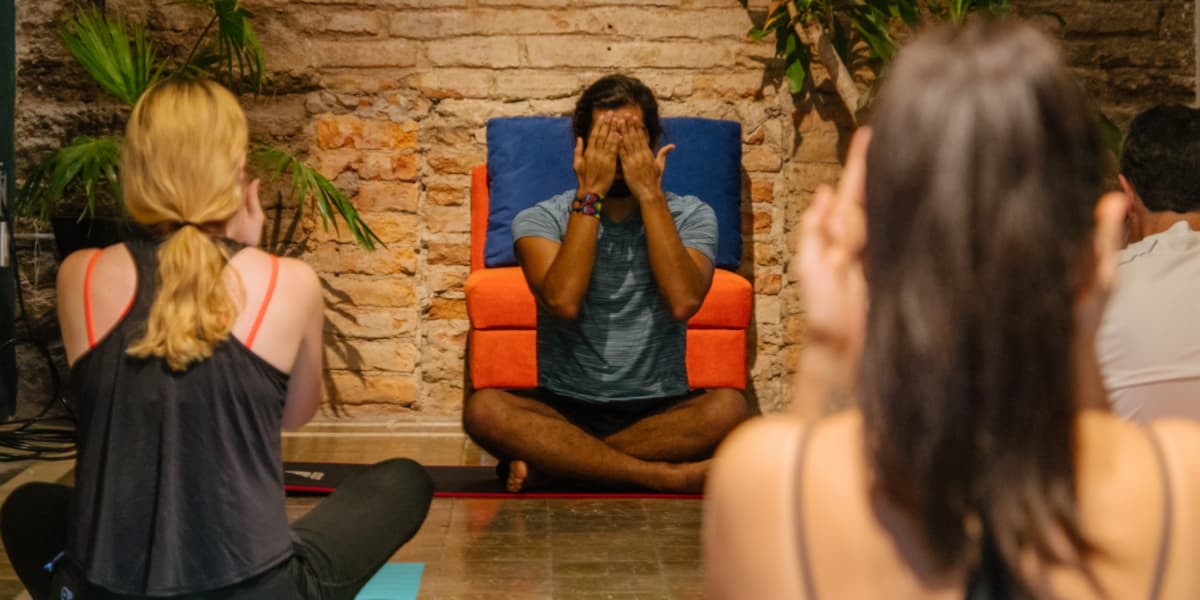
Experienced instructors began to use masks or blindfolds to prevent vision and to help their disciples deepen their technique.
This is how Blindfold Yoga is becoming more and more popular nowadays, especially because by removing the sense of sight during the sessions, the other senses are automatically intensified, increasing the connection with ourselves and the environment around us, obtaining important benefits.
Benefits of practising yoga blindfolded
- Self-awareness: something primordial in yoga, as it gets rid of all value judgements and competition with the person next to you. By being blindfolded, we eliminate any possible distraction or comparison with others. It does not matter how you look, only how you feel.
- Muscles and posture: this technique also offers multiple physical benefits. In addition to those inherent in the regular practice of yoga, as it is a little more difficult to maintain balance, we use our muscles more consciously, activating and strengthening them more efficiently. We also improve our posture and alignment, as we force ourselves to rely on our other senses and become more aware of our own bodies.
- Stress: Blindfold Yoga can help reduce stress and improve sleep quality. By blocking vision, sensory stimulation is reduced and it is possible to focus on inner sensations, absent of worries and negative thoughts. This promotes greater relaxation and better sleep.
- Confidence: Blindfold Yoga can also be a tool for building confidence and self-acceptance. It is a personal challenge and involves a lot of inner work. Blindfolding makes us face our fears instead of walking away from them, and they gradually lose their power. In this sense it has a liberating effect.
How to do a Blindfold Yoga session?
A Blindfold Yoga session consists of performing asanas common to traditional yoga, attempting to achieve a greater degree of awareness, sensitivity and mind-body connection through visual deprivation.
Preparation
Before starting the session, it is important to gradually prepare the body and mind by performing a brief relaxation with deep breathing. It is also useful to take a few minutes to situate where we are, the space around us and the dimensions of the body in relation to the mat. In this way we achieve greater body awareness.
During the session
At the beginning of the session, the yoga instructor will give precise verbal instructions to guide you through the sequence of postures, inviting you to feel, rather than seek perfection.
The instructions should always be very clear so that you can focus on the journey that is happening inside you.
You may feel vulnerable at some point, but as you progress this feeling will disappear. Visual deprivation can be challenging, so the instructor will use strategies to inspire confidence and security during practice.
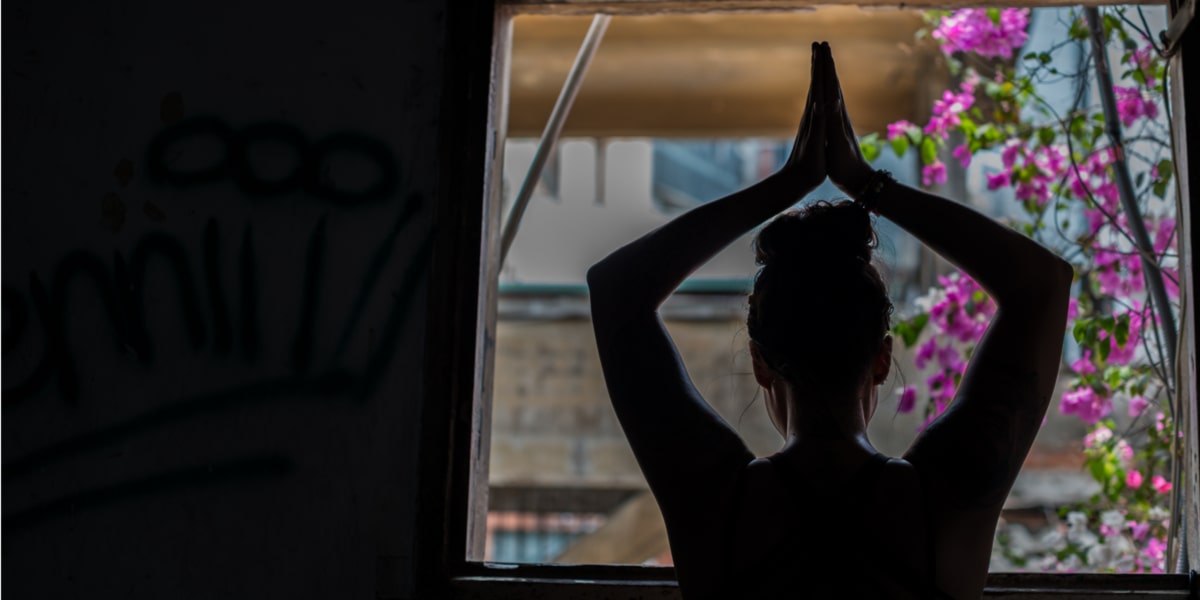
It is advisable to start with simple yoga postures, such as paschimottanasana, sun salutations, and other balancing asanas, but always with the mask on.
To conclude
The Blindfold Yoga session can end with a guided meditation or relaxation, bringing the body and mind into connection with the inner sensation.
Once the practice is over and your vision is restored, you appreciate its power much more.
What material do you need?
The equipment required to practice Blindfold Yoga is the same as for classical yoga: non-slip mats, comfortable clothes, blocks and cushions.
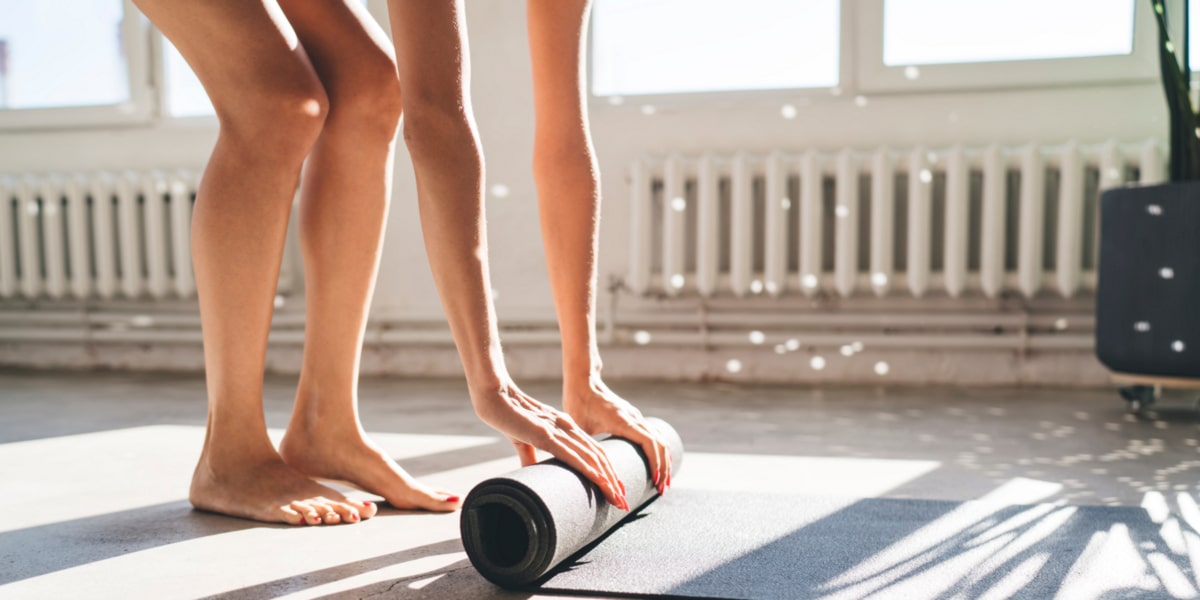
You will only need an additional bandage or blindfold. It is important that it fits well and does not fall off to avoid being distracted by continually adjusting it.
Tips and precautions
Here are some tips to help you make the most of your Blindfold Yoga experience.
- It is important that before you start practising blindfold yoga, you first familiarise yourself with the postures and exercises of traditional yoga so that you have a better command of the movements.
- Make sure the space is safe and well conditioned to avoid injury.
- Let yourself be guided by a qualified and experienced instructor who fully masters the technique.
- As it is performed with vision deprivation, it is recommended that the session does not involve demanding balancing or a routine of postures that are too physically intense.
- If you have back, knee, neck or any other problems, tell the instructor and he/she will recommend the appropriate postures to help you improve or which ones you should be more cautious with.
Related Entries
- Why do Yoga every day?
- We explain what it is and what are the benefits of the “Low Pressure Fitness” method: read Post.
- If you want to improve your posture, add these exercises to your daily routine.