 Fitness, Nutrition, Health and Sports Blog In the HSNstore Blog you will find tips about Fitness, sport in general, nutrition, and health – HSNstore.com

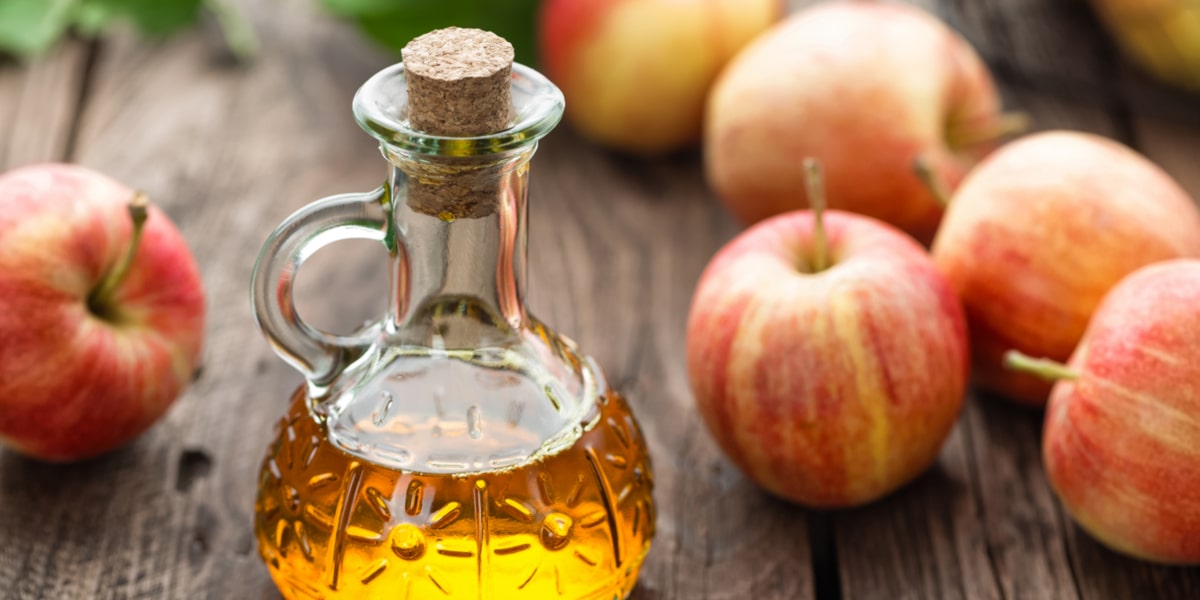
Vinegar is a by-product of the fermentation of alcohols by acetic acid-producing bacteria, which is why there are so many types of vinegars.
Whenever there is a rich source of carbohydrates, there can be alcohol, which is why many cereals are used to make beer (wheat, rye, hops, barley, etc.), grapes to make wine, apples to make cider and potatoes to make vodka.
These alcohols are stored under controlled conditions, because if exposed to air, acetic acid-producing bacteria convert the alcohol into vinegar, and the longer the storage time, the “stronger” the vinegar becomes because more acetic acid is generated.
The main component of any vinegar is acetic acid, which is mainly responsible for its effects.
Despite this, apple cider vinegar has some additional properties for which it has not yet been possible to establish a rationale, although it is attributed to the malic acid in apples, as different types of vinegar have different phenolic compounds characteristic of their fruit of origin.
In analytical tests of various apple cider vinegars, in addition to the above-mentioned acetic acid, other acids such as malic and lactic acid and various polyphenols such as catechins have been found.
Why take apple cider vinegar?
It has been used since ancient Mesopotamia, not only for food preservation, but also for personal care and for the treatment of various ailments.

It has several properties that have been researched for decades.
Antibacterial effect
In fact, it is thanks to these properties that in medieval Europe during the time of the Black Death, apple cider vinegar was used as a home remedy to prevent contagion and seek to counter the spread of the pathogen.
Today, apple cider vinegar is considered a “battle” remedy as an antiseptic treatment for superficial wounds when no other tools (such as ethyl alcohol or povidone) are available.
Antiglycaemic and appetite suppressant
This has positive connotations both in terms of health and aesthetics.
Apple cider vinegar is able to cope with acute elevations in blood insulin concentrations following the ingestion of carbohydrate-rich foods.
This decrease in net glycaemic load is proposed as a mechanism by which this vinegar has been able to exert the effects observed in appetite reduction studies.
Ultimately it helps to reduce body weight.
Digestion
In other words, they do not produce enough hydrochloric acid in their digestive tract to carry out the processes of food breakdown.
In general, apple cider vinegar is considered a good tool, used in moderation, diluted, or in encapsulated presentations; during meals, to improve digestion and reduce gastro-oesophageal reflux in people sensitive to it, or after large meals rich in fats and carbohydrates.
How to take apple cider vinegar?
Apple cider vinegar is colloquially recommended to be taken on an empty stomach, however, this use is pure esotericism, as is the case with lemon.
What do I mean by that?
That the properties of this vinegar are primarily linked to the impact on food consumption.
Besides, if we know that undiluted and uncoated apple cider vinegar (i.e. apple cider vinegar as such) is gastro-irritant, consuming it on an empty stomach doesn’t seem the best option, does it?
Apple cider vinegar supplements
As apple cider vinegar is such a widespread product, why would one use a supplement?
This vinegar does not taste delicious, the way it is usually consumed as an after-meal drink can ruin the taste of the previous meal, not to mention that some people are not able to drink it at all because they are repulsed by it.
Moreover, this vinegar must be diluted, you can’t just take a “shot” and “pull the band-aid off in one go”, you must drink a whole glass of apple cider vinegar-flavoured mixture which is, frankly, very unpleasant.
Vinegar is a gastro irritant, it damages the gastric mucosa when consumed in large quantities and in liquid form, and its acetic acid content, in contact with tooth enamel, erodes the protective dentine plaque, and is specifically contraindicated in people with tooth sensitivity.
For all these reasons, HSN’s capsule product is perfect, because:
- It saves you the bad taste of this vinegar.
- It is a quality development, appropriately dosed.
- It contains other nutrients with synergistic action that enhance the product’s properties.
- It does not damage the enamel or the digestive tract.
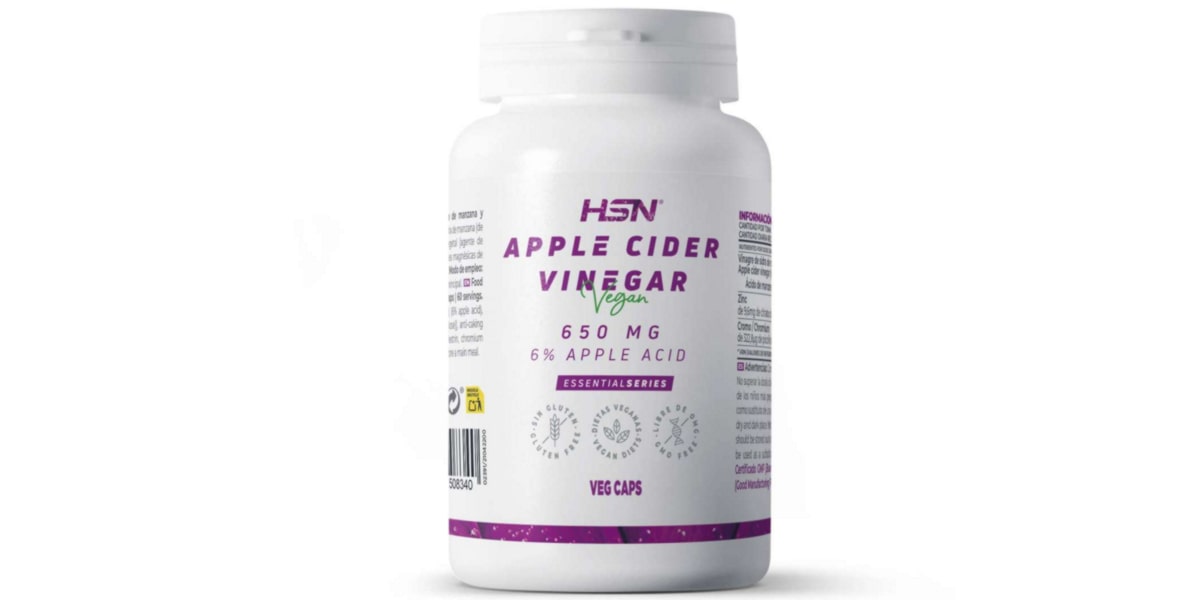
Apple Cider Vinegar 650mg by EssentialSeries.
Enjoy a healthier life with HSN!
Bibliographical references
- Budak, N. H., Aykin, E., Seydim, A. C., Greene, A. K., & Guzel-Seydim, Z. B. (2014). Functional Properties of Vinegar. Journal of Food Science, 79(5), R757-64.
- Hadi, A., Pourmasoumi, M., Najafgholizadeh, A., Clark, C. C. T., & Esmaillzadeh, A. (2021). The effect of apple cider vinegar on lipid profiles and glycemic parameters: a systematic review and meta-analysis of randomized clinical trials. BMC Complementary Medicine and Therapies, 21(1), 179.
- Ho, C. W., Lazim, A. M., Fazry, S., Zaki, U. K. H. H., & Lim, S. J. (2017). Varieties, production, composition and health benefits of vinegars: A review. Food Chemistry, 221, 1621–1630.
- Johnston, C. S., Kim, C. M., & Buller, A. J. (2004, January). Vinegar Improves Insulin Sensitivity to a High-Carbohydrate Meal in Subjects with Insulin Resistance or Type 2 Diabetes [10]. Diabetes Care, Vol. 27, pp. 281–282.
- Kondo, T., Kishi, M., Fushimi, T., Ugajin, S., & Kaga, T. (2009). Vinegar intake reduces body weight, body fat mass, and serum triglyceride levels in obese Japanese subjects. Bioscience, Biotechnology and Biochemistry, 73(8), 1837–1843.
Related Entries
- Did you know that olive oil is one of the best foods for athletes? Find out more here.
- How do you plan a healthy diet?.
- What is the relationship between Turmeric and Diabetes? Read Post.