Fitness, Nutrition, Health and Sports Blog In the HSNstore Blog you will find tips about Fitness, sport in general, nutrition, and health – HSNstore.com

Numerous studies have looked into thyroid function during exercise, with varying results. Some researchers have shown increases in this gland’s function during exercise, while others haven’t reached the same conclusion. The reason for the discrepancy lies in the exercise characteristics and the methodology used to collect thyroid hormone samples.
Thyroid Gland
The thyroid gland is located along the midline of the neck, just below the larynx, and has a butterfly shape. It secretes five hormones derived from the amino acid tyrosine and absolutely requires iodine supply.
- Iodothyronine (T1): Iodine + tyrosine
- Diiodothyronine (T2): 2 Iodines + tyrosine
- Triiodothyronine (T3): 3 Iodines + tyrosine (prohormonal)
- Tetraiodothyronine or thyroxine (T4): 4 Iodines + tyrosine (the most effective)
- Calcitonin: helps regulate calcium metabolism.
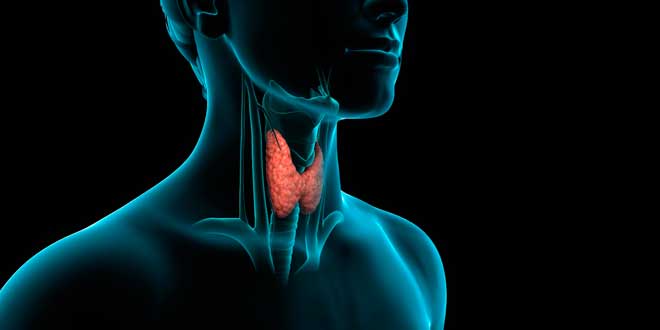
These hormones regulate metabolism in general
Triiodothyronine (t3) and thyroxine (t4) in adults
Both increase the metabolic rate of almost all tissues (except gonads, spleen, and brain) and can raise the body’s basal metabolic rate by between 60% and 100%. The effects of these hormones on metabolism depend on their concentration.
- Increase gluconeogenesis (hepatic glycogen synthesis).
- Improve insulin action.
- Facilitate rapid cellular consumption of glucose and ATP.
- Intensify lipid mobilization, increasing free fatty acid availability for oxidation.
- Increase synthesis and degradation of cholesterol and triglycerides in plasma.
- Increase protein synthesis (and therefore enzyme synthesis as well).
- Increase the size and number of mitochondria in most cells.
- Enhance catecholamine effects on cardiac muscle and adipocytes.
Hyperthyroidism Symptoms
- Hyperglycemic effect (high blood glucose levels).
- Protein breakdown leading to weight loss and muscle weakness.
- Excessive sweating due to increased core body temperature.
- Increased heart rate and uncontrollable tremors.
- Irregular menstruation.
- Infrequent bowel movements and diarrhea.
- Moist and sweaty hands.
- Leukopenia (white blood cell deficiency).
- Sterility, decreased libido, and enlarged breasts in men.

Refers to excessive secretion of thyroid hormones, that is, supra-physiological concentrations: (T4 > 10 μg/100 ml; T3 > 0,12 μg/100 ml). In this situation, these hormones have a catabolic effect.
Hypothyroidism Symptoms
Refers to deficient secretion of thyroid hormones, that is, infra-physiological concentrations: (T4 < 8 μg/100 ml; T3 < 0,12 μg/100 ml). Hypothyroidism symptoms aren’t as clear as hyperthyroidism’s, but metabolism slows down, so it’s likely to have some of these:
- Weight gain and decreased appetite (reduced basal metabolism).
- Elevated triglycerides, phospholipids, and cholesterol in blood.
- Fatty liver.
- Generally normal blood glucose, although hypoglycemia may occur.
- Anemia due to adaptation to reduced basal metabolism.
- Slow heart rate.
- Heavy menstruation.
- Constipation and fluid retention.
- Fatigue, muscle cramps, and paresthesias.
- Dry skin.
- Etc…
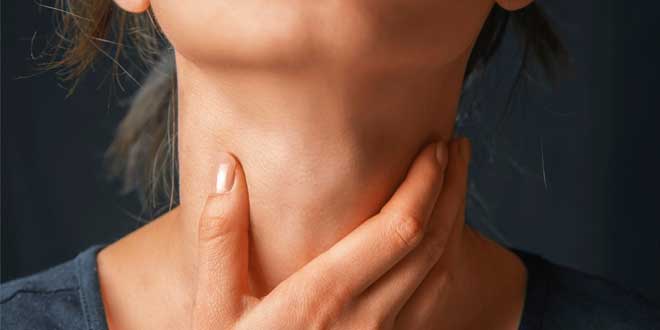
A physical way to notice the possibility of having either of these two diseases is an enlarged thyroid gland upon palpation (in both cases), known as “goiter”
Type of Exercise to Regulate the Thyroid
Most studies have focused on dynamic exercises (running, swimming, cycling, etc.), while studies related to static exercises (weight training, weightlifting, etc.) are less frequent.

Thyroid Adaptation to Training
One way to indirectly study if this gland adapts to training is to assess resting metabolism. It’s well known that one adaptation to training is an increase in RMR, so although a hyperthyroid response to training hasn’t been demonstrated, it’s reasonable to think this increase is due, among other mechanisms, to better thyroid function.
The hypothesis of better adaptation could be greater skeletal muscle sensitivity to the same T3 hormone concentration. In other words, training improves thyroid efficiency in muscle tissue
Use of Exogenous T3 in Sports
As mentioned, one symptom of hyperthyroidism is increased RMR. That’s why many athletes interested in dropping their fat levels for competition use thyroid hormones to boost their metabolic rate and thus burn more calories (hoping it’s fat tissue, although that’s not always the case).
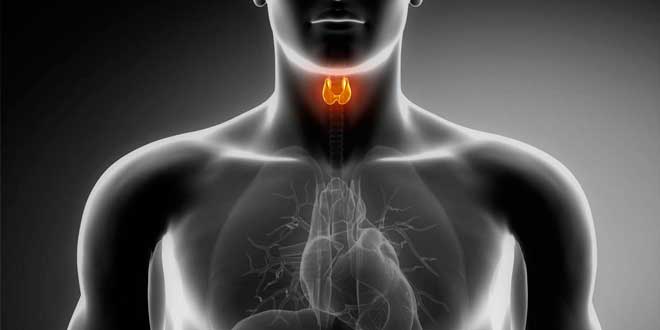
This method can be potentially useful when an athlete needs to shed a large amount of fat in a short time frame to show up at that important competition.
One characteristic of hypothyroidism, remember, is the drop in RMR. Consequently, besides health problems, from a sports perspective what was initially a solution (exogenous T3 intake to lose fat) becomes a bigger problem later because they’ll gain more fat after stopping it.
The best is to stay away from these substances and eliminate excess fat through proper diet and training.
Sources
- Calderón Montero, FJ. Sports Physiology (2nd edition). Ed TÉBAR, S.L., Madrid, 2007.
- Chicharro JL, Fernandez Vaquero A. Exercise Physiology (3rd ed). Ed. Panamericana, Madrid, 2006
- Garber. JR, White, SS. How to Overcome Thyroid Problems. Ediciones Robinbook, Barcelona, 2006.
- Adamopoulos, S., Gouziouta, A., Mantzouratou, P., Laoutaris, I. D., Dritsas, A., Cokkinos, D. V., & Pantos, C. (2013). Thyroid hormone signalling is altered in response to physical training in patients with end-stage heart failure and mechanical assist devices: potential physiological consequences?. Interactive cardiovascular and thoracic surgery.
- Calderón Montero, FJ. Sports Physiology (2nd edition). Ed TÉBAR, S.L., Madrid, 2007.
- GONCALVES, A., RESENDE, E. S., FERNANDES, M. L. & DA COSTA, A. M. (2006) Effect of thyroid hormones on cardiovascular and muscle systems and on exercise tolerance: a brief review. Arq Bras Cardiol, 87, e45-7.
- Maor, E., Kivity, S., Kopel, E., Segev, S., Sidi, Y., Goldenberg, I., & Olchovsky, D. (2013). Differences in Heart Rate Profile during Exercise among Subjects with Subclinical Thyroid Disease. Thyroid, (ja).
- MASTORAKOS, G. & PAVLATOU, M. (2005) Exercise as a stress model and the interplay between the hypothalamus-pituitary-adrenal and the hypothalamus-pituitary-thyroid axes. Horm Metab Res,37, 577-84.
Related Posts
- How to Speed Up Metabolism
- How to Calculate My Ideal Weight?
- What Type of Metabolism Do You Have?
- Symptoms of Having a Fast Metabolism
- Boost Your Health with the Benefits of Calcium D-Glucarate