Fitness, Nutrition, Health and Sports Blog In the HSNstore Blog you will find tips about Fitness, sport in general, nutrition, and health – HSNstore.com

The “metabolic type” or metabolism of each individual is a concept that is related to the diet and the way in which each organism uses these nutrients.
Thus, one type of diet may be very beneficial for someone, while being the complete opposite for another person. One of the possible causes is the genetic diversity observed in society.
What is Metabolism?
It can be described as the process by which our body obtains energy and nutrients from the food we eat.
These are the countless chemical reactions that take place inside our bodies and that allow us to stay alive and functioning.
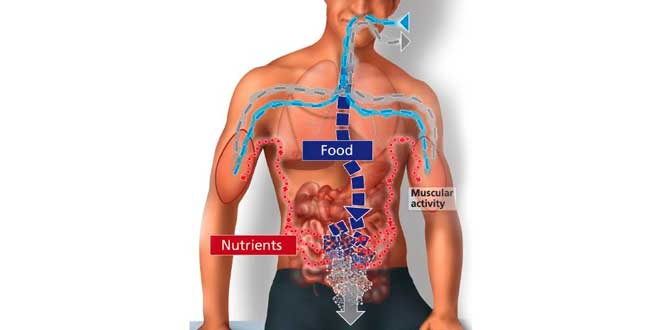
In this sense, we have heard of people with a slow metabolism and a fast metabolism. In the former case, the process described above is slower, and the opposite applies in the latter.
For these reasons, different nutrients, eating habits, or the way they are supplemented, will have different impacts on different people.
What factors affect metabolism?
- Age: the older you get, the slower your metabolism.
- Body composition: the higher the fat percentage, the lower the metabolism.
- Gender: men tend to have a faster metabolism than women, due to hormonal involvement.
- Hormonal factors: hypo/hyperthyroidism.
- Diet: certain macronutrients, such as protein, increase metabolism.
- Environment: a colder climate induces faster metabolisms to maintain body temperature.

Some people oxidise carbohydrates very quickly (burn them), while others do so much more slowly. In other people, their sympathetic nervous system is more or less reactive than the parasympathetic system.
Markers Distinguishing the Type of Metabolism
According to some research, there is a consensus that each type of metabolism can be differentiated according to efficiency. What does efficiency mean in this context? Efficiency shall be the ratio of energy developed to the amount of energy obtained.
Therefore, we are dealing with:
- Efficient Metabolism: Someone with an efficient metabolism will be able to obtain a large amount of energy per unit of energy ingested.
- Inefficient metabolism: Someone with an inefficient metabolism will require much more energy input to develop or be able to match the person with a better metabolism.
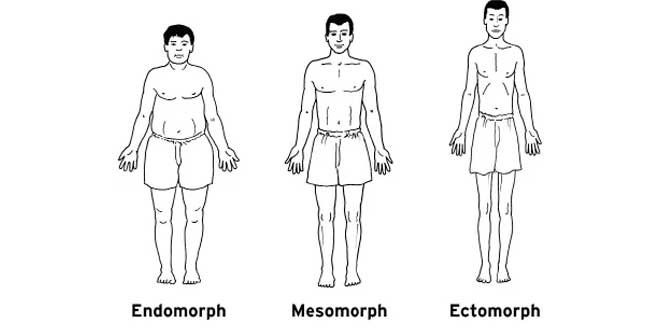
Somatotype: Ectomorph, Mesomorph and Endomorph characteristics
- From another perspective, a person with an efficient metabolism has a condition to save or store ingested calories. And in the other case, the person is more predisposed to “waste” those calories.
- In the first case, people with thrifty phenotypes are said to be thrifty, and for the second, the term is spendthrift phenotypes.
Efficient Metabolism
Among the characteristics observed for those with this type of metabolism, the following can be distinguished:
High Insulin Sensitivity
Insulin is the hormone the body uses to store calories.This makes sense for efficient metabolism, as it will respond very positively to insulin secretion, due to the rise in blood glucose in response to carbohydrate intake.

Sympathetic Nervous System (SNS)
The SNS is directly related to the release of certain hormones: catecholamines (epinephrine and norepinephrine), and glucocorticoids (cortisol). These substances are responsible for activating us to stay alert and respond to stressful situations.
Catecholamine and cortisol levels run parallel, i.e. a subject that secretes a lot of catecholamines will also secrete a lot of cortisol.
Less Muscle Mass
Normally, by genetic disposition, there is a certain level of muscle mass. This fact conditions the metabolism to expend a lot of calories.
Slow Fibres
A person who possesses a greater number of these types of muscle fibres as a whole will lead to metabolic savings.
Fast fibres consume a large amount of energy for their activation, although in this sense the characteristics of the person and their activity are also conditioned.
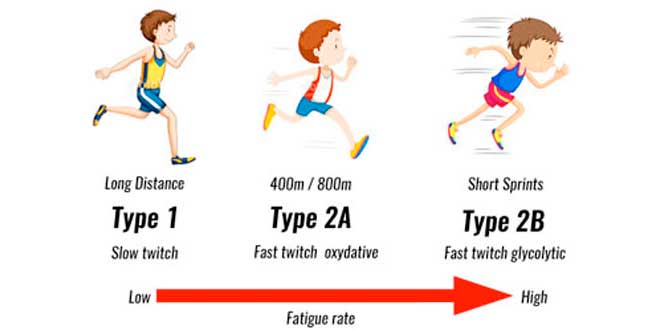
The latter two characteristics are associated with physiques that are more prone to a certain activity.
Weight Gain Tendency
This point is self-explanatory.
Someone with an efficient metabolism will tend towards a slower metabolism and will be more likely to store more calories, rather than burn them.
Hypoglycaemia Response Curve
This type of curve relates to the body’s response to carbohydrate intake and blood glucose variation.
There are 2 extreme types of response for this curve:
- Hypoglycaemic response
- Flat Response
If someone with the first type is given a considerable amount of carbohydrates (100g of glucose), the curve will rise to the stratosphere, and then fall to levels below basal (before taking the food). This is indicative of extreme insulin sensitivity and insulin production.

This answer is given to people who are at a very low fat percentage.
Fat Accumulation in Subcutaneous Tissues
The adipose area is just below the skin and is the fat that can be “pinched”. Visceral fat is deposited under the organs in the abdominal area and causes the stomach to push outwards.
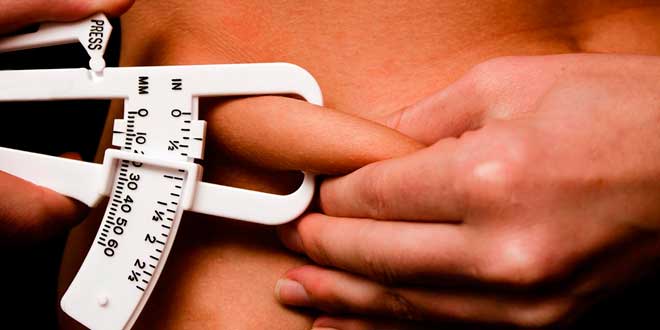
There are two main types of “stores” for fat: adipose tissue and the visceral area.
Low Resting Heart Rate
A person with an efficient metabolism tends to have a low resting heart rate, a symptom of energy conservation.
Problems Related to Overweight
These people are undoubtedly going to suffer greater ailments than someone looking at a leaner profile. These symptoms include high blood pressure, cardiovascular problems, high triglyceride levels, among others.

However, this is not exclusive to obese people. There may be the case of someone who is lean, who suffers from one of these pathologies.
Low Energy with Oscillations
Because an efficient metabolism tends to an underactive SNS, it leads to lower energy levels or energy status. The fluctuations are a consequence of blood glucose disturbances.
Positive Response to Reducing Carbohydrates in the Diet
Due to the nature of being very prone to insulin and carbohydrate response, people with this profile respond remarkably well to diets where glucose levels are kept stable.

Low-glycaemic fruits and vegetables should be the mainstay of carbohydrates in the diet of these people, incorporating starches and flours only in cases of heavy use.
Inefficient metabolism
The characteristics of this type of metabolism include:
Insulin Resistance
They correspond to worse insulin response, following carbohydrate intake in less efficient metabolism. Therefore, someone with this type will be able to consume large amounts of sugar-containing foods and have normal energy levels for hours.

Its response curve will therefore be flat. As they acquire the sporting habit, this parameter improves, becoming more “sensitive”.
High Sympathetic Nervous System Activity
High SNS activity is observed, accentuating the activity of the hormones involved.
Increased Muscle Mass
Sometimes people with this metabolism tend by nature towards a higher level of muscularity, and even gain more muscle without major variations in fat.

Mastering Fast Fibres
Characteristic of this type of metabolism will be stronger, more explosive or faster people, but this results in less efficiency from an energetic point of view.
High Energy Level
Naturally, this behaviour can be seen, thanks to the activity of the SNS.
Ease of Fat Loss and Gain
It may be a paradox, but it makes sense, as they are less sensitive to insulin. In the case of a high level of endurance, the body tends to “get rid” of excess calories to prevent fat storage.
An organism with these characteristics will be able to become “lean” more easily.
However, at a certain point, if insulin resistance is high (due to lack of activity and weight gain), nutrients cannot be stored in muscle, and will go into fat cells.
In this sense, the brain reaches a state in which it “feels hungry”, even when it has eaten. This leads to severe weight gain. This group, in the absence of activity, may gain a large amount of fat, but then, applying the same rule, will easily lose it.

Visceral Tissue Fat Accumulation
This is due to the increased activity of the SNS, in particular cortisol. High secretion of this hormone leads to accumulation in these areas. On the positive side, this type of fat is “easily” eliminated through calorie deficit.
Worst of all, its accumulation leads directly to the liver, with consequences.
Better Response to Carbohydrates
They even respond well to diets low in this macronutrient, but risk lower energy levels. Actually we all have certain characteristics of each group, some lean more to one side.

Which group do you belong to?
Now with this information you can analyse and identify yourself.

When you eat a high-carbohydrate breakfast, do you feel very energetic at first, but after 30 minutes, do you feel sluggish and even drowsy? You may belong to the first group. If you feel good in the next 3 hours, you belong to the less efficient group.
What would be the ideal diet?
There should be no major variations. Athletes need around 1.8-2.2g of protein per lean weight, and in some cases even slightly more, contributing up to 40% of total calories. The rest of the manipulations are based on carbohydrates and fats.
- If you are in the less efficient group, you will have better tolerance to carbohydrates, you will not burn fat properly, and the diet to adjust would be around 40%, 40-45%, and 15-20% for each macronutrient, protein, carbs, and fat, respectively.
- If you are in the other group, it is just the opposite. You tolerate diets higher in fat and moderate in carbohydrates better. The percentages would be 40%P, 20-30%C and 30-40%F.

One of the reasons why you may see professional football or basketball players not following a strict dietary plan is due to the high wear and tear of competition. But the moment they stop being professional players….
Related Entries