Fitness, Nutrition, Health and Sports Blog In the HSNstore Blog you will find tips about Fitness, sport in general, nutrition, and health – HSNstore.com

Who hasn’t dreamed of having defined abs? That “six-pack” is almost the universal symbol of fitness. But beyond looks, having strong, well-trained abs brings huge benefits for health and performance.
Getting them is a challenge that takes patience and consistency. There are no magic shortcuts. The key is to combine two essential factors: a low body fat percentage and a developed rectus abdominis through hypertrophy.
The real path involves smart training, proper nutrition, and enough rest. It’s a process, but the results are totally worth it. Let’s see how to make it happen!
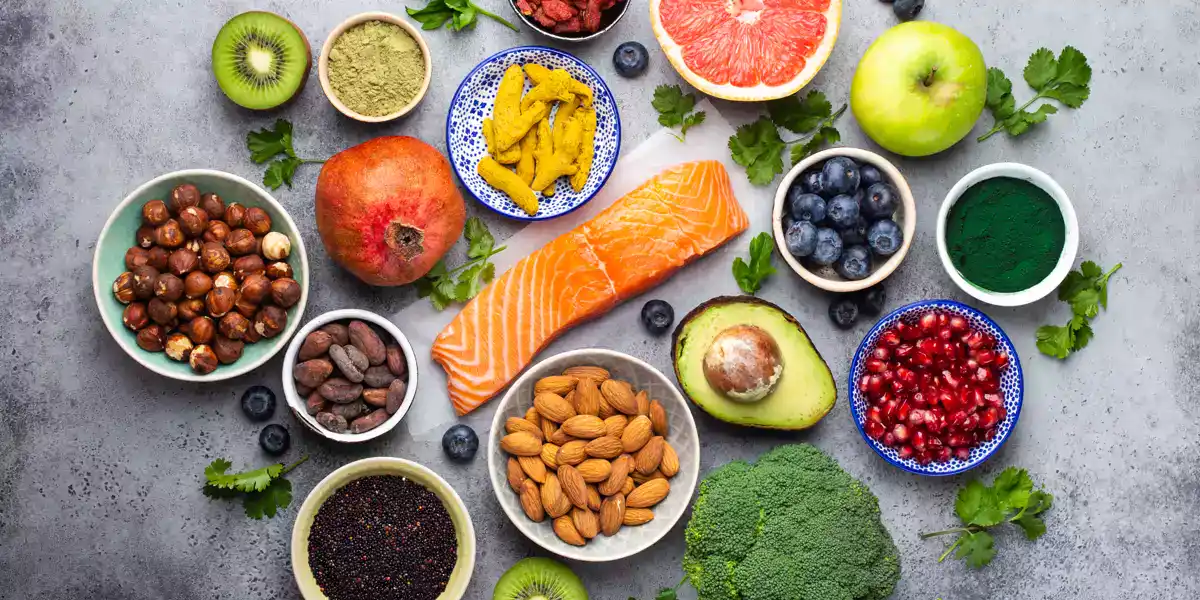
What you need to change in your diet to get defined abs
Reading the word diet might have sent a chill down your spine… To some extent, following some eating guidelines and good planning shouldn’t generally cause too much stress.
Protein is the most filling macronutrient, plus there’s no real “storage” in the body like with carbs (stored as glycogen) or fats (which depending on the type either accumulate in adipose tissue or get oxidized).
About training, two key points: ab exercises like isometric planks or squats (yes, they also work your abs), and on the other hand, increasing calorie burn (calorie deficit) through “cardio,” especially HIIT.
It all depends on your starting point:
- If you have low body fat but no visible abs, you probably need to gain muscle mass (especially if you’re an ectomorph).
- If you carry a bit more body fat, the way forward is to set up a controlled calorie deficit to reduce that layer covering your abs.
1 Make sure you get enough protein at every meal
Protein is your best friend: it fills you up, helps preserve muscle during a calorie deficit, and boosts energy expenditure while digesting.
Try to include a protein source in every meal.
?Foods: lean meat, fish, eggs, legumes, or protein shakes if you need an extra boost.
?Example if you weigh 70 kg:
- Minimum: 70 x 1.6 = 112 g/day
- Ideal: 70 x 2 = 140 g/day
- Maximum: 70 x 2.2 = 154 g/day
The general recommendation for active people aiming to improve body composition (gain muscle or lose fat) is to consume between 1.6 and 2.2 grams of protein per kilogram of body weight per day.
2 Don’t cut out all carbs
Carbs are necessary, especially if you train hard. The common mistake is to ditch them completely, which can slow down your metabolism and hurt your performance.
?To maintain weight or gain muscle: 3 to 5 g per kg of weight (e.g., 70 kg → 210–350 g/day).
?To define or lose fat: 2 to 3 g per kg (e.g., 70 kg → 140–210 g/day).
A good strategy? Calorie cycling:
- More carbs on tough training days.
- Less on rest days or light training days.
3 Include healthy fats
Don’t fear fats, but choose wisely:
- Omega-3 (fatty fish, fish oil): improves insulin sensitivity.
- Extra virgin olive oil or coconut oil: provide beneficial fats and help regulate appetite.
?Example for 70 kg: between 56 and 84 g per day.
4 Try intermittent fasting (if it suits you)
It’s not mandatory, but it can help you create a calorie deficit without feeling hungry.
?Example: eating only within an 8-hour window (like from 12:00 to 20:00), having 2 main meals and a post-workout shake.
Exercises to define abs
Without downplaying their importance, compared to nutrition guidelines, ab training will also be key to mainly promote abdominal hypertrophy.
Among the most important exercises are compound or basic ones, like deadlift or military press.
During these, the core must stay active (isometric work) to stabilize. But without a doubt, specific ab training is the other fundamental pillar to develop and show off your six-pack.
Isometric exercises for maximum muscle activation!
When it comes to training abs directly, isometric exercises are the most efficient. Unlike traditional ones like crunches, this type of work activates more muscle fibers and improves the endurance of the entire abdominal belt. Some especially effective exercises are:
1 Isometric plank
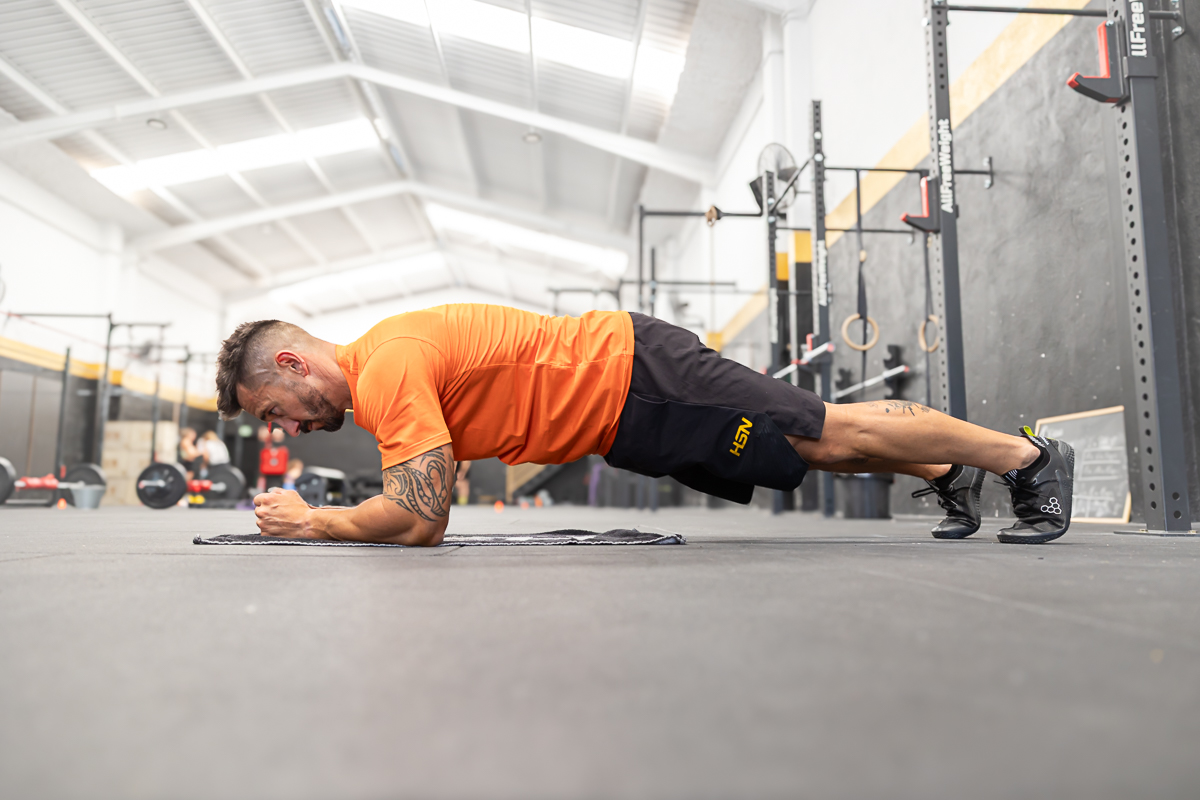
?️To do this exercise, hold this position without letting your pelvis drop. You’ll know you’re doing it right when you start to “shake.”
?We recommend doing a plank Tabata (8 rounds of 20″ plank and 10″ rest).
2 Ab Wheel

The ab wheel can become a powerful tool to increase ab volume.
?️Simply “roll” out until fully extended, supporting only your knees and the wheel, to contract the rectus abdominis, then roll back to the start position.
?A solid routine would be 10 sets of 10 reps with 1 minute rest.
3 Carry overhead
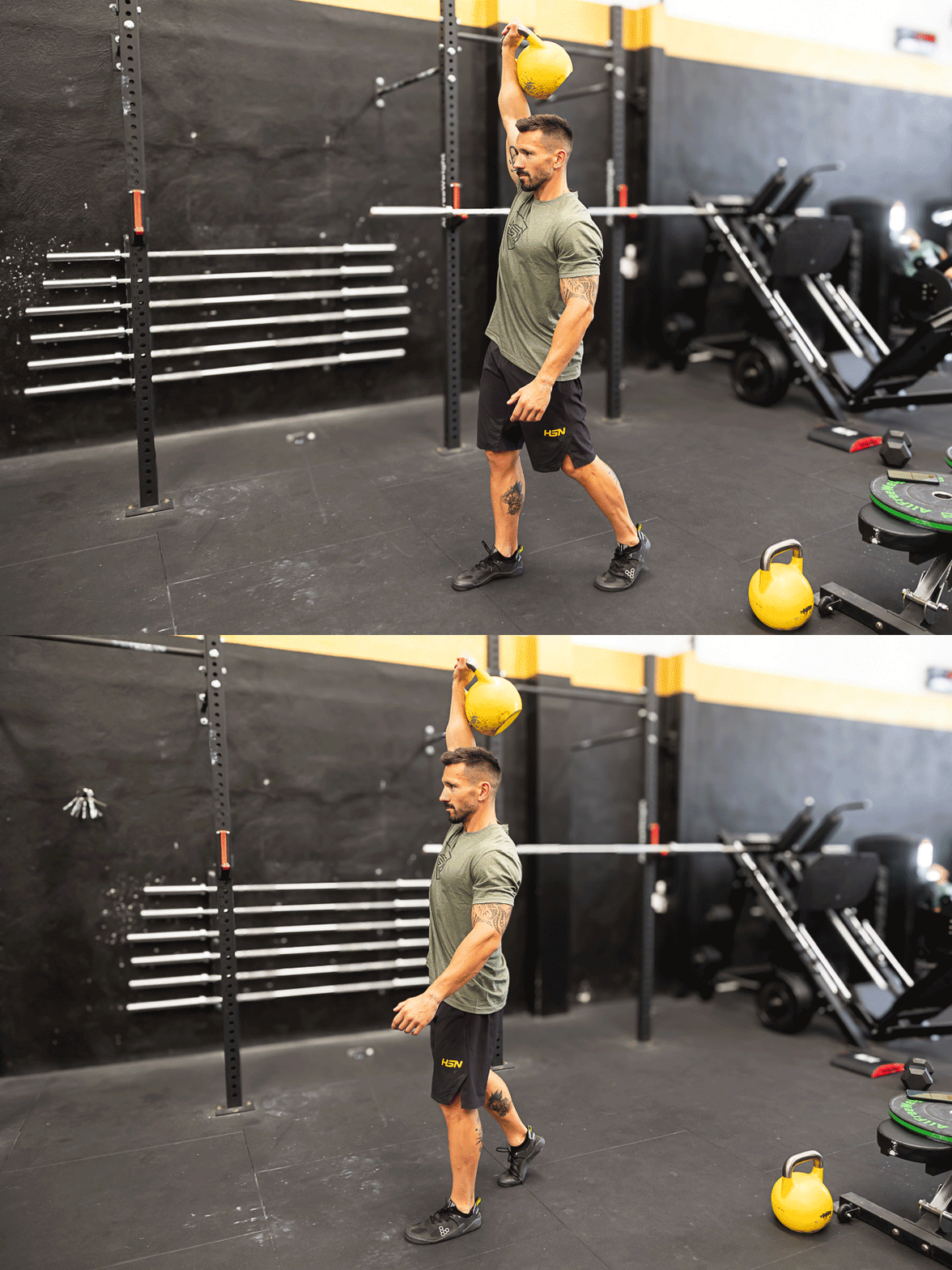
Definitely one of the toughest exercises for your abs.
?️It involves carrying a weight overhead (dumbbell, kettlebell, plate…) for several meters, keeping your core active the whole time.
?Complete 5 sets of about 20 meters with 45 seconds rest.
HIIT also works your abs
High-intensity interval training (HIIT) not only helps burn fat faster but also preserves muscle mass.
When doing sprints, for example, your abs naturally activate due to the movement’s demand. Plus, you can add HIIT sessions after your strength training to maximize calorie burn without making your workouts too long.
Boost your calorie burn with small changes
It’s not all about exercise. Increasing daily energy expenditure also means upping NEAT, that is, non-exercise activity thermogenesis (walking, taking stairs, moving more throughout the day).
These small actions add up to calories burned without structured effort and help you keep the deficit needed to lose belly fat.
Related posts
- How to hypertrophy your abs with these exercises
- Can you lose localized belly fat?
- Alternative ab exercises
- Why do abs before training?