Fitness, Nutrition, Health and Sports Blog In the HSNstore Blog you will find tips about Fitness, sport in general, nutrition, and health – HSNstore.com

The Pallof Press is a particularly useful exercise for developing core stability and the ability to resist trunk rotation. Although it may look simple to perform, maintaining proper posture and tension throughout the entire movement is key to executing it correctly and getting the most out of its benefits.
How to Do the Pallof Press
To perform the Pallof Press, stand sideways to a cable machine or resistance band and hold the handle in front of your chest. Keep your torso stable and extend your arms straight out in front of you without allowing your body to rotate towards the resistance. Hold the position briefly, then bring your hands back towards your chest in a controlled manner.

- Stand sideways to the resistance point, with your feet apart in a stable stance.
- Hold the handle with both hands and bring it in front of your chest.
- Keep your core engaged and your torso stable throughout the exercise.
- Extend your arms straight out in front of you without rotating your torso.
- Briefly hold your arms extended while resisting the rotational force generated by the load.
- Bring your hands back towards your chest in a controlled manner.
- Repeat the movement, then switch sides to work in both directions.
Recommended Sets and Reps
For optimal results, we recommend:
| Level | Sets x Reps | Load | Rest | Weekly Frequency |
| Beginners | 3 x 12 per side | Light weight | 45-60″ | 2 (as part of core workouts) |
| Advanced | 4 x 15 per side | Progressively increase the load | 45-60″ | 2 (as part of core workouts) |
Muscles Worked by the Pallof Press
The muscles involved in this exercise work isometrically, meaning they contract without producing visible movement in order to maintain proper body alignment. This static contraction is key to developing core endurance and control.
- Obliques: these are the main muscles responsible for preventing trunk rotation. The external oblique on the side opposite the resistance and the internal oblique on the same side contract strongly to prevent the torso from rotating.
- Rectus abdominis: commonly known as the “six-pack”, this muscle is activated to stabilise the pelvis and rib cage, helping to prevent excessive extension and lateral flexion of the spine.
- Transversus abdominis: this is the deepest abdominal muscle and acts like a natural corset, increasing intra-abdominal pressure and providing a solid foundation for stability.
- Multifidus and other deep back muscles: these small muscles running along the spine play an important role in the segmental stability of the vertebrae.
- Quadratus lumborum: this deep lower-back muscle helps stabilise the pelvis and spine.
3 Pallof Press Variations
Adapt the exercise to your level with these variations:
1 Kneeling Pallof Press
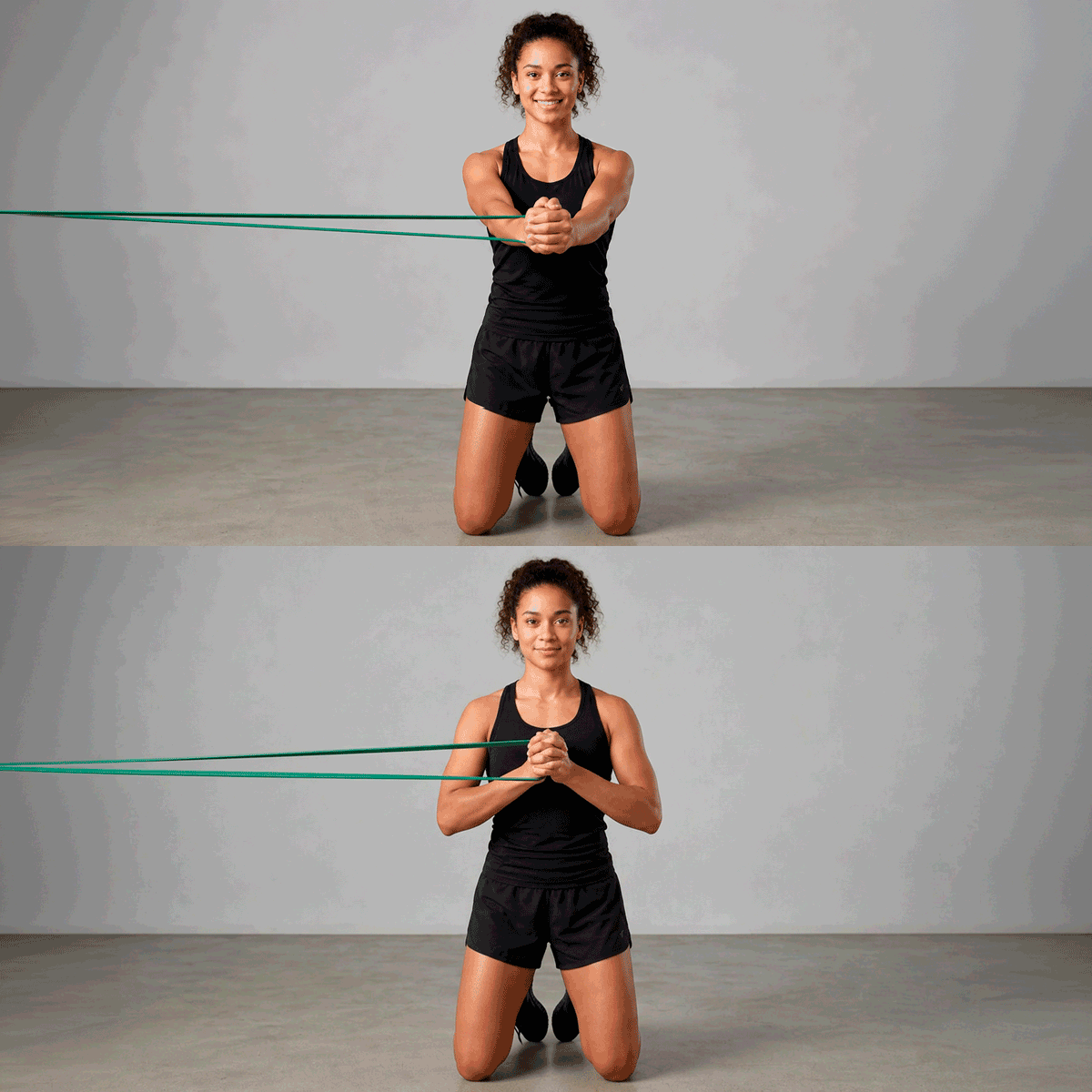
- Kneel on a pad, keeping your torso upright.
- Extend your arms in front of your chest while resisting the pull of the cable.
- Hold for 3 seconds on each repetition.
2 Pallof Press with Controlled Rotation
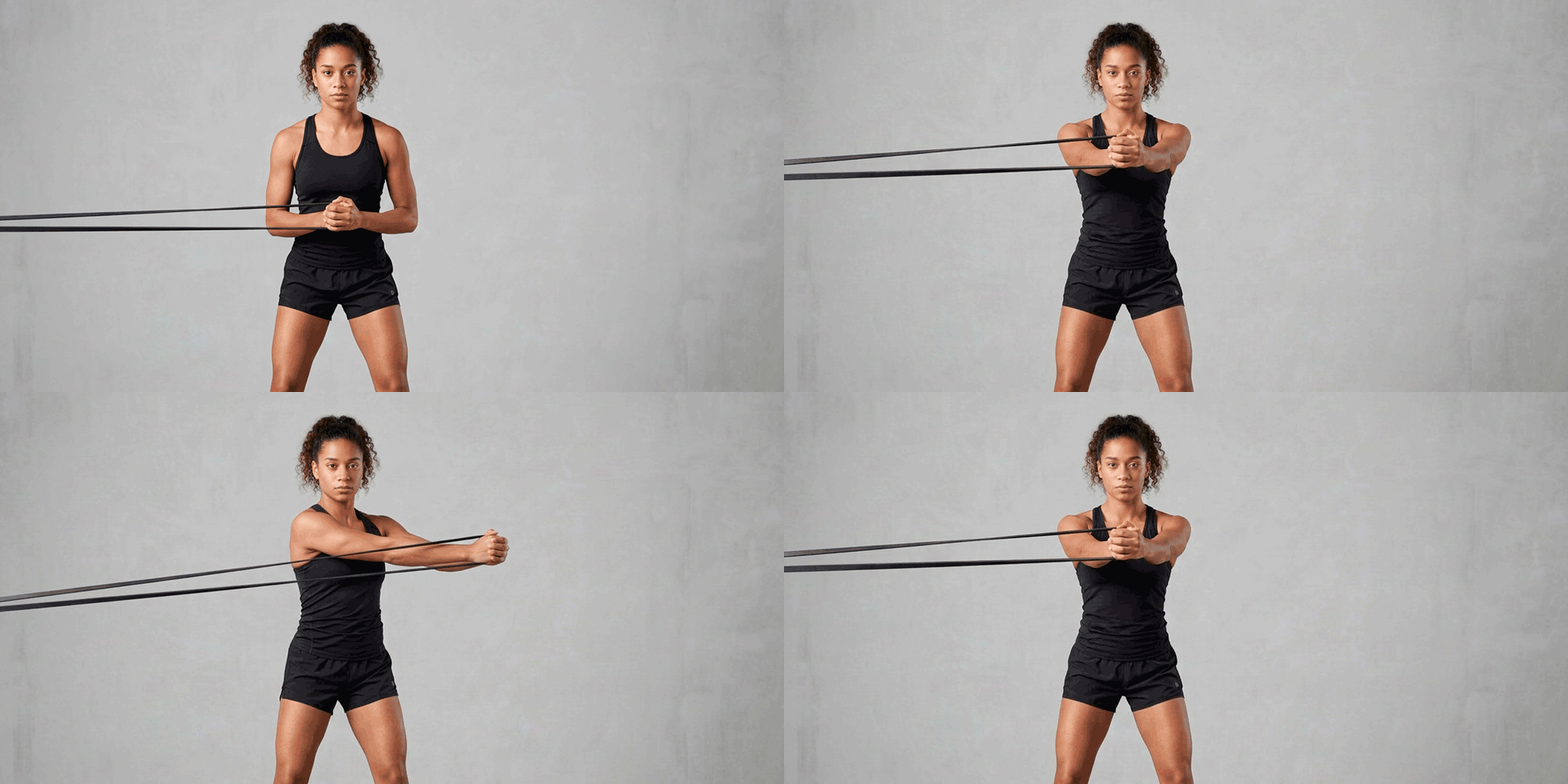
- From the standard position, slowly rotate your torso 45º.
- Return to the centre without allowing the cable to pull you out of position.
- Perform 10 repetitions per side.
3 Single-Arm Pallof Press
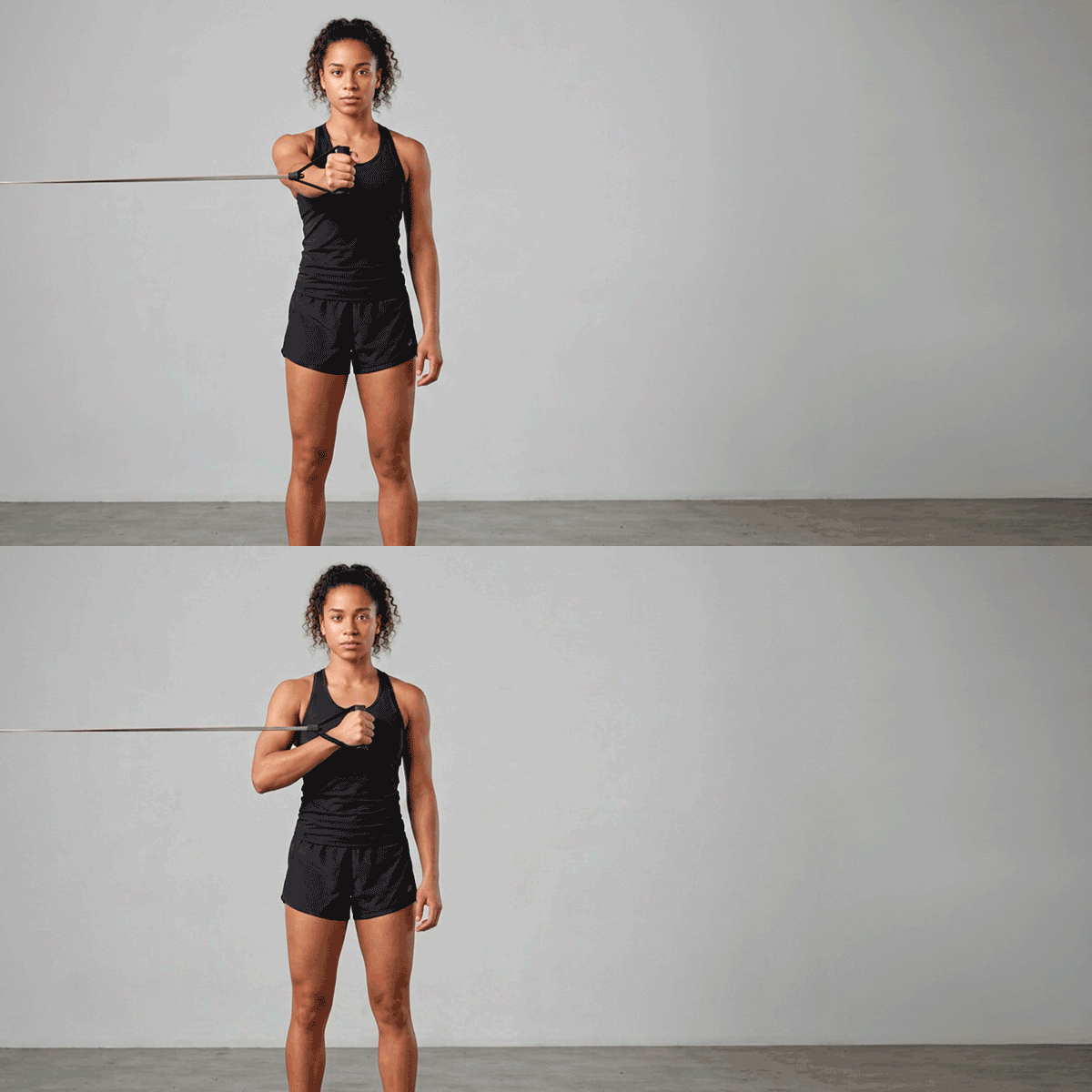
- Hold the handle with one hand.
- Extend your arm while slightly rotating the opposite foot.
- Use 50% of your usual weight.
Common Mistakes and How to Fix Them
These mistakes can reduce the effectiveness of the exercise:
| Mistake | Consequence | Solution |
| Rotating the torso | Reduces oblique activation | Keep the shoulders aligned |
| Lumbar hyperextension | Places excessive stress on the lower back | Engage the glutes and core |
| Bent arms | Reduces tension on the core | Fully extend the arms |
| Excessive weight | Leads to compensatory movement | Use a load that allows you to maintain control |
Benefits of the Pallof Press
- Strengthens the deep core muscles, helping to prevent injuries during heavy lifts.
- Helps address muscular imbalances and improve posture affected by prolonged sedentary behaviour.
- Can improve performance in rotational sports such as golf or tennis by strengthening the obliques.
- Helps develop controlled intra-abdominal pressure and improve trunk stability.
Other alternative exercises:
- How to Do the Side Plank
- Learn How to Do the Farmer Carry
- Complete Plank Exercise Guide
- Front Rack Carry Technique
- Complete Guide to Abdominal Exercises