Fitness, Nutrition, Health and Sports Blog In the HSNstore Blog you will find tips about Fitness, sport in general, nutrition, and health – HSNstore.com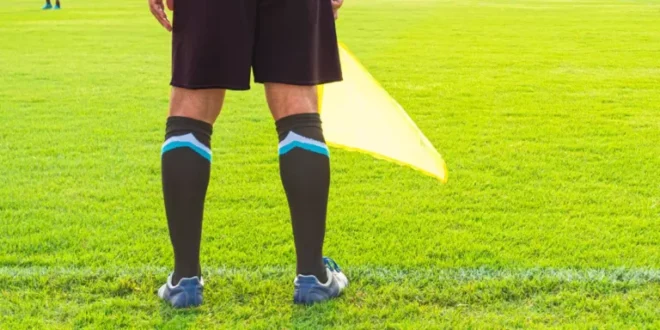

Football referees are, in essence, high-performance athletes. Although they are often overlooked in sports planning, a referee can cover up to 10,000 meters per match, performing high-intensity sprints and making critical decisions under metabolic fatigue.
In this guide, we analyze how to professionalize your physical preparation and which supplements will help you stay fresh until the 90th minute.
Physical Demands: Why is a Referee an Athlete?
Football is an intermittent sport. According to studies (Castillo-Alvira, 2017), both main referees and assistant referees display different activity patterns, but they share one common need: the ability to recover quickly.
- Volume: ~10 km per match.
- Intensity: management of high-intensity sprints (>21 km/h), which decrease by 20% in the second half due to fatigue.
- Physiology: 75% of the time is spent at intensities below 75% of maximum heart rate, but peak-intensity actions determine the correct positioning to award a penalty or call an offside.
Official Physical Tests (RFEF and FIFA)
To compete in professional categories, it is mandatory to pass the tests established by the Referees Technical Committee. Below is a summary of the tests you should prepare for:
| Test | Objective | Typical Requirement (Elite Level) |
|---|---|---|
| Sprints (6 x 40m) | Explosive Speed | < 6.00 seconds per sprint |
| Yo-Yo Intermittent Recovery | Aerobic Endurance | Level 18.2 or higher |
| 75m / 25m Interval Test | Intermittent Capacity | 40 repetitions (15s run / 18s recovery) |
| ARIET (Assistant Referees) | Specific Agility and Endurance | Intermittent shuttle-run protocol |
Training Periodization
To maintain peak fitness throughout the season, running alone is not enough. We propose a 3–4 session weekly microcycle focused on maintaining competitive freshness:
| Day | Session Focus | Technical Description |
|---|---|---|
| Monday | Active Recovery | Light jogging (20–30 min) + Joint mobility + Core stability work |
| Tuesday | Strength and Power | Eccentric-focused training: Squats, jumps (plyometrics), and intramuscular coordination |
| Wednesday | HIIT / RSA | Interval training: 10 x 30m sprints with 30s active recovery |
| Thursday | Complete Rest | Physiological recovery and energy substrate replenishment |
| Friday | Pre-Match Activation | Short session (30–40 min): Explosive speed and reactive running technique |
| Saturday/Sunday | Competition | Match day: Application of maximum physical demands on the field |
Nutrition and Strategic Supplementation
This is the differentiating factor. Mental fatigue can be just as dangerous as physical fatigue for a referee.
Recommended HSN Supplements
- Isotonic Drink: contains electrolytes and rapidly absorbed carbohydrates to maintain glycogen levels throughout the match.
- Beta-Alanine: ideal for buffering lactate during repeated sprints, delaying the burning sensation in the legs.
- Caffeine: improves cognitive focus and decision-making when fatigue sets in during the final quarter of the match.
- Creatine: supports explosive efforts and post-match recovery.
Frequently Asked Questions (FAQ)
How can assistant referees improve their speed?
Assistant referees require more lateral movements and changes of direction. You should include SAQ (Speed, Agility and Quickness) drills using agility ladders and cones.
What should I eat before an official match?
Prioritize low-glycemic-index carbohydrates 3 hours before the match and a serving of Evocarbs or a piece of fruit 45 minutes before kick-off.
References
- Drust, B., Atkinson, G., & Reilly, T. (2007). Future perspectives in the evaluation of the physiological demands of soccer. Sports Med, 37(9), 783-805.
- Campos, M. A. (2015). Monitoring physical and physiological responses to training and competition in football. (Doctoral Thesis). Pablo de Olavide University: Seville.
- Castillo, D., Cámara, J., & Yanci, J. (2015). Fatigue produced and workload imposed by an official match on an international football referee. I National Congress on Physical Preparation in Football.
- Castillo-Alvira, D. (2017). Quantification of physical and physiological responses and analysis of fatigue induced by official football matches in referees. Doctoral Thesis. University of the Basque Country.
- Royal Spanish Football Federation (2020). Circular No. 2: Physical tests and medical controls for football referees. Referees Technical Committee. RFEF.
- Irigoyen, J. Y., Vaíllo, R. R., Domínguez, C. G., Martín, J. J. S., & Larumbe, A. L. A. (2014). Assessment and relationship between anthropometric characteristics and physical fitness in football referees. Spanish Journal of Physical Education and Sports, (406), 15-27.
- Bustos-Viviescas, B. J., Acevedo-Mindiola, A. A., & Ortiz-Novoa, J. A. (2017). Maximum oxygen consumption, maximum heart rate, and maximum aerobic speed in Colombian football referees. Búsqueda, 4(19), 149-157.
- Castillo, D., Cámara, J., & Yanci, J. (2016). Analysis of the physical and physiological responses of field and assistant soccer referees during Spanish Third Division official matches. RICYDE. International Journal of Sport Science. doi: 10.5232/ricyde, 12(45), 250-261.
- Mallo, J., García, J. M., & Navarro, E. (2009). Physical performance of football referees according to competition level. Archives of Sports Medicine, 335-344.
- Sainz, J. M. (2006). Analysis of the physical performance of referees and assistant referees during football competition (Doctoral dissertation, Polytechnic University of Madrid).
Related Posts
- Do You Know the Best Supplements for Football?
- Work on Strength if You Play Football
- Home Training for Football Players
- Invisible Training to Optimize Performance
- How to Manage Stress in Football and Futsal