Fitness, Nutrition, Health and Sports Blog In the HSNstore Blog you will find tips about Fitness, sport in general, nutrition, and health – HSNstore.com

Most of the digestive system problems related to exercise are directly related to intensity: if the intensity is low or moderate, it benefits gastric emptying, and the same goes for intestinal transit; but if the intensity is high, the opposite can happen.
The acute physiological effects that occur from this intensity cause an exponential increase in acidosis caused by metabolites, such as hydrogen ions (H+), hypoxanthine or lactate. This alteration of the acid-base balance (decrease in pH) can cause a neuromuscular disorder of the lower two-thirds of the oesophagus (achalasia).
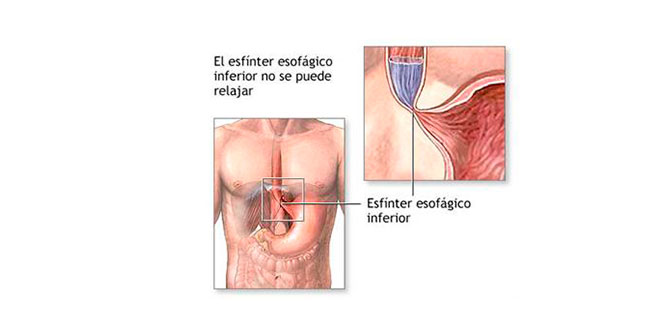
Under normal conditions, the pressure in the internal oesophageal sphincter is superior to the gastric, and during exercise, achalasia modifies (inverts) this normality.
Although it’s not easy to prove that aerophagy or fluid/food intake are directly related to it, it’s certain that the adrenal activity we’re in during high-intensity exercise causes a slowing of peristalsis and gastric emptying. This increases the risk of reflux and symptoms like pain in the lower part of the breastbone or burps.
Other factors
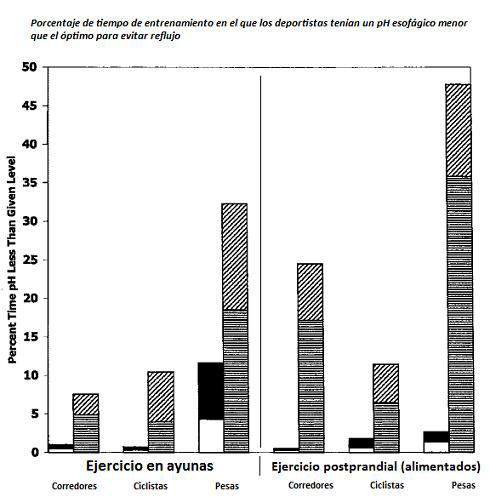
- Exercise modality: running has proven to be one of the most reflux-inducing exercises, while the exercise bike is much safer in this regard, likely due to the lower mechanical vibration of the body. Nevertheless, weight lifters can report even greater reflux episodes than runners, especially in sessions where certain exercises are carried out; and this aspect is directly related to the following points.
- Exercise position: Analysing different positions (upright, leaning and sitting), most people suffer from reflux in forward bending exercises, which compress the abdomen and increase intra-abdominal pressure.
The hypothesis behind this finding is that there must be an increase in lower oesophageal sphincter pressure as a protective response to an increase in intra-abdominal pressure.

Foods
Some foods have also been shown to cause achalasia, so they should be avoided before exercising
This includes fats, starches, fibres, chocolate (specifically), excessive protein intake due to its nitrogenous structure, alcohol, carbonated drinks, and even certain types of carbohydrates (amylopectin).
Recovery of normality
In acute cases of gastroesophageal reflux complaints, moderate to low-intensity exercise (<70% VO2max) has been shown to promote digestive function and intestinal transit, so walking or taking a short walk after completing the high-intensity exercise would be a solution to not having to suffer that acidity for the rest of the day.
Bibliographic Sources:
- Calderón, F.J. (2007). Fisiología aplicada al deporte. Madrid. Editorial Tébar.
- Clark, C. S., Kraus, B. B., Sinclair, J., & Castell, D. O. (1989). Gastroesophageal reflux induced by exercise in healthy volunteers. JAMA, 261(24), 3599-3601.
- Collings, K. L., Pierce, P. F., Rodriguez-Stanley, S., Bemben, M., & Miner, P. B. (2003). Esophageal reflux in conditioned runners, cyclists, and weightlifters. Medicine and science in sports and exercise, 35(5), 730-735.
- Chicharro, J. L., & Vaquero, A. F. (2006). Fisiología del ejercicio. Madrid. Ed. Médica Panamericana.
- Sodhi, J. S., Zargar, S. Javid, G., Khan, M. A., Khan, B. A., Yattoo, G. N., … & Shoukat, A. (2008). Effect of bending exercise on gastroesophageal reflux in symptomatic patients. Indian J Gastroenterol, 27(6), 227-231.
- Purifying infusions for our body
- Ginger – Increase testosterone and health benefits