Fitness, Nutrition, Health and Sports Blog In the HSNstore Blog you will find tips about Fitness, sport in general, nutrition, and health – HSNstore.com

Unfortunately, every day I come across more emails and messages on social networks from people who are buying supplements but asking how to take them, sometimes not even knowing what they’re used for. For this reason, I’ve decided to gather together the 5 frequently asked questions about supplementation.
Let’s do it!
1. Is it better to take protein before or after training?
It doesn’t matter
Keep in mind that the presence of amino acids in plasma can last around 3 hours if we’re consuming WHEY (reaching up to 7 if we consume casein).
This means that if you consume “X” amount of WHEY 30 mins before training, and you train for 1-1.5 hours, at the end of said training you’ll still have amino acids available to supply the degradation that’s occurred during training.
In fact, some authors1 have noted how phenylalanine levels (the marker used to measure protein balance) were slightly higher pre-workout than post, as we see in the following image:
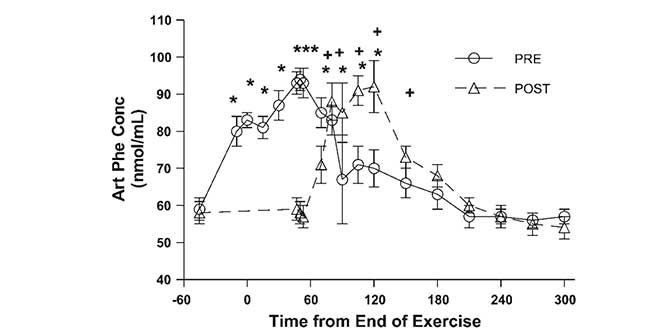
For this reason, my recommendation is that each person adapts their protein intake based on their habits and digestion.
- If consuming it as a pre-workout causes nausea, discomfort, or if you simply prefer to have something to drink afterwards, have it post-workout
- If, on the contrary, your post-workout intake would be too close to your next meal, and you don’t have digestion problems, have it as a pre-workout
2. When’s the best time to take creatine, before or after?
A recent study by Jose Antonio2 showed that post-workout creatine intake had greater benefits than pre-workout intake, and this study has been used as a reference to recommend creatine as a post-workout supplement.
My perception is somewhat different from that of the study
While it’s true that the group that consumed creatine post-workout gained more muscle mass than the one who consumed it pre-workout (2.0 vs 0.9 respectively), the first group consumed slightly more calories/day.
Something that surprised me was that the group that consumed creatine post-workout lost 1.1kg more fat, a fairly high difference when we talk about the “timing” of creatine.
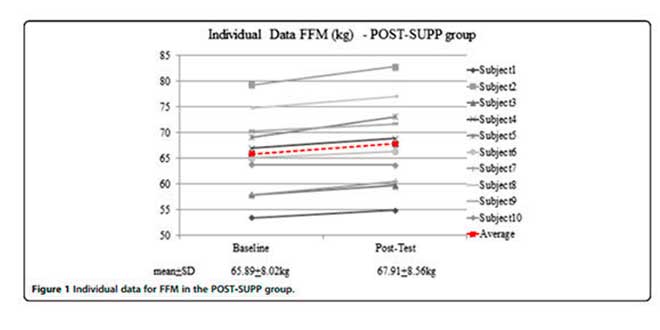
PRE Creatine Group. Difference in weight from the beginning of the study to the end
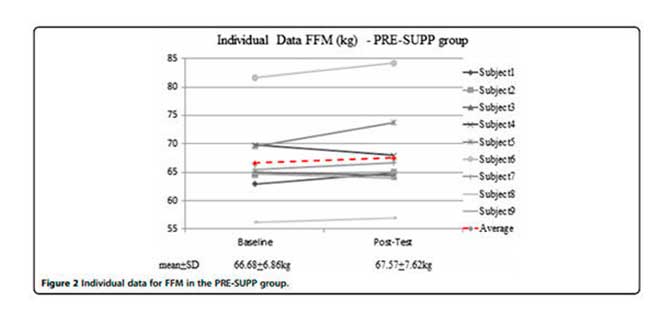
POST Creatine Group. Difference in weight from the beginning of the study to the end
3. Should I take BCAAs or amino acids to maintain muscle mass?
As with most issues related to nutrition: It depends
If your protein intake is low, BCAAs (especially leucine) will help you to reduce the loss of muscle mass. The problem is that:
- 80-90% of athletes follow high protein diets, easily consuming 2g of protein/kg of body
- Studies that show benefits in terms of maintaining muscle mass are following low-protein diets
Let’s focus on point 2. When adding leucine to meals is noted as resulting in greater muscle mass, participants’ meals have on average about 20-25g of protein.
If they eat 5 meals a day, this would give a TOTAL amount of 100-125g, which if we divide it by the average weight of a subject (70kg), gives us a value of 1.43-1.79g of protein/body kg, an insufficient amount if we want to maintain muscle mass on a low calorie diet (2-2.5g of protein/kg of body or 0.8g per pound of weight).

4. I’ve been told that I can’t mix caffeine with creatine, is that true?
This is a cyclical question, as every “X” weeks I get asked it again. In short, there’s only one study where it was observed that caffeine reduced the benefits of creatine in terms of strength gain.
In fact, other researchers carried out another trial with a similar methodology (the same amount of caffeine) and NO negative effects were observed, and all but one subject improved their marks.

5. Does caffeine break a fast?
No
When we refer to “breaking a fast”, we speak of anything that alters the use of fatty acids as an energy source, or in other words, anything that causes an increase in insulin levels.
In this case, caffeine doesn’t increase insulin levels, in fact it can even elevate catecholamine levels — adrenaline and noradrenaline.
This will increase lipolysis, meaning our body will release a greater amount of fatty acids into the bloodstream so that they can be transported to the tissues that require energy, in this case, mainly muscle tissue.

See you in the next posts. See you soon!
Sources
- Stimulation of net muscle protein synthesis by whey protein ingestion before and after exercise. Tipton KD1, Elliott TA, Cree MG, Aarsland AA, Sanford AP, Wolfe RR. Am J Physiol Endocrinol Metab. 2007 Jan;292(1):E71-6. Epub 2006 Aug 8.
- The effects of pre versus post workout supplementation of creatine monohydrate on body composition and strength.Jose Antonio* and Victoria Ciccone
Related Entries
- Protein Shakes: What they are, Types, Why they're Taken, and What their Benefits are
- Creatine, everything you need to know
- Caffeine – What it is, how it works, and what its effects are on the body
- BCAAs or Branched Chain Amino Acids – Effects, Contraindications and How to take them