Fitness, Nutrition, Health and Sports Blog In the HSNstore Blog you will find tips about Fitness, sport in general, nutrition, and health – HSNstore.com

The rest intervals are one of the key training variables, determining training density (the ratio between work time and rest time). High-rep training with low load has long been considered an optimal method for fat oxidation. However, I find it to be a much less efficient way than the alternative we’ve been proposing at HSN, which is backed up by the latest research on energy expenditure depending on rest between sets.
Incomplete recovery during rest periods means lactate levels aren’t fully cleared, nor are ammonium levels; and the heart rate stays within moderate ranges. So, consecutive sets start from a pretty altered metabolic state, without full recovery, leading to early onset of fatigue; both in terms of subjective perception (a 17% increase in fatigue sensation) and objective measures seen in differences in energy expenditure and the contribution of metabolic pathways: aerobic (lipids) versus anaerobic (glycolytic).
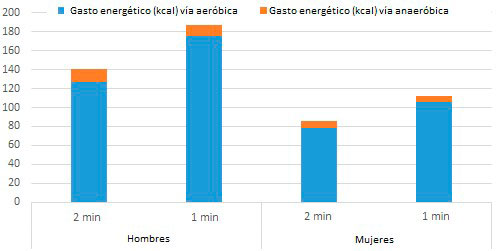
For sure, the 33% and 32% increase in total energy expenditure shown by men and women respectively is way more pronounced than you’d expect just by cutting rest times. Still, another earlier study showed energy expenditure can go up by as much as 37% when reducing rest from 3 minutes to 1 minute.
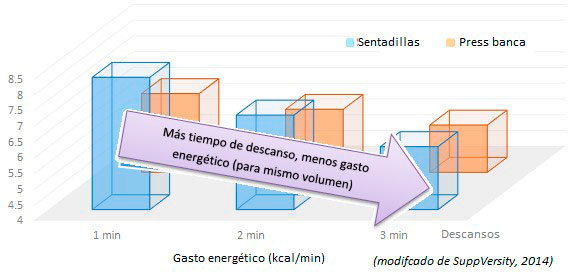
In this context, the idea that short rest periods lead to a significant boost in energy expenditure is super relevant for those with limited training time. On the flip side, one variable to watch and consider is that with longer rest (2-3 min), you can crank out more sets, potentially matching total energy expenditure per session if volume (total reps) isn’t fixed.
Also, without fixing volume, longer rest allows more complete recovery of phosphocreatine levels, lactate clearance, and overall fatigue reduction; which lets you train at higher intensity (%1RM or execution speed), and more importantly for fat burning, lower the respiratory exchange ratio.
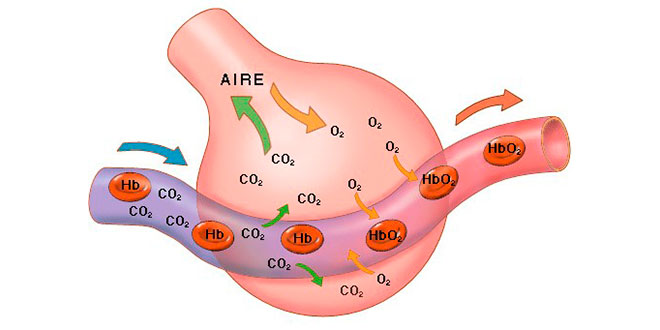
The respiratory quotient (RQ) shows the metabolic nature of the effort, i.e., whether exercise is mainly aerobic or anaerobic (ratio of CO2 produced to O2 consumed). RQ ranges from 0.7 (mainly fat or lipid consumption) to 1 (mainly glucose consumption), with the latter being closer when rest periods are shortened.
So, for folks who keep an eye on total session volume understood as available training minutes, the best way to burn fat might be cutting rest times, but it’s recommended to work at high intensities (≥75% 1RM; ≥ 8 reps) and max speed intent. In fact, when analyzing training protocols that manipulate both duration and total reps, results show equal or even greater metabolic response in protocols with max-speed reps compared to slow intentional reps.
Sources
- de Lacerda, L. T., Costa, H. C. M., Diniz, R. C. R., Lima, F. V., Andrade, A. G. P., Tourino, F. D., … & Chagas, M. H. (2015). Variations in repetition duration and repetition numbers influences muscular activation and blood lactate response in protocols equalized by time under tension. The Journal of Strength & Conditioning Research.
- Pareja-Blanco, F., Rodríguez-Rosell, D., Sánchez-Medina, L., Gorostiaga, E. M., & González-Badillo, J. J. (2014). Effect of movement velocity during resistance training on neuromuscular performance. International Journal of Sports Medicine, 35(11), 916-924.
- Ratamess, N. A., Rosenberg, J. G., Kang, J., Sundberg, S., Izer, K. A., Levowsky, J., … & Faigenbaum, A. D. (2014). Acute oxygen uptake and resistance exercise performance using different rest interval lengths: The influence of maximal aerobic capacity and exercise sequence. The Journal of Strength & Conditioning Research, 28(7), 1875-1888.
- Ratamess, N. A., Rosenberg, J. G., Klei, S., Dougherty, B. M., Kang, J., Smith, C. R., … & Faigenbaum, A. D. (2015). Comparison of the acute metabolic responses to traditional resistance, body-weight, and battling rope exercises. The Journal of Strength & Conditioning Research, 29(1), 47-57.