Fitness, Nutrition, Health and Sports Blog In the HSNstore Blog you will find tips about Fitness, sport in general, nutrition, and health – HSNstore.com

- If there is one thing we are experiencing in recent years, it’s that Artificial Intelligence is entering all fields, including the fitness sector: apps, gym equipment, virtual workout assistants, programming…
- All players in the fitness sector (trainers, managers, athletes, users…) can benefit from this powerful tool to enhance efficiency and effectiveness in advising and training.
AI-led Fitness Classes
In the realm of guided classes, AI has long been implemented, offering users fun and interactive experiences.
Especially in group classes like indoor cycling or spinning, where in addition to being taught virtually there are branching processes to further challenge users.
We also find applications where through AI users can create their avatar and train live with other users in very different scenarios.

Personalised Training Programs
While, as a personal trainer I believe direct contact with our athlete is crucial, and particularly that human and psychosocial part I believe cannot be replaced by artificial intelligence.
However, we can benefit from AI in many aspects of personal trainer work to optimize time, improve recommendations, and individualize programs much better for each athlete:
- Training Planning: Tools like Aaptiv can analyze client data to identify patterns and trends in their behaviour, which can help trainers design training plans that better suit their needs.
- Progress Tracking: AI systems can be used to track clients’ progress over time, allowing personal trainers to identify areas for improvement and adjust programming.
- Task Automation: AI can help personal trainers automate routine and administrative tasks, such as scheduling appointments and tracking payments, freeing up time to dedicate more time to interacting with our clients.
Artificial Intelligence in Gym Equipment
Major manufacturers of sports equipment for gym training, and even for home use, now incorporate artificial intelligence to facilitate their use: individualizing loads, duration, and intensity of the exercise… and most interestingly, analyzing the technique and execution of the exercise and offering corrections.
- For example, “Kaia Personal Trainer”, a virtual app, provides instant feedback on how to improve technique by reviewing up to 16 points of body alignment.
- In the case of Tecnogym, it has created BIOCIRCUIT, a circuit of machines that integrates intelligent training programs for everyone’s demands and has been developed to achieve the best possible results with more efficiency. The exercises, workloads, pace, and recovery time are designed to offer training programs adapted to all types of users.
Wearables and Devices Using AI
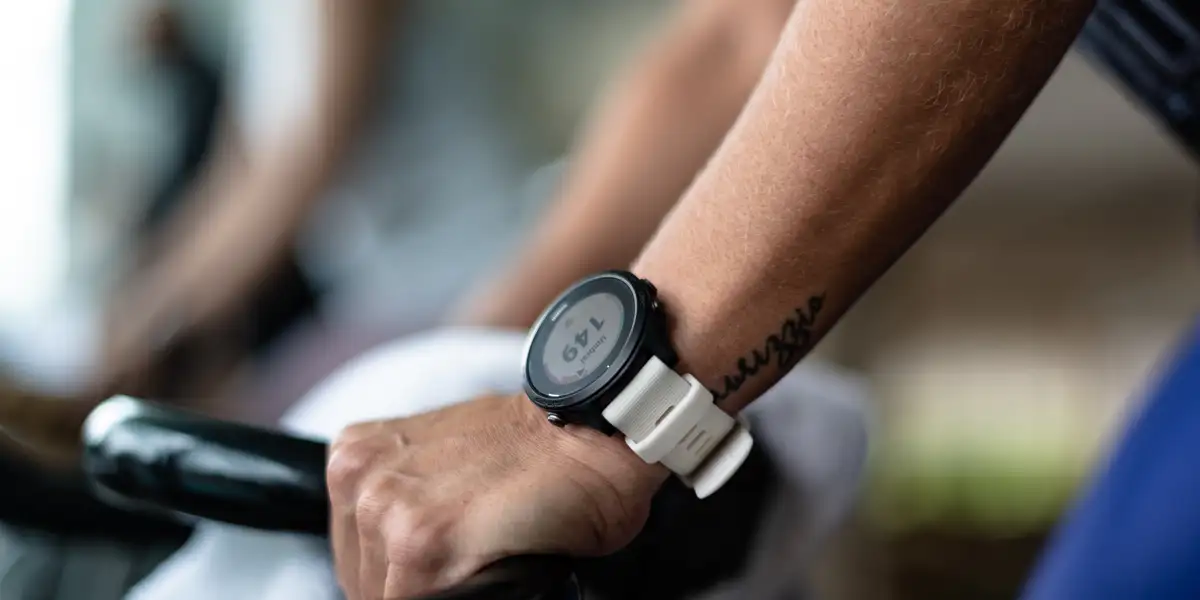
Currently, most of the wearable devices we use collect all the data from each user daily.
From their hours of sleep, their resting heart rate and during exercise, the routes and duration of the training, the temperature of the place where they exercise, the muscle group being worked on…
All this provides a multitude of data that can cross-reference all and each of the variables to study different scenarios and offer health recommendations, performance to the athletes who use them.
- For example, when a recovery session is needed, the nervous system is predicted to be altered and it is better to reduce the intensity and load of training.
- That is, through the data collected by the athletes’ wearables, AI analyzes them to detect signs of fatigue or over-training, allowing personal trainers to adjust the training plan accordingly.

Sports Apps with AI
Currently, we find many fitness apps that collect all the data and variables of the users. So all this data along with the magic of artificial intelligence makes it increasingly possible to better predict performance results, anticipate certain behaviors based on certain variables, and thereby, improve the sports experience of the user.
- For example, Fitbit, uses all the data collected from the registered users and those using their devices, to analyze sleep patterns.
- The training app Virtuagym, for example, already has a part of artificial intelligence to facilitate and individualize the plans and training sessions of its users attending to the different individual variables of health, preferences, and interests. Offering thus a much more personalized experience to each of the users.
Data Management Through Artificial Intelligence
Artificial intelligence provides the opportunity to manage a multitude of data about the interests and behaviors of the users in fitness centers and clubs, through sports apps, etc.
This allows not only the managers of sports centers but also other agents to improve strategic decision-making for management and organization. In this way, with that data of behavioural patterns, customer preferences, measured devices etc.
Entrepreneurs and managers will adopt decisions better suited to adopting new services.
Moreover, there are artificial intelligence systems that have data from so many clubs and centers that certain behaviors can be predicted in terms of future trends, understand how the competition works. And this provides really valuable information to improve efficiency and profitability of the centers.
Advantages and Disadvantages of Using AI in Fitness
Artificial intelligence, when well used and managed, offers endless advantages for data management, decision-making, improving customer experiences as well as effectively personalizing and customizing training programs.
In terms of disadvantages: it is that AI cannot replace the human part that offers direct contact with our clients and athletes, something that in the world we live in is increasingly necessary and healthy.
The Future of Fitness and Artificial Intelligence
If anything is evident, it’s that from this year 2024 we will see an exponential leap in the use of artificial intelligence and it will become a part of our lives.
A new revolution is coming in this field like we have never seen before.
By making a sensible use of this extremely powerful tool we can improve as professionals, offer better solutions and more personalized to our clients and athletes, without forgetting, that the human, social side of training we must offer it ourselves (trainers) genuinely and authentically.

The real opportunities that AI offers in the fitness sector to optimize work times, manage data for better decision making, and enhance the user and client experience is the imminent future.
Related Posts
- How Biohacking Can Elevate Your Quality of Life
- What are Gym Pods?
- Learn How to Create a Training Journal