Fitness, Nutrition, Health and Sports Blog In the HSNstore Blog you will find tips about Fitness, sport in general, nutrition, and health – HSNstore.com

We tell you everything you need to know about the amino acid Glycine, its properties and its uses. It is the simplest of all, but with complex functions.
What is it
Glycine is an amino acid, that is, an organic compound containing nitrogen and whose binding to other amino acids forms proteins, such as those that we consume through food and find in our body.
It is a neutral, non-polar amino acid; which means that it has no electric charge or reaction to water; it does not have a chiral configuration, so seen in a mirror would be comparable to the original mirror image.
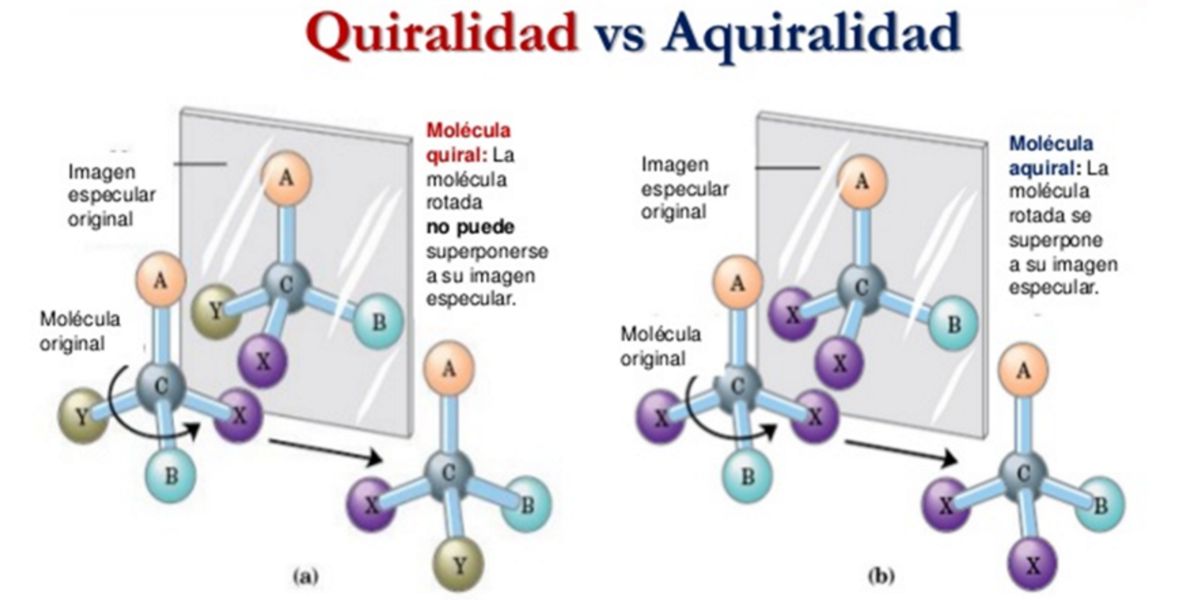
Figure I. Example of a chiral and achiral molecule and its mirror image.

Figure II. Glycine (left) and L-Leucine (right). Look at the neutral position of the functional group in the glycine.
And as an amino acid, it is the simplest of all, since its lateral chain (which makes all amino acids unique) consists of just one hydrogen.
Nutritional characteristics of Glycine
Glycine is a conditionally essential amino acid, and is described as such because although our organism can synthesise it by itself apart from other molecules (via GHMT, mainly), it does so in insufficient quantities.
When sufficient glycine is not consumed for a long period of time:
- Collagen synthesis is seriously altered, leading to the onset of osteoarthritis, xerosis, keratosis, hair thinning and susceptibility to hair loss.
- An oxidative stress environment is generated that depletes glutathione and leads to hepatotoxicity, insulin resistance, nephropathy, retinopathies, and even neurotoxicity.

Figure III. Osteoarthritis.
What is it for?
Glycine has a great deal of functions in the body, and although its most well-known role is that of a neurotransmitter (sending messages between neurons), it is not lacking in work.
Glycine as a neurotransmitter
Glycine is an inhibitory neurotransmitter, you’ll have heard of this before in relation to GABA, which is our main nerve inhibitor, and glycine functions in a similar way.
It accumulates in the emitting neurons and is released to act on specific receptors of the receptor neurons, allowing the increase of chloride permeability and preventing depolarisation (inhibited the activation of neurons).

Figure IV. Inhibitory signalling of glycine in the Gly/GABA complex.
This has proposed that glycine and its receptors be a possible target of anaesthetic and somniferous action; in fact:
Glycine has been shown to increase sleep efficiency and subjective perception of rest, as well as to decrease electroencephalographic activation during a sleep study, i.e. it acts as a natural neurological relaxant (Yamadera et al., 2007).
Still, glycine is strange, as it exhibits inhibitory effects on the brainstem and spinal cord; in other locations of the nervous system, it may increase the response of NMDA receptors to glutamate, and may amplify the excitatory response of this neurotransmitter.
For glycine, there are nights where the bouncer is hired in another nightclub and the party animals are allowed in to liven up the party.
Other functions of glycine
Glycine has a large amount of metabolic, genomic, and biochemical functions in the body that make it unique:
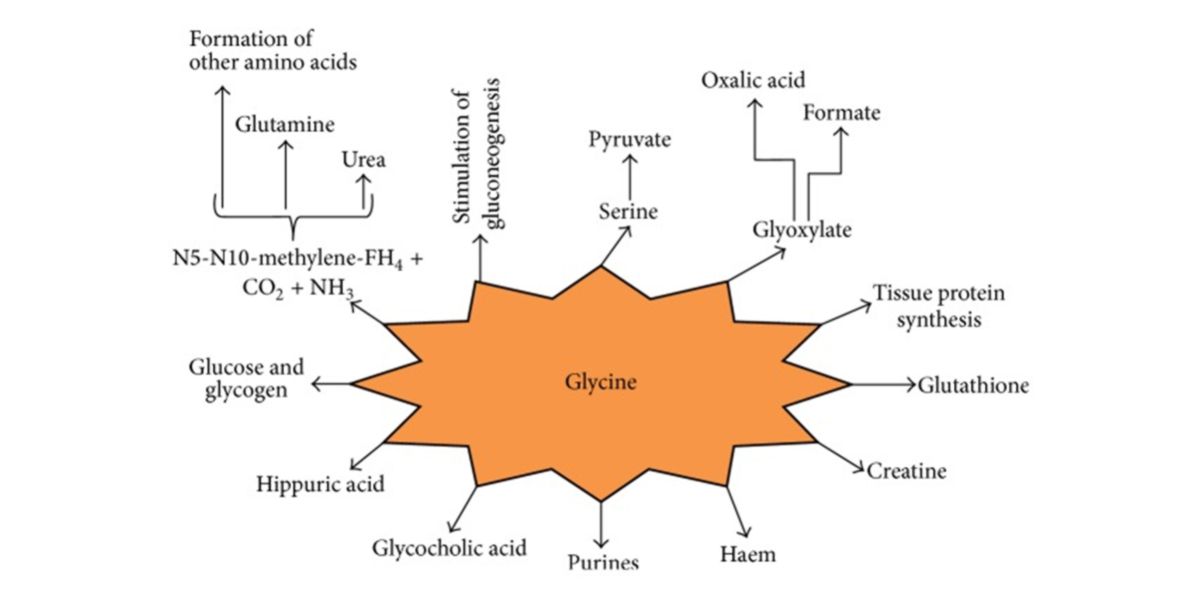
Figure V. Metabolic and biochemical functions of glycine.
Stay tuned and don’t miss the explanation of the most important ones!
Protein synthesis
Glycine is part of proteins in our body, especially collagen, that structure that makes up our blood vessels, our articular cartilage, is part of our bones, hair, skin…
Our main “structural” protein.

Figure VI. Collagen content of various tissues in the body.

Figure VII. Amino acid sequence of a collagen protein. Gly is Glycine.
Without glycine it would not be possible to produce collagen, as we would lack the main structural element of the protein, and we would begin to suffer a serious catabolic condition that would put our health at risk.
Molecules precursor
Glycine is a precursor (an element of the synthesis process) of products:
- Fromguanidinoacetate in the kidney, which then transforms into creatine.
- From glutathione, our main antioxidant in the body.
- Of porphyrins, from which hemoproteins are created such as haemoglobin, which prevents the appearance of anaemia.
- The purine bases, from which nucleotides are synthesized for DNA and RNA synthesis.
And the list doesn’t end…
It is complex and involves many primary and secondary biosynthetic mechanisms…

Figure VIII. Simplified Biometabolism of Glycine.
…it is important to understand that glycine is a biologically essential amino acid that our body needs to perform its normal bodily functions.
How do we get glycine through our diet?
Glycine is naturally present in the connective tissueof animals.
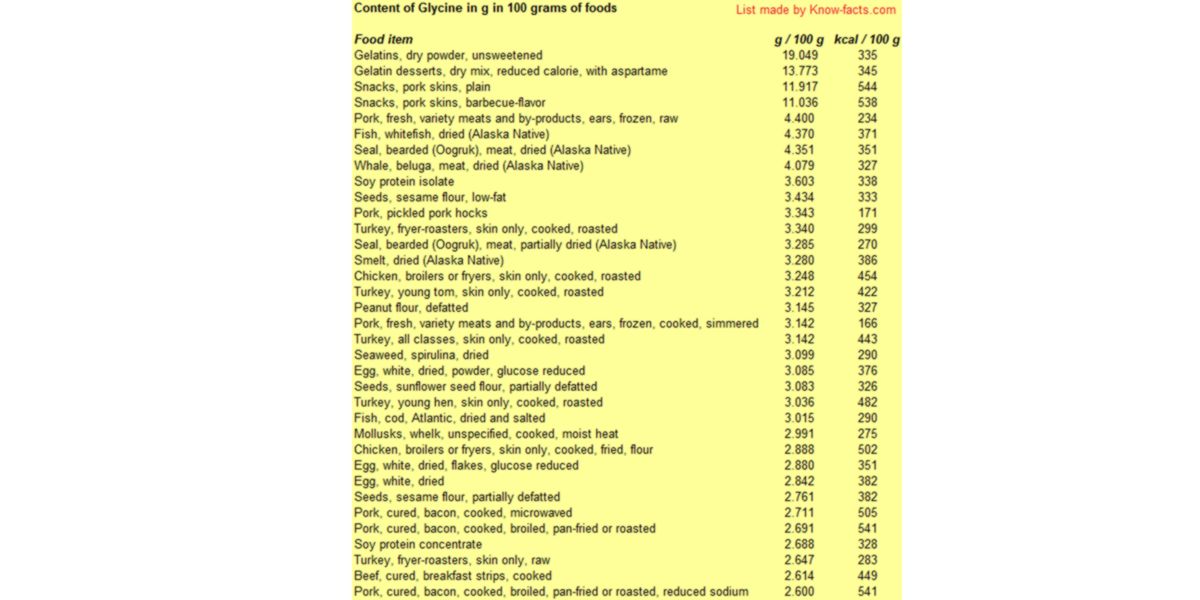
Figure IX. Glycine content per 100g of product, extracted from the USDA database.
A person who eats a vegetarian/vegan diet, or who does not consume a lot of protein through their diet may have problems reaching the recommendations of 10-12g extra glycine through the diet.
For this we have created RawSeries Glycine powder!
An ultra-concentrated form of the amino acid, of maximum purity, without any additives.
- It is a convenient and easy way to consume the amino acid.
- Perfect for vegans.
- Useful before bed: Increase relaxation and improve sleep quality as shown in studies.
What are you waiting for? ?
Bibliography sources
- Meisenberg, G., & Simmons, W. H. (2012). Principles of medical biochemistry. Philadelphia: Elsevier/Mosby.
- Meléndez-Hevia, E., & De Paz-Lugo, P. (2008). Branch-point stoichiometry can generate weak links in metabolism: The case of glycine biosynthesis. Journal of Biosciences, 33(5), 771–780.
- Meléndez-Hevia, E., De Paz-Lugo, P., Cornish-Bowden, A., & Cárdenas, M. L. (2009). A weak link in metabolism: the metabolic capacity for glycine biosynthesis does not satisfy the need for collagen synthesis. Journal of Biosciences, 34(6), 853–872.
- Razak, M. A., Begum, P. S., Viswanath, B., & Rajagopal, S. (2017). Multifarious Beneficial Effect of Nonessential Amino Acid, Glycine: A Review. Oxidative Medicine and Cellular Longevity, 2017, 1716701.
- Yamadera, W., Inagawa, K., Chiba, S., Bannai, M., Takahashi, M., & Nakayama, K. (2007). Glycine ingestion improves subjective sleep quality in human volunteers, correlating with polysomnographic changes. Sleep and Biological Rhythms, 5(2), 126–131.
Related Articles
- Buy Glycine Supplements
- Discover the Benefits of Collagen and Glycine in this link.
- What is the relation between Glycine and the Growth Hormone? Go to this post.