Fitness, Nutrition, Health and Sports Blog In the HSNstore Blog you will find tips about Fitness, sport in general, nutrition, and health – HSNstore.com

- During adolescence, a critical period of growth and development, it is advisable to get around 9 hours of sleep per night to support proper muscle development.
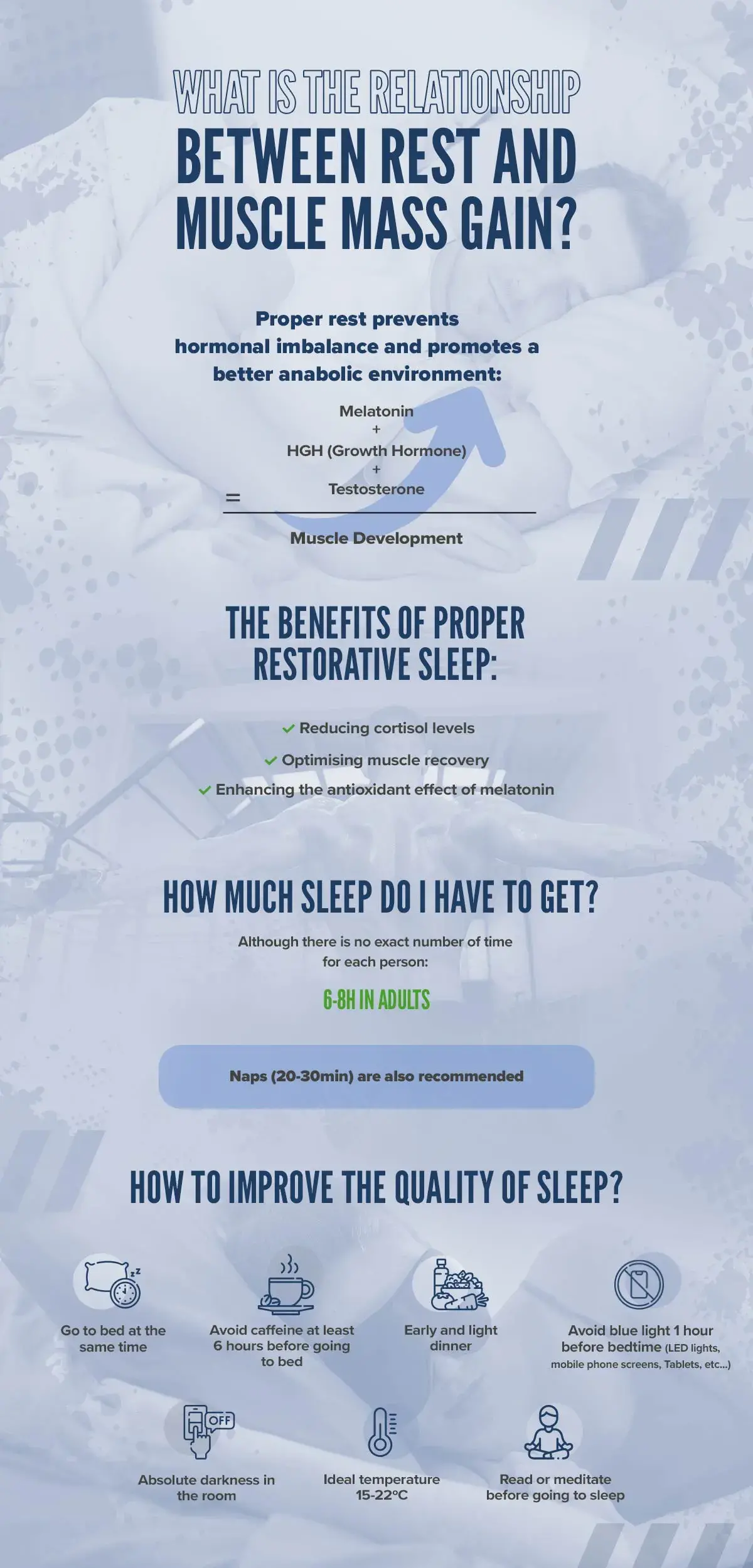
- For adults, it is generally recommended to get a minimum of 7 to 8 hours of sleep per night. This amount allows for the necessary rest and recovery after workouts and helps maintain the processes of muscle repair and growth.
Can sleep deprivation affect your muscle goals?
Yes, sleep deprivation can significantly affect your muscle goals. A study published in the “Journal of the American Medical Association” in 2011 by Eve Van Cauter, PhD, showed that sleep restriction drastically reduces growth hormone and testosterone levels in young and healthy men.
These hormones are important for muscle development and recovery. Participants who slept less than 5 hours per night for a week experienced a 10-15% decrease in testosterone levels, which can compromise muscle protein synthesis and, therefore, muscle growth.
Why does sleep influence muscle gain?
When we sleep, our body enters a powerful anabolic state, meaning all resources are directed towards reconstruction and regeneration, contributing to the rejuvenation of the body’s tissues.
Sleep is the longest period between meals that our body has to synthesise proteins.
During the sleep phase, the body generates molecules involved in the recovery of:
- Muscle tissue.
- Immune system.
- Nervous system.
Which hormones affect muscle gain?
Hormones play a vital role in numerous bodily functions, including sleep regulation. During rest hours, a series of hormones work in synchrony to repair and rejuvenate the body, affecting everything from growth to metabolism.
Growth Hormone
Human growth hormone (HGH) is essential for muscle growth and is released during sleep, especially in phase 3.
However, HGH levels decrease after puberty, which can negatively affect muscle mass and bone density.
Boost and maintain healthy HGH levels requires good rest, regular physical activity, and weight control.Testosterone
Testosterone, a hormone with significant anabolic relevance, peaks during puberty and decreases after age 30.
This hormone is linked to sex drive, sperm production, muscle development, bone density, and red blood cell synthesis.
Symptoms of low testosterone levels may include mood swings, weight gain, muscle loss, and decreased libido.
Melatonin
Acting as a powerful antioxidant, melatonin aids in recovery and improves rest.
Athletes produce a high amount of free radicals, so melatonin’s antioxidant effect is vital in reducing oxidative damage.
Melatonin helps regulate circadian rhythms, whose imbalance can lead to issues such as depression, anxiety, fatigue, stress, digestive problems, cardiovascular risk, and insulin resistance.
Cortisol
Cortisol is a hormone that is released in response to stress.
While it can be beneficial in certain circumstances, excess cortisol can inhibit testosterone production and cause muscle fibre breakdown.
Tips to Improve Sleep Quality
There are various strategies to enhance our sleep quality, one of the most advisable being establishing a consistent sleep routine.
- Try to maintain a pattern and go to bed at the same time.
- Avoid physical activities at least two hours before bedtime.
- Avoid drinks containing stimulants after midday.
- Have an early dinner and avoid heavy or hard-to-digest meals (don’t go to bed hungry either).
- Do not use electronic devices that emit light just before sleeping.
- Ensure you are neither too cold nor too hot (a temperature between 15-22ºC is recommended).
- You can medidate before going to bed.
Sources
- https://www.sleepassociation.org/patients-general-public/what-is-sleep/
- http://www.ncbi.nlm.nih.gov/pmc/articles/PMC297368/
- http://www.ncbi.nlm.nih.gov/pubmed/12797841
- http://www.ncbi.nlm.nih.gov/pmc/articles/PMC1188300/
- http://www.ncbi.nlm.nih.gov/pubmed/10591612
- http://www.ncbi.nlm.nih.gov/pubmed/8370132
Related Posts
- What is muscle catabolism and why does it happen
- How to gain muscle mass with workouts
- How to speed up muscle recovery