Fitness, Nutrition, Health and Sports Blog In the HSNstore Blog you will find tips about Fitness, sport in general, nutrition, and health – HSNstore.com

- Homocysteine is a non-proteinogenic amino acid, homologous to cysteine (homo-cysteine), and linked to methionine (as the amino acid from which it is created and into which it can be reconverted), being an important metabolic intermediate for the metabolic health of the organism.
- Maintaining healthy homocysteine levels is important because when homocysteine levels are out of control it is considered a risk factor for liver, kidney, neurological and cardiovascular diseases.
- The most appropriate food supplements for maintaining good homocysteine control are B vitamins, which act as cofactors for the enzymes responsible for metabolising this amino acid so that it does not accumulate. In fact, deficiency of these vitamins is the main non-pathological cause of elevated homocysteine levels.
What compounds can help you regulate homocysteine?
As indicated above, homocysteine metabolism is a process with a certain metabolic complexity as it involves the interaction of the methionine, folate and cysteine trans-sulphurisation cycles.
There are many compounds useful for maintaining healthy homocysteine levels, which should not be missing from your daily diet. These include the following:
Vitamin B12
- Vitamin B12 is an essential nutrient found primarily in red meat and egg yolk, and is almost totally lacking in vegan diets.
- Vitamin B12 is particularly linked to the maintenance of good haematological, neurological and cognitive health, and in relation to homocysteine, it catalyses the retroconversion of homocysteine to methionine through the action of the enzyme methionine synthase.
- Vitamin B12 food supplements (either in the form of Cyanocobalamin or Methylcobalamin) are the best options to reinforce vitamin B12 intake in cases of hyperhomocysteinemia (high homocysteine).
The recommended daily dose of vitamin B12 depends on factors such as nutritional status, gender, age and other variables. A minimum daily consumption is recommended:
| Age | Adequate Intake (μg/day) |
| 7-11 months | 1.5 |
| 1-3 years | 1.5 |
| 4-6 years | 1.5 |
| 7-10 years | 2.5 |
| 11-14 years | 3.5 |
| 15-17 years | 4 |
| > 17 years | 4 |
| Pregnancy | 4.5 |
| Breastfeeding | 5 |
As minimum intakes, there is no dose beyond which adverse effects are observed and much higher concentrations (over 15,000 μg per week) may be administered to ensure a state of sufficiency.
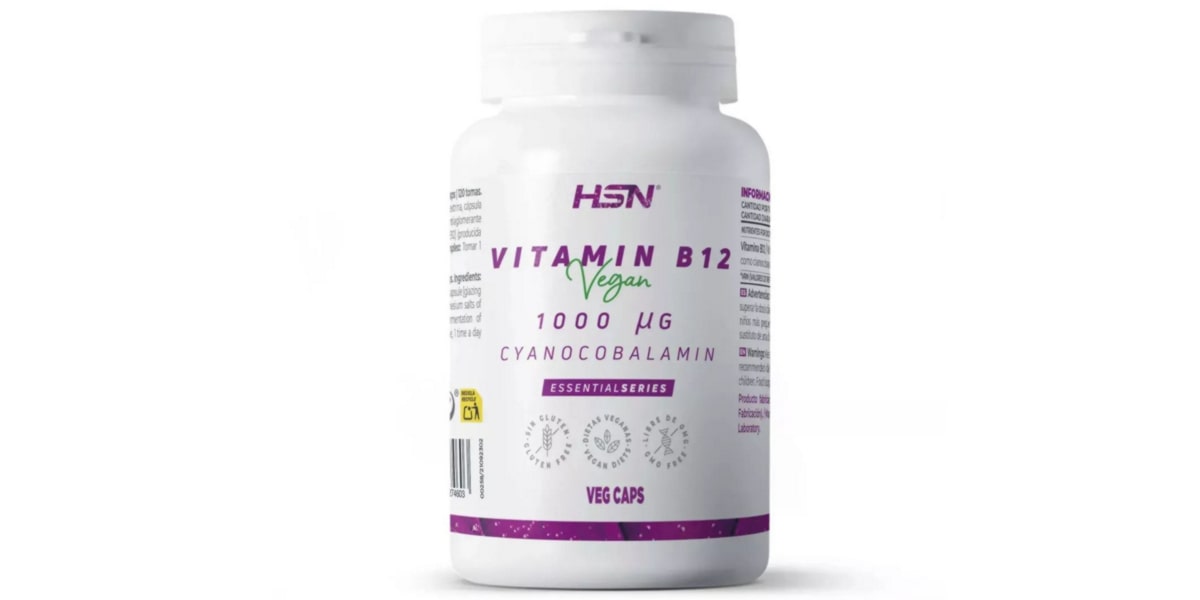
Vitamin B12 (Cyanocobalamin) 1000mcg
Folic Acid (Vitamin B9)
- Vitamin B9, also called folic acid, and in general its derived forms (folates), are essential nutrients found mainly in green leafy vegetables (such as spinach), certain fruits and legumes.
- Folates are important for DNA synthesis and cell division processes, and therefore have a key influence on red blood cell formation and energy metabolism.
- Its relationship with homocysteine is, as with vitamin B12, that vitamin B9 acts as a cofactor in the remethylation of homocysteine to methionine, helping to reduce its levels in the blood.
As with other vitamins, the recommended daily dose of vitamin B9 depends on different individual characteristics. The average daily requirement for this vitamin is:
| Age | Average Requirement (μg/day) |
| 7-11 months | 80 |
| 1-3 years | 90 |
| 4-6 years | 110 |
| 7-10 years | 160 |
| 11-14 years | 210 |
| >14 years | 250 |
| Pregnancy | To be assessed by physician, higher intake needed to prevent neural tube defects |
| Breastfeeding | 380 |
You can increase your folate intake by supplementing your diet with folic acid or its active form (calcium L-methylfolate), both of which are available in significant quantities in the HSN catalogue to increase your intake of this essential vitamin in a convenient and practical way.

Vitamin B6
- Vitamin B6, called pyridoxine, is an essential nutrient found primarily in foods such as liver, salmon and certain fruits and vegetables, especially leafy greens and papayas or melon.
- Vitamin B6 is important in the metabolism of amino acids, carbohydrates and fats, and its deficiency is associated with anaemia, neurological disorders and problems with energy metabolism, so consuming sufficient vitamin B6 is important for overall good health.
- Its relationship with homocysteine is that it acts as a cofactor for the enzymes responsible for trans-sulphurising homocysteine into cysteine, which, being a proteinogenic amino acid, can then be converted into more complex structures.
The recommended daily allowances for vitamin B6 are:
| Age | Average requirement (mg/day) |
| 1-3 years | 0.5 |
| 4-6 years | 0.6 |
| 7-10 years | 0.9 |
| 11-14 years | 1.2 |
| 15-17 years | male = 1.5; female = 1.3 |
| Adult | male = 1.5; female = 1.3 |
| Pregnancy | 1.5 |
| Breastfeeding | 1.4 |
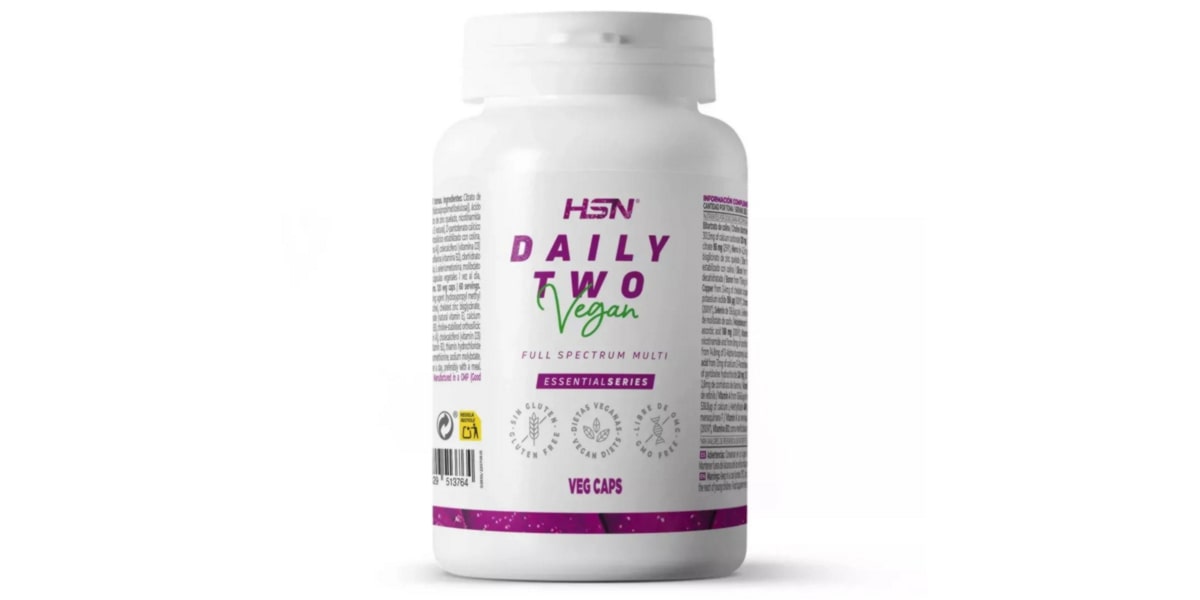
Vitamin B6 is not a nutrient that outside of clinical nutrition requires an isolated supply, but you can find it in HSN’s multivitamin formulas such as Evovits, Evovits Plus+, Ultimate Multi for Men’s Care and Ultimate Multi for Women’s Care, and Daily Two Multivitamin.
Betaine/Trimethylglycine
- Betaine is a by-product of the body’s bioconversion process of choline, which is a non-essential nutrient, but is considered a pseudovitamin because of its dietary relevance.
- Betaine, losing a methyl group, catalyses the conversion of homocysteine to methionine as a donor of a methyl group.
The recommended amount of betaine is variable and not clearly defined, nor is the daily amount of choline.
We recommend using products that provide adequate amounts based on scientific studies that have evaluated the effects of these compounds on the maintenance of normal homocysteine levels in the body, which is why we recommend the minimum equivalent of a daily intake of 82.5mg of choline per day.
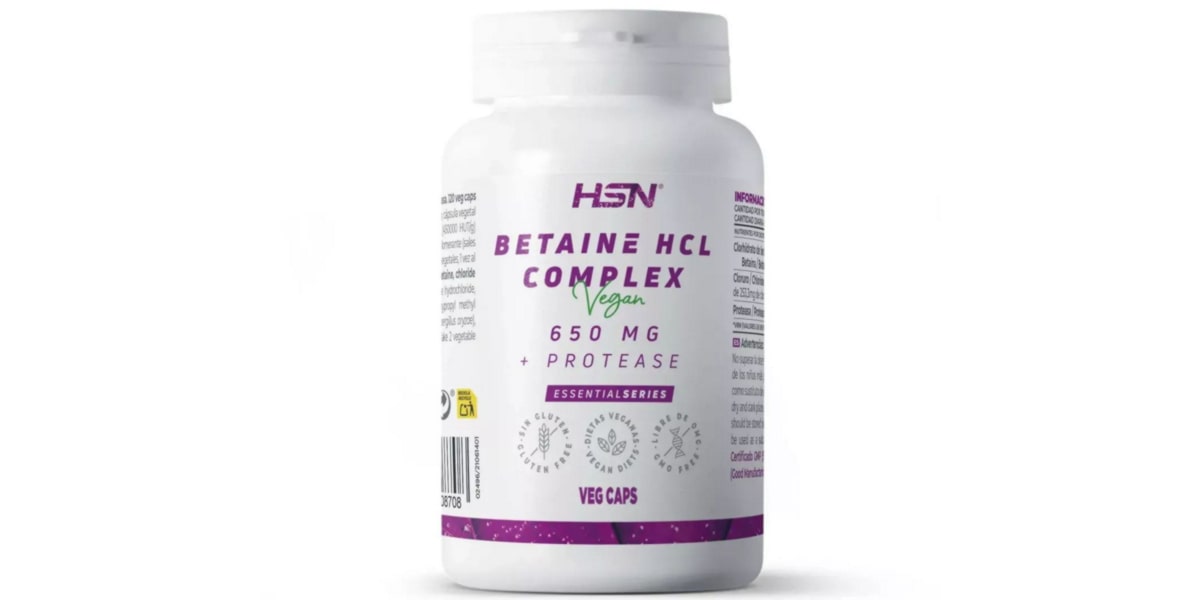
Choline Bitartrate, Citicoline and Betaine HCl Complex supplements provide amounts of choline that exceed the minimum amount required to maintain adequate and sufficient intake of this important nutrient to ensure optimal intake.
How to choose the best food supplement to lower homocysteine?
A key factor in choosing a quality food supplement is that the company from which you buy is the manufacturer of its own supplements, as this can ensure proper control of the development process and purity of the supplement.
This production must be duly audited by external entities that certify the quality of the process and its good practices, as well as the analysis of its critical control points.
HSN is the best option, we manufacture our own food supplements, and we are certified by the most prestigious and rigorous international bodies, including IFS Food, a quality certification that ensures that our products meet all the requirements set out to comply with the highest standards of the food industry.
Certification in which we have obtained the “Higher Level” rating exclusive to a select group of companies, those that achieve the highest score in the quality and safety criteria.

It is important that if you are using dietary supplements for a condition of hyperhomocysteinemia, you consult a health professional before using them as a treatment.
Common Causes of High Homocysteine Levels
- Diet
Vitamin deficiency due to unhealthy and unvaried diets, with low fruit and vegetable intake, is a risk factor for the development of hyperhomocysteinemia, the result of inadequate enzyme activity due to a lack of cofactors leading to homocysteine accumulation.
- Genetics
Genetic alterations such as defects in 5-methyltetrahydrofolate reductase can lead to the development of homocysteinemia.
- Other medical conditions
Systemic diseases such as kidney disorders, cancer, hypothyroidism, psoriasis, diabetes and cardiovascular infarction lead to elevated homocysteine levels in the blood.
Many types of drugs, such as anticonvulsants, oral contraceptives, statins, or methotrexate also lead to increased blood levels of homocysteine.
Conclusion
Maintaining healthy homocysteine levels is important, and to do so, it is necessary to ensure adequate intake of vitamins B6, B9 and B12, as well as choline (or its metabolite, betaine).
We also recommend that if you have a medical condition or are on medication, you should consult your doctor before taking food supplements, and that it is important to maintain a varied and balanced diet to maintain good health.
References / Bibliography
- Arumugam, M. K., Paal, M. C., Donohue, T. M., Ganesan, M., Osna, N. A., & Kharbanda, K. K. (2021). Beneficial effects of betaine: A comprehensive review. Biology, 10(6). https://doi.org/10.3390/biology10060456
- Hunt, A., Harrington, D., & Robinson, S. (2014). Vitamin B12 deficiency. BMJ (Online), 349, g5226. https://doi.org/10.1136/bmj.g5226
- Kennedy, D. O. (2016). B vitamins and the brain: Mechanisms, dose and efficacy—A review. Nutrients, 8(2), 68. https://doi.org/10.3390/nu8020068
- Swain, R. A., & St. Clair, L. (1997). The role of folic acid in deficiency states and prevention of disease. Journal of Family Practice, 44(2), 138–144.
- Zeisel, S. H., & Da Costa, K. A. (2009). Choline: An essential nutrient for public health. Nutrition Reviews, 67(11), 615–623. https://doi.org/10.1111/j.1753-4887.2009.00246.x
Related Entries
- Tips and habits for a healthy heart
- Getting started with cardiovascular exercise
- Learn about natural memory boosters
- What nutrients does your body really need?