Fitness, Nutrition, Health and Sports Blog In the HSNstore Blog you will find tips about Fitness, sport in general, nutrition, and health – HSNstore.com

In the extensive market of sports supplements, creatine has stood out in recent years as one of the most popular and supported supplements. There are different formats and types of creatine, and when purchasing creatine we usually come across the terms: creatine monohydrate and micronised creatine.
If you are a regular reader of our blog, you will know that at HSN we always want you to be able to make an informed decision and choose the one that best suits your needs and sporting goals.
What is the difference between monohydrate and micronised creatine?
- Creatine is composed of three amino acids (glycine, arginine and methionine) and is generally marketed as creatine monohydrate. Although different chemical forms exist, creatine monohydrate is the variant with the highest degree of evidence and advantages in terms of quality and price.
- Micronisation is a process that converts raw material into a more soluble and easily digestible powder by reducing the particle size. When applied to creatine, we obtain micronised creatine, which dissolves better and is more easily digested.

Micronised creatine properties
The term “micronised” therefore refers to the refinement of creatine monohydrate, which potentially brings certain benefits linked to this physical treatment.
As we have been saying, the aim is to reduce the particle size, which translates into the following points:
- Improved absorption: Treatment to decrease size also results in increased bioavailability. 9
- Greater “solubility”: By making the powder acquire a larger surface area, we obtain a greater suspension capacity, giving more homogeneous and stable mixtures. 9
- Better digestion: Thanks to its absorption benefits, potential gastrointestinal problems traditionally associated with creatine supplementation can be reduced, especially relevant if loading phases are performed.9
- Better consumption experience: The smaller particle size improves the mouthfeel when consumed, as it minimises the gritty sensation typical of powder with larger granules.
Monohydrate creatine benefits
The high degree of evidence in favour of the use of creatine monohydrate in different sports and health contexts, together with its great value for money, has positioned it as one of the star supplements.
Not only adult individuals and athletes benefit from creatine supplementation, but studies in populations of different age ranges have shown both safety and cognitive and therapeutic benefits6-7, as well as providing an anabolic environment that can help mitigate sarcopenia rates.8
Recommended dose, how and when to take
There is a traditional misconception linked to the need to implement a protocol with higher doses than maintenance doses. The recommendations suggested a loading period in order to maximise creatine levels in the muscle, however, new studies show that, after a period of time, continued doses achieve the same concentrations.
The two most widespread protocols for creatine supplementation:
- Use a maintenance dose of 3g/day or an equivalent of 0.1g/kg bw/day.
- Perform a loading period followed by a maintenance period, with initial doses of 0.3g/kg/day followed by the maintenance dose.

In the absence of significant long-term benefit, the option of “loading” may have a place when ergogenic benefits are to be obtained in a shorter period of time.5
Although no significant differences have been reported in relation to the timing of intake, however, ingestion with carbohydrates may aid muscle glycogen recovery leading to better recovery, making it an excellent choice as a post-workout drink.1
What factors should I consider when choosing?
Some of the most important factors to consider about micronised or monohydrate creatine are:
- Sieving or granulometry: As you have seen, reducing the particle size provides benefits linked to solubility, bioavailability and digestion. Mesh units determine the properties of the sieve mesh that a product is able to pass through, so the higher the Mesh number, the smaller the particle size.
- Affordability and scientific backing: Creatine monohydrate has been the focus of most research, so it has the most evidence. It is also the most affordable chemical form. Because of this, we do not recommend using alternative chemical forms to monohydrate, such as creatine gluconate or creatine phosphate.
- Product purity: It is important to consume a product free of impurities. Factors such as traceability and transparency should be present in the choice.
- Recommended dose: As indicated above, except in exceptional cases, it is recommended to use a maintained dosing protocol with doses of 3g/day or an equivalent of 0.5-1g/kg/day depending on individual needs. For more information check the labelling and the manufacturer’s instructions.
- Free of traces of potential allergens: at HSN we apply really strict protocols to avoid any contamination in our manufacturing process, thus guaranteeing safety for intolerant and allergy sufferers.
- If you buy creatine under the Creapure® label, you can check on the website of its manufacturer, Alzchem, whether the brand is registered as an official distributor of this famous raw material. At HSN, we have the distributor code Creapure®:18HR11, which you can find on the labels of our products with this raw material.
- Check reviews: the opinions and experiences of other users can provide you with useful information about the effectiveness of the product.
Which is the best option for you?
At HSN we have different products and formats based on creatine monohydrate, in powder or capsules, and we have very good news for you! And if you don’t decide on one or the other, we can tell you that you are in a situation in which, whichever option you choose, you won’t go wrong:
- If you’re considering taking creatine for the first time, our RawSeries creatine monohydrate is an excellent choice. Its 200Mesh particle size provides a smooth, non-gritty texture in the mouth. Plus, its neutral taste makes it ideal for combining with other products or mixing into your post-workout shake.
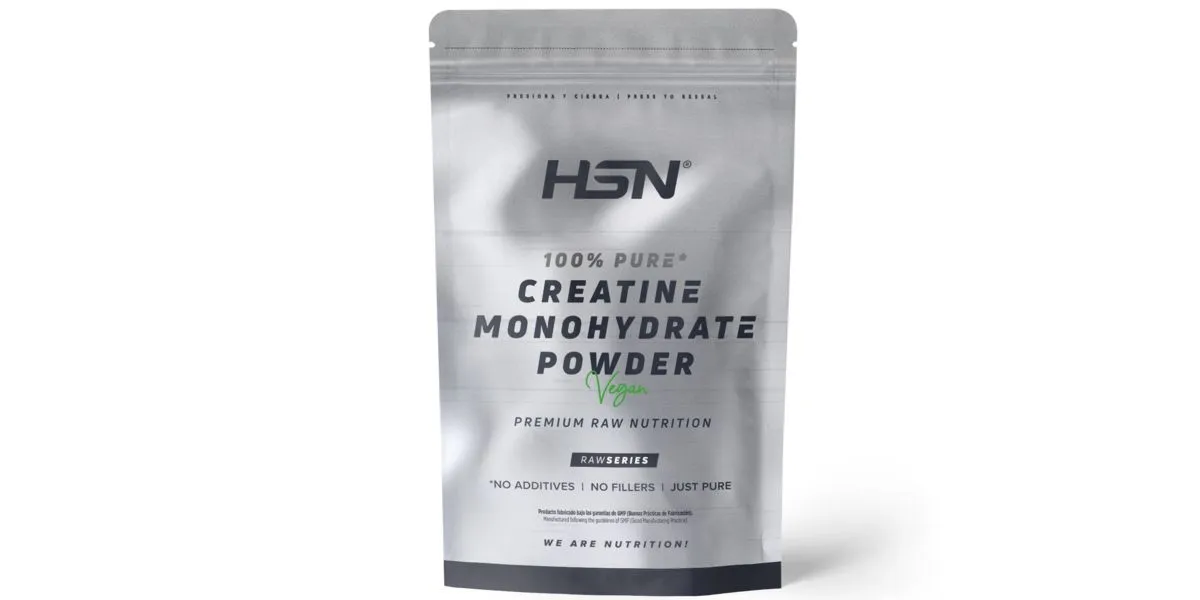
Creatine Monohydrate at HSN
- Moreover, we have the products under the famous Creapure® and Kre-Alkalyn® patents.
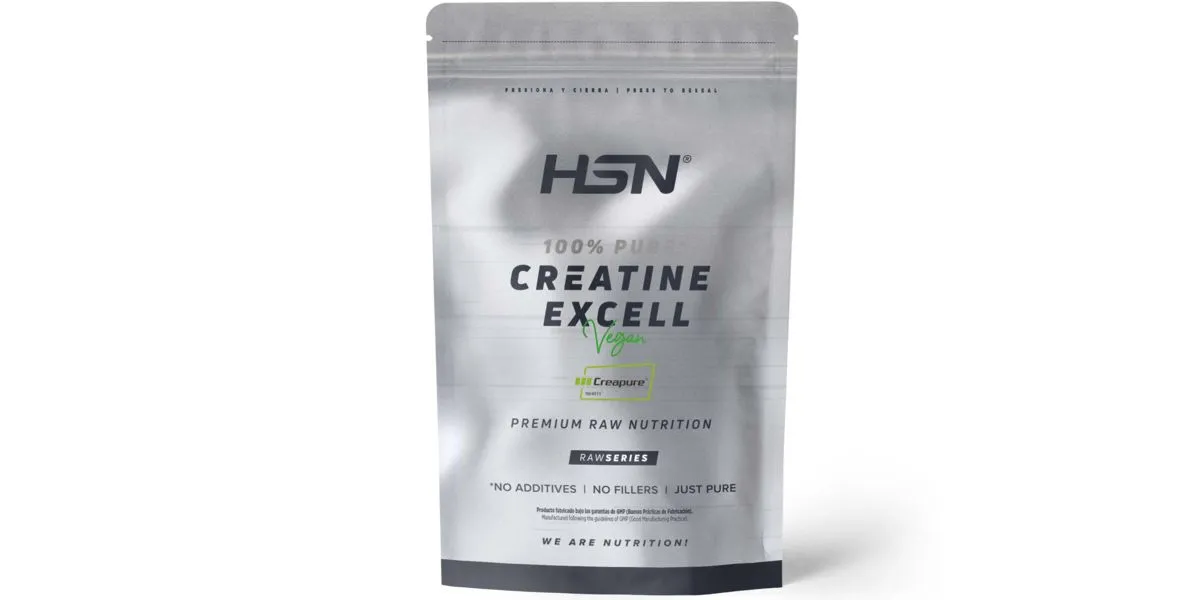
Creapure version of creatine monohydrate HSN
- Capsule versions can be very useful to carry and take at any time.
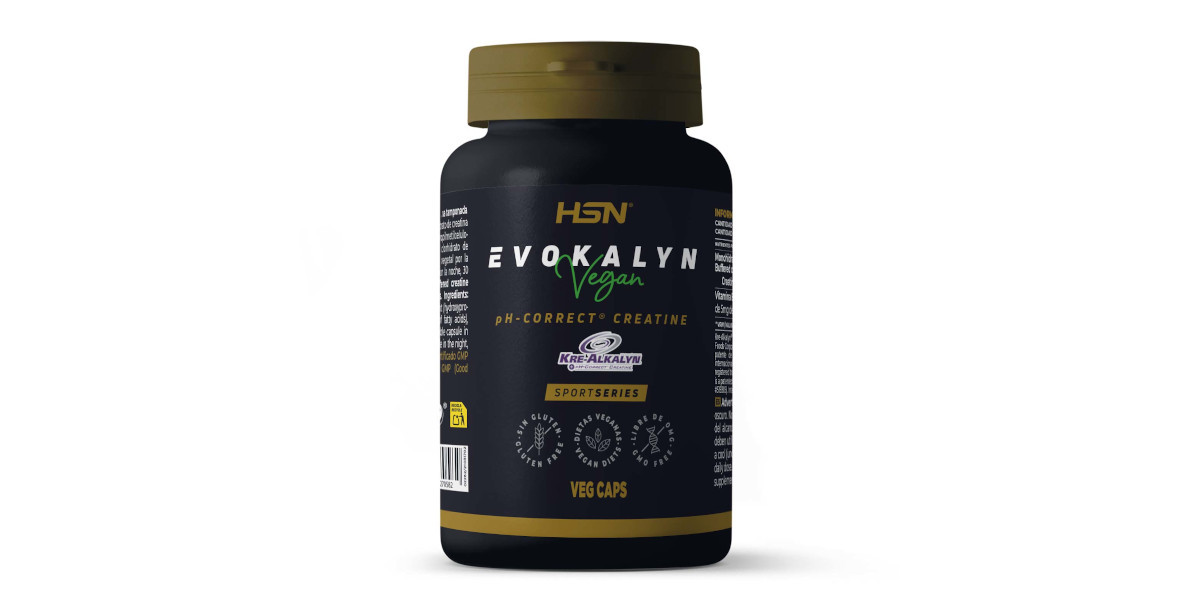
Evokalyn Creatine by HSN
Conclusions
The safety, efficacy and benefits in different scenarios have made creatine one of the most in-demand supplements.
Throughout the article, reference has been made to micronisation, a physical process by which we reduce the particle size and therefore improve solubility, bioavailability and consumer experience by achieving a more pleasant texture.
What to combine it with?
Bibliographic sources:
- Antonio J, Candow DG, Forbes SC, Gualano B, Jagim AR, Kreider RB, Rawson ES, Smith-Ryan AE, VanDusseldorp TA, Willoughby DS, Ziegenfuss TN. Common questions and misconceptions about creatine supplementation: what does the scientific evidence really show? J Int Soc Sports Nutr. 2021 Feb 8;18(1):13. doi: 10.1186/s12970-021-00412-w. PMID: 33557850; PMCID: PMC7871530.
- Gielen, E., Beckwée, D., Delaere, A., De Breucker, S., Vandewoude, M., Bautmans, I., Beaudart, C., Beyer, I., Bruyère, O., De Cock, A.-M., de Saint-Hubert, M., De Spiegeleer, A., & Perkisas, S. (2021). Nutritional interventions to improve muscle mass, muscle strength, and physical performance in older people: an umbrella review of systematic reviews and meta-analyses. Nutrition Reviews, 79 (2), 121-147. doi:10.1093/nutrit/nuaa011
- Fernández-Landa J, Fernández-Lázaro D, Calleja-González J, Caballero-García A, Córdova Martínez A, León-Guereño P, Mielgo-Ayuso J. Effect of Ten Weeks of Creatine Monohydrate Plus HMB Supplementation on Athletic Performance Tests in Elite Male Endurance Athletes. Nutrients. 2020 Jan 10;12(1):193. doi: 10.3390/nu12010193. PMID: 31936727; PMCID: PMC7019716.
- Antonio J, Candow DG, Forbes SC, Gualano B, Jagim AR, Kreider RB, Rawson ES, Smith-Ryan AE, VanDusseldorp TA, Willoughby DS, Ziegenfuss TN. Common questions and misconceptions about creatine supplementation: what does the scientific evidence really show? J Int Soc Sports Nutr. 2021 feb 8;18(1):13. doi: 10.1186/s12970-021-00412-w. PMID: 33557850; PMCID: PMC7871530.
- Hultman E, Söderlund K, Timmons JA, Cederblad G, Greenhaff PL. Muscle creatine loading in men. J Appl Physiol (1985). 1996 Jul;81(1):232-7. doi: 10.1152/jappl.1996.81.1.232. PMID: 8828669.
- Gualano B, Artioli GG, Poortmans JR, Lancha Junior AH. Exploring the therapeutic role of creatine supplementation. Amino Acids. 2010 Jan;38(1):31-44. doi: 10.1007/s00726-009-0263-6. Epub 2009 Mar 1. PMID: 19253023.
- Wyss M, Schulze A. Health implications of creatine: can oral creatine supplementation protect against neurological and atherosclerotic disease? Neuroscience. 2002;112(2):243-60. doi: 10.1016/s0306-4522(02)00088-x. PMID: 12044443.
- Chilibeck PD, Kaviani M, Candow DG, Zello GA. Effect of creatine supplementation during resistance training on lean tissue mass and muscular strength in older adults: a meta-analysis. Open Access J Sports Med. 2017 Nov 2;8:213-226. doi: 10.2147/OAJSM.S123529. PMID: 29138605; PMCID: PMC5679696.
- Khadka, P., Ro, J., Kim, H., Kim, I., Kim, J. T., Kim, H., Cho, J. M., Yun, G., & Lee, J. (2014). Pharmaceutical particle technologies: An approach to improve drug solubility, dissolution and bioavailability. Asian Journal of Pharmaceutical Sciences, 9(6), 304–316. https://doi.org/10.1016/j.ajps.2014.05.005
- Escalante, G., Gonzalez, A. M., St Mart, D., Torres, M., Echols, J., Islas, M., & Schoenfeld, B. J. (2022). Analysis of the efficacy, safety, and cost of alternative forms of creatine available for purchase on Amazon.com: are label claims supported by science? Heliyon, 8(12), e12113. https://doi.org/10.1016/j.heliyon.2022.e12113