Fitness, Nutrition, Health and Sports Blog In the HSNstore Blog you will find tips about Fitness, sport in general, nutrition, and health – HSNstore.com

Vitamins are essential to keep hair healthy, hydrated, and shiny. How can we know which vitamins are good for hair? The vitamins and minerals that most influence hair health are B vitamins, biotin, iron, copper, zinc, and selenium. All of them help hair stay strong, hydrated, and shiny.
Hair health
Certain vitamins and minerals, like vitamin B, especially biotin, vitamin C, the mineral zinc or iron, combined with the contribution of proteins, are essential for hair health. These vitamins work from inside the hair structure and promote scalp growth, giving it more strength, shine, and elasticity.
How to keep hair healthy?
To have healthy and shiny hair, it’s necessary to follow a balanced diet and maintain a healthy lifestyle. Certain vitamins promote hair growth and beauty, especially vitamin B and the vitamin B complex B2, B5, B6, B9, as well as biotin, calcium, silicon, and trace elements like zinc, copper, iron, and selenium. Due to their properties, these nutrients are popularly known as “vitamins for hair.”
Why does hair fall out?
Hair loss can originate from various factors, from some illness or pathology, use of certain drugs or medications (some therapy), a nutrient-deficient diet, hormonal imbalance… Any of these causes can interfere with the hair growth cycle, preventing new hairs from growing in the hair follicles.
We lose on average 80-150 hairs per day, which is part of the hair life cycle. Hair grows at an average of ½ inch per month
Still, you might notice a sudden increase in hair loss over a short period, which can be quite alarming, especially for women, almost forcing you to take action. Besides hair loss, other symptoms are also common, like hair thinning.

Many men and women suffering from hair loss report feelings of depression and/or low self-esteem
How does our hair grow?
It’s important to understand how hair growth happens to better grasp the importance of proper nutrient intake and know if extra vitamins are needed for its health. This process can be divided into 3 phases:
- Anagen or growth phase: normal hair growth occurs, reaching the corresponding length, as well as the necessary thickness and health to keep it strong, plus its characteristic shine.
- Catagen or transition phase: no growth happens, and hair remains in the same state.
- Telogen or resting phase: this is when hair falls out, either by itself or pushed out by a new hair growing.
Hair loss, thinning, or growth problems happen when the growth cycle is interrupted. This can be caused by conditions like metabolic imbalances, illness, or poor nutrition. If this imbalance exists, the number of hairs falling out will be greater than the time needed for new ones to grow, causing visible hair loss.
Hair Growth Phases
Vitamins to prevent hair loss
Good hair care habits and a matching diet can prevent hair loss and help maintain its shine and strength, combined with vitamins. In many cases, hair loss caused by various factors (stress, hormonal changes…) leads to the condition known as “telogen effluvium,” a temporary interaction with the hair growth phase.
A noticeable effect of maintaining proper nutrient intake during the anagen phase is to promote hair health, especially its strength, shine, and thickness.
- Prevent hair loss
- Stimulate hair regeneration
- Regenerate brittle hair
- Strengthen weak hair
- Prevent premature gray hair
- Treat hair lacking strength and shine
Vitamins for hair
How do vitamins work on hair?
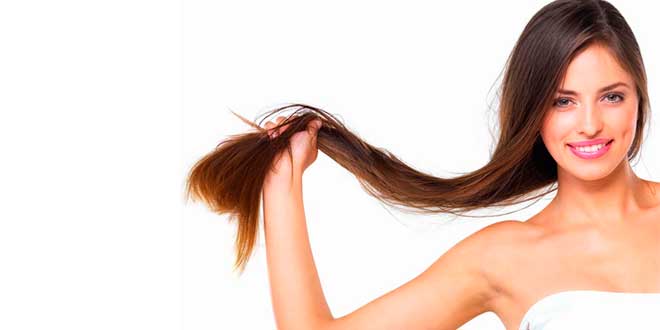
The vitamins we mainly need to improve the look and health of our hair include:
Vitamin A:
This vitamin helps fight hair loss and keeps it shiny. It promotes tissue healing and helps fight infections. Lack of this vitamin causes hair loss and dullness. You can find it in foods like fruits, vegetables, dairy, liver, etc.
Vitamin B2 or Riboflavin:
Fights dermatitis and eczema. You’ll find it in foods like milk, yogurt, cheese, wheat germ. Signs of deficiency in hair include itching and scalp flaking.
Vitamin B3:
Involved in metabolizing certain trace elements used to form hair like lithium, selenium, phosphorus, calcium, iron, cobalt, and copper. It also improves blood circulation, helping nutrients reach the scalp.

Vitamins and minerals that promote hair health: Vitamin B, Biotin, Calcium, Silicon, Zinc, Copper, Iron, and Selenium
Vitamin B5 or Pantothenic Acid:
Increases and regulates hair growth speed. If you want your hair to grow faster, eat meats, eggs, legumes, nuts…
Vitamin B6 or Pyridoxine:
To fight seborrhea. Found in foods like eggs, meats, oranges, etc.
Inositol:
To prevent baldness along with other B vitamins. Found in foods like nuts, brewer’s yeast, egg yolk, etc.
Vitamin B9 or Folic Acid:
Helps maintain a nice natural hair color. Found in foods like vegetables, mushrooms, alfalfa, etc.
Vitamin C:
Helps hair growth. Found in foods like citrus fruits, avocado, cucumber, onion, bananas, cabbage, etc.
Vitamin E:
Also helps prevent hair loss and breakage. Found in foods like corn, spinach, apples, carrots, asparagus, etc.
Benefits of collagen for hair
Collagen is the most abundant protein in our body, made up of the amino acids glycine, proline, hydroxyproline, and arginine, naturally found in tissues, especially bones and connective system. It maintains skin elasticity. Regarding its contribution to improving hair health, collagen can be used as a natural treatment:
- Strengthening hair
- Reducing split ends
- Preventing hair breakage
- Preventing tangles and frizz
- Protecting from heat (dry and fragile hair…)
- Prevents dandruff
Biotin, the vitamin for hair
Biotin, also known as B7 or H, is a water-soluble vitamin for hair loss, which has properties to promote hair growth, thicken hair strands, and prevent hair loss. It works together with vitamins B2, B3, and B6, preventing hair loss.
Properties of vitamins for hair
How can we boost the effects of each vitamin?
Vitamins for hair should be taken combined so all their nutrients can deliver their beneficial properties on hair. That means we must ingest each vitamin to act effectively on the scalp. Taking this combo boosts the properties of each vitamin and their individual effects.
What should we do when we notice our hair is damaged?
When we notice hair damage, we should consume a combo including each vitamin to repair damage as soon as possible. If our diet has any deficiency, we should also turn to this combo as it promotes hair health and improves its appearance.

How does this combo work?
Vitamin B helps form and transform carbohydrates, proteins, and fats. Vitamin B is also essential for the nervous system to work well. Calcium phosphate is basic for bones. Iron is an essential component of hemoglobin, responsible for transporting oxygen to all body parts. The raw materials combined with trace elements or oligoelements are basic to keep body metabolism controlled.
How does vitamin B act on hair?
How does zinc act on hair?
Zinc is involved in keratin formation, an essential substance to give hair strength and power.
How does copper act on hair?
Copper helps hair pigmentation and also gives it shine and color.
How does iron act on hair?
Iron helps hair regeneration and stimulates softness. It also prevents brittleness.
How do silicon and calcium act on hair?
Silicon is the best vitamin for elasticity, and another vitamin like calcium is the best to keep hair structure healthy.
Foods for hair growth
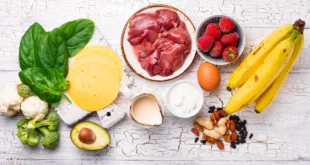
A healthy and balanced diet that guarantees adequate doses of vitamins and minerals involved in hair health is the first step if we want to avoid worsening hair appearance or hair loss. Among the most suitable foods are: fresh fruits and vegetables, meat, fish, poultry, whole grains, wheat bran, oat flour, brown rice, legumes, yeast, milk and dairy products, nuts…

Go for fresh and natural foods
When to take supplements for hair health?
If you notice one or more of the following signs, it’s recommended to act to protect your hair:
- Hair loss
- Brittle hair
- Hair dry as straw
- Premature gray hair
- Hair growth problems
- Difficulty regenerating hair
- Hair lacking strength
- Dull hair

If this happens every morning, it’s highly recommended to consider taking a supplement aimed at hair health
Vitamin supplements for hair
Although the term “vitamins for hair” is used, there are actually a series of products and supplements that aren’t strictly vitamins but are understood to provide nutrients and substances that promote hair health.
Omega-3
omega-3 fatty acids are essential nutrients that promote optimal health. Specifically, one of their main actions is reducing inflammation, so they’re involved in conditions directly affecting the hair growth phase. As shown in this study, an omega-3 supplement can support hair maintenance and even increase its thickness.Vitamin B Complex
Vitamin B is involved in many physiological reactions in the body, acting as cofactors and absorption enzymes in food metabolism to obtain nutrients. Among this group, biotin stands out the most, as we saw earlier. If these vitamin sources aren’t predominant, external supplementation is highly recommended.
Vitamin C
Vitamin C is a natural antioxidant and helps regulate high cortisol levels. This is one of the main causes that promote hair loss, and as recent research suggests, it can help with hair health.
Vitamin D
Hair follicles are very sensitive to hormones, and vitamin D is a hormone that plays an important role in calcium homeostasis, immune regulation, and cell growth differentiation. According to studies, this vitamin may have an important role in treating hair loss.
How to take vitamins for hair?
How to ingest the vitamins hair needs?
Vitamin intake for hair should be covered through food, which provides each specific vitamin. However, when following an unbalanced diet for a long time, the body may have a deficiency of some vitamin, affecting scalp health.
What should we do in these cases?

Who needs vitamins for hair?
- Athletes and sportspeople who expend more energy and need more fuel
- For elderly people
- People who suffer hair loss
- For people with brittle hair
- During menopause
- For pregnant women and breastfeeding mothers
- For people with metabolic and hormonal disorders
Side effects and interactions of vitamins for hair
How should we take vitamins to avoid side effects?
Bibliographic sources
- Hatem S, Nasr M, Moftah NH, Ragai MH, Geneidi AS, Elkheshen SA. Melatonin vitamin C-based nanovesicles for treatment of androgenic alopecia: Design, characterization and clinical appraisal. Eur J Pharm Sci. 2018 Sep 15;122:246-253. doi: 10.1016/j.ejps.2018.06.034. Epub 2018 Jul 5.
Related posts on the topic:
- Myths about Hair Loss
- Proteins and Hair