Fitness, Nutrition, Health and Sports Blog In the HSNstore Blog you will find tips about Fitness, sport in general, nutrition, and health – HSNstore.com

Biotin, also known as vitamin B7 or vitamin H, is a water-soluble vitamin belonging to the B-complex group. It plays an essential role as a coenzyme in several metabolic processes that are vital for life, including converting nutrients from food into energy that the body can use.
Since the human body does not synthesise sufficient amounts of biotin, it must be obtained through the diet or strategic supplementation. In this guide, we take an in-depth look at what it is, what it does, its benefits supported by scientific evidence, its safety, and how to choose a high-quality supplement.
What is Biotin and how does it work in the body?
Biotin primarily acts as an essential cofactor for five key carboxylase enzymes. These enzymes are actively involved in:
- Gluconeogenesis: Production of glucose from non-carbohydrate sources.
- Fatty acid synthesis: A critical process for cellular health and the skin’s lipid barrier.
- Branched-chain amino acid (BCAA) catabolism: Metabolism of leucine, isoleucine and valine.
Due to its direct involvement in cell renewal and rapidly growing tissues, vitamin B7 has become an important nutrient in both metabolic health and nutritional cosmetics (nutricosmetics).
What is Biotin used for? Proven benefits
When assessing the effects of vitamin B7, it is essential to consider the regulatory framework of the European Food Safety Authority (EFSA), which recognises the following health claims for the general population:
| Area of action | EFSA-authorised health claim |
|---|---|
| Hair health | Contributes to the maintenance of normal hair. |
| Skin care | Contributes to the maintenance of normal skin and mucous membranes. |
| Energy metabolism | Contributes to normal energy-yielding metabolism and normal macronutrient metabolism. |
| Nervous system | Contributes to the normal functioning of the nervous system and normal psychological function. |
Biotin and hair: What is the real connection?
There is extremely high demand for information about the impact of biotin on hair. Hair is primarily composed of keratin, a protein rich in amino acids whose synthesis depends to a large extent on proper protein metabolism, in which vitamin B7 is involved.
- Nutritional maintenance: Maintaining adequate biotin levels supports the strength, thickness and cellular structure of the hair follicle, helping to prevent weakness and a brittle appearance.
It is important to clarify that biotin supports hair health from a nutritional perspective. If you are experiencing severe loss of hair density or alopecia of hormonal, genetic or pathological origin, biotin supplementation is not a substitute for medical treatment. In these cases, it is essential to consult a dermatologist.
If you would like to assess whether your biotin levels are low or whether your symptoms may be related to a nutritional deficiency, see our detailed article on biotin deficiency and its symptoms.
Sources of Vitamin B7: Food vs. Supplementation
Biotin is found in a wide variety of everyday foods, although generally in modest concentrations:
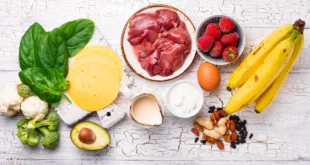
- Animal sources: Egg yolk (always cooked), beef liver, and oily fish such as salmon.
- Plant sources: Sunflower seeds, almonds, walnuts, avocado and brewer’s yeast.
For a detailed list including exact amounts per serving and cooking tips to help preserve the vitamin, see our guide to foods rich in biotin.
When nutritional requirements cannot be met through diet alone or when a concentrated dose is sought to support skin and hair health, food supplements provide a practical and effective option. You can explore our Biotin supplement category to discover the different formats and combinations available.

Recommended dosage, safety and side effects
The daily reference intake for biotin in healthy adults ranges between 50 μg and 100 μg per day to meet basic physiological needs. However, doses of 5000 μg (5 mg) are commonly used in nutricosmetic supplementation.
- Safety: As a water-soluble vitamin, the body can eliminate unused excess through the urine. No specific toxicity level or strict tolerable upper intake level (UL) has been established.
- Interference with laboratory tests: It should be noted that high doses of biotin (above 5000 μg) may temporarily interfere with the results of certain blood tests, such as thyroid or troponin tests. It is advisable to stop taking it approximately 48–72 hours before having a blood test.
- Pharmacological comparison: If you are unsure whether to choose a prescribed pharmacy product or a high-concentration supplement, see our comparison of Medebiotin Fuerte vs biotin supplements.
What should you consider when choosing a Biotin supplement?
Not all commercial products offer the same amount per capsule or the same level of purity. To ensure an optimised nutritional intake compared with traditional dietary sources, Biotin 5000 mcg from EssentialSeries provides:
- Concentrated 5 mg serving: Provides a high-concentration dose in a single daily serving.
- Suitable for vegan diets: Free from animal-derived ingredients and animal gelatine in the capsule.
- Optimised absorption: D-biotin as the active form, free from inactive biotin forms.
Looking for more comprehensive care? If you want to combine vitamin B7 with minerals such as Zinc and Selenium and standardised botanical extracts, take a look at the HSN Care formula from the EssentialSeries range.
Frequently asked questions about Biotin
Hubo un error al configurar el Carrousel.No son suficientes slides.
What is the difference between Vitamin B7, Vitamin H and Biotin?
None. All three terms refer to exactly the same water-soluble B-complex vitamin.
How long does it take to notice the effects of biotin supplementation on hair?
As hair grows at approximately 1 cm per month, nutritional effects on the structure of newly grown hair may generally begin to become noticeable after around 8 to 12 weeks of consistent supplementation.
Hubo un error al configurar el Carrousel.No son suficientes slides.
Related Studies:
- Hamid M Said. Biotin: The Forgotten Vitamin. 2002. American Society for Clinical Nutrition.
- Zempleni J, Wijeratne SS, Hassan YI. Biotin. 2009 Jan-Feb; 35(1): 36-46. doi: 10.1002/biof.8.
- Fernandez-Mejia C. Pharmacological effects of biotin. J Nutr Biochem. 2005 Jul; 16(7): 424-7.
- RA Peters. The Vitamin B Complex. Br Med J. 1936 Nov 7; 2(3957): 903-905.
- Higdon, Jane, Drake, Victoria J. and Mock, Donald. Micronutrient Information Center: Biotin. Oregon State University: Linus Pauling Institute. August 2008.
Related Posts
- Best tips for glowing skin
- How to maintain healthy hair when exercising
- Best vitamins for adults
- Best vitamins for athletes