 Fitness, Nutrition, Health and Sports Blog In the HSNstore Blog you will find tips about Fitness, sport in general, nutrition, and health – HSNstore.com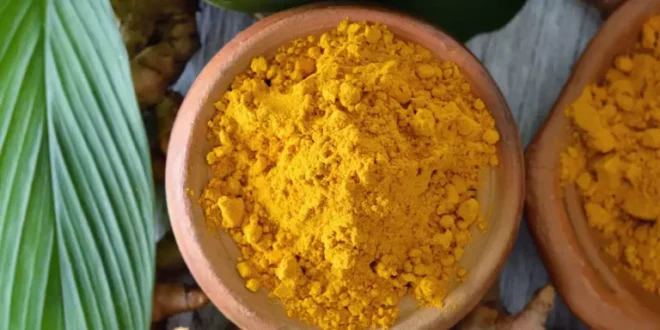

You don’t have to be a kitchen enthusiast to have heard of the countless benefits of Curcuma longa, the spice that grows in Indonesia, China and India and has made its way into our dishes.
Join the trend of this natural remedy in your diet – your health will thank you. You’re in the right place to find out everything you need to know about the ‘queen’ of the culinary world.
A bit of history…
Improving your health with a spice from your kitchen cupboard is an amazing opportunity you shouldn’t miss.
Used to season food for the past 4,000 years, what you might not know is that turmeric can do so much for you!
To this day, studies continue on its use as a potential alternative treatment for many common illnesses, injuries, and chronic conditions.
In recent times, there has been a trend among nutrition experts to recommend turmeric to patients as a first-line treatment for joint inflammation or arthritis. The results speak for themselves.
What is Turmeric?
It’s a perennial herbaceous ‘rhizomatous’ plant from the ginger family, specifically the zingiberaceae family.
A fact that might not get your attention at first, but what if we told you that it’s ground and boiled into an orange powder usually used as a spice in curry? Now that rings a bell, right?
It’s also used in cooking as a colouring in foods like mustard, pickles, cheeses, and margarines.
In fact, it’s been used since ancient times to fight discomfort and all kinds of gastrointestinal issues: diarrhoea, colic, and especially inflammation. It’s also praised for its antiseptic role in healing wounds and burns.
Other names for turmeric include ‘Indian sulphur’, ‘Indian saffron’, or ‘Spice of Life’.
As a prominent member of the ginger family, this Asian and tropical-origin plant has many culinary uses, but what truly makes it stand out are its amazing medicinal properties for treating different conditions.
The key lies in Curcumin
Today, turmeric is a trending food worldwide, generating excitement in the scientific community. The compound in this spice – curcumin – is mainly responsible for its many health benefits and gives it its characteristic yellow-orange colour.
It’s also used for skin treatment, with proven benefits in wound healing and treating conditions such as psoriasis. It also shows promise in tackling cystic fibrosis, a common genetic disorder in Europe.
Do you know the differences between Turmeric and Curcumin?
The result is that golden hue in curry, but it’s also highly valued medicinally.
It has been traditionally used to treat everything—from smallpox to a simple ankle sprain.
Turmeric has been presented as a prophylactic remedy for many inflammatory-mediated conditions in different body systems.
One of the most studied aspects is its potential to inhibit uncontrolled tumour growth and metastasis, making it useful alongside cancer treatments like chemotherapy or radiotherapy.
A natural remedy effective against Inflammation
Among turmeric’s many health benefits, it stands out as a strong cardiovascular protector. It also helps fight diseases like cancer and neurodegenerative disorders such as Alzheimer’s and Parkinson’s.
It also shows promise in treating multiple sclerosis.
At the same time, it acts as effective eye protection against cataracts and helps repair damage associated with high blood sugar, linked to diabetes.

Check its nutritional values here
Contains:
- Polyphenols
- Fibre
- Vitamins: C, E, K, B1, B2, B3, B6 and B9
- Manganese
- Iron
- Potassium, calcium, magnesium, copper and zinc
10 Benefits of ‘Indian Saffron’
Far more than a flavouring spice, it is the natural anti-inflammatory par excellence, known for medicinal and culinary uses.
Did you know it’s credited with helping prevent cholesterol?
Turmeric is making waves globally, and scientists have found its compound, curcumin, to be the main agent behind its incredible health benefits.
Here are its 10 benefits!

A powerful antioxidant
‘Indian saffron’ is priceless as an antioxidant, helping to protect cells from harmful free radicals. In recent years, experts have paid increasing attention to its antioxidant benefits.
Research from 1995 concluded that a diet including it helps reduce oxidative stress. More recent studies support the same conclusion.
Turmeric is a potent antioxidant, both when used in your diet and when taken as a supplement.
Turmeric is a powerful antioxidant, both when used as a spice in your diet and when taken as a supplement.
Its importance is such that oxidative damage is widely believed to be a key factor in cancer and heart disease, so using this extract could play a major preventive role in both conditions.
Turmeric fights other diseases
One of turmeric’s ‘star’ properties is its proven effectiveness in fighting cancer cells.
Many researchers have focused on its promising anti-cancer effects, noting that curcumin is one of the most promising chemopreventive agents against tumours.
Among the different types of cancer for which studies have revealed its benefits are prostate, pancreatic, colon, and breast cancer, where this nutrient has shown promising potential in the fight.
Anti-inflammatory and therapeutic properties
Its anti-inflammatory properties are well known—it stimulates the adrenal glands to produce anti-inflammatory hormones, gaining popularity among those suffering from joint pain and arthritis.
A digestive aid
Turmeric also improves digestion by reducing gas and bloating. It can encourage bile production in the liver and assist fat digestion. Additionally, diabetics may find it helpful for lowering blood sugar levels.
Its strong choleretic effect stimulates bile production, supporting the metabolism of fats.
Curcumin, which is not water-soluble, has a high lipophilic capacity, enabling it to absorb fats that are easily metabolised and excreted in the stool.
Anticoagulant Properties
Another major property of curcumin is its ability to help thin the blood, reducing plaque oxidation on arterial walls. This makes it beneficial for people with high blood pressure or elevated cholesterol levels.
The fact that a spice can become a perfect natural ally in managing triglyceride levels is something you shouldn’t overlook.
Turmeric helps balance those levels, supporting their reduction and, in turn, helping to prevent potential heart attacks.
Asthma – Another Major Beneficiary
Asthma is another common respiratory condition in both children and adults, which doctors define as a reversible chronic obstructive airway disease. Fortunately, if the cause is identified and the condition correctly diagnosed, it can be successfully treated.
The results left no room for doubt, showing greater prevention of inflammation and mucus production associated with asthma, while reducing inflammation and enhancing antioxidant properties.
In addition, from a topical perspective, it can be useful in cases of burns or conditions such as psoriasis or fungal infections.

Turmeric and eye health
In this regard, it’s worth highlighting chronic anterior uveitis, an inflammatory condition affecting the vascular layer of the eye, particularly the area surrounding the iris.
Recent research has found that turmeric is just as effective as corticosteroids in treating this condition, but without the associated side effects.

Speeds up wound healing
Wound healing is supported by the extract of this spice. An experiment on animals, specifically two groups of rats and guinea pigs, found that those treated with curcumin experienced faster wound healing. And it didn’t stop there, as the researchers also observed the new development of epidermal cells.
Turmeric and the nervous system
In neurological health, experts have identified several benefits from this nutrient—curcuminoids have at least ten known neuroprotective actions.
Prevents dementia and cognitive decline—ageing-related cognitive loss can occur with or without brain damage, but some studies show promising cognitive benefits from curry consumption.
Protects against Alzheimer’s
Acts as a nootropic
The nootropic properties of this spice have been proven. What does that mean exactly? It means that it can support brain function by protecting neurons and facilitating signal transmission through synapses.
Ideal for Weight Loss
Have you heard about the benefits of turmeric for weight loss? It’s widely known that this spice tops the list of superfoods for slimming thanks to its ability to mobilise and metabolise fats. When curcumin is absorbed through the diet, it tends to limit the spread of fat tissue by inhibiting the growth of new blood vessels (angiogenesis)—which is why it’s featured in the most modern and innovative weight-loss therapies.
Turmeric is a treasure trove of benefits—and it can also add flavour to your dishes. A fabulous opportunity to boost your health while enjoying delicious curry-based recipes.
Uses of This Natural Anti-Inflammatory
It has two main uses, as we’ve seen throughout this article.
Medicinal Use
The medicinal use of this spice is becoming increasingly relevant.
You should know that there are two main variants: Java turmeric and longa Vahl. Both varieties have been approved by the European Medicines Agency for treating symptoms of various digestive disorders due to their ability to stimulate bile flow.
Among the most common symptoms are bloating, a feeling of fullness, and slow, heavy digestion.
And here’s another reason to celebrate: both the World Health Organization and the European Medicines Agency recommend turmeric for treating dyspepsia and digestive discomfort caused by these issues.
Culinary Use
But we don’t live on medicine alone—eating well is essential to enjoying better health. Its culinary uses are definitely worth highlighting.
Used in the production of curry, it adds a distinctive colour and a mildly sweet and spicy flavour. You can use it to season food and give that unique mustard-yellow tone we’ve mentioned to your rice dishes and stews with poultry, pork, or fish.
That said, be careful not to overdo it—or the flavour might overpower your dish.
How to Take the ‘Spice of Happiness’
Turmeric supplements usually come in doses of around 650 mg and are typically taken once a day with food.
One key factor to consider is the extraction ratio and the standardised content of the active compound (in this case, curcuminoids).
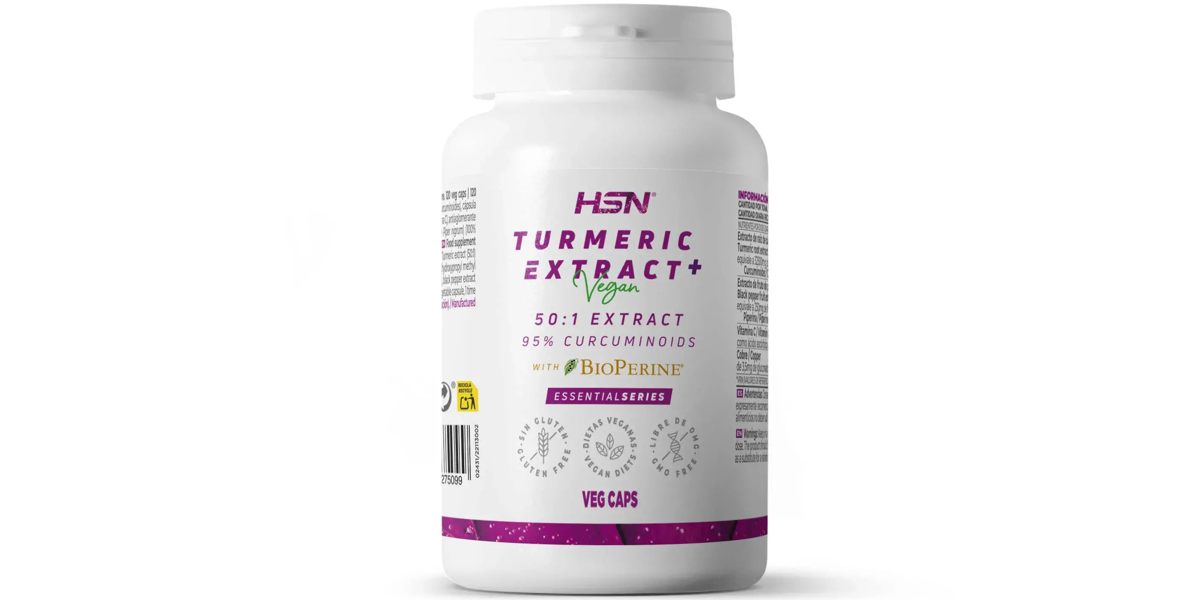
High-quality food supplements, such as the Turmeric Root Extract from EssentialSeries, offer a 50:1 ratio and are standardised to 95% curcuminoids.
After all, if you can do it right—why settle for less?
Are There Any Contraindications?
It’s advisable to consult your doctor if you’re considering adding a turmeric supplement to your routine.

Especially if you’re pregnant or breastfeeding, don’t forget to have this consultation.
Now you know turmeric is much more than an aromatic spice—it helps support the heart, liver, and joints, and offers promising hope in the fight against cancer.
Related Posts
We explain the link between Turmeric and Diabetes in this link.
Two Turmeric Smoothie Recipes: