Fitness, Nutrition, Health and Sports Blog In the HSNstore Blog you will find tips about Fitness, sport in general, nutrition, and health – HSNstore.com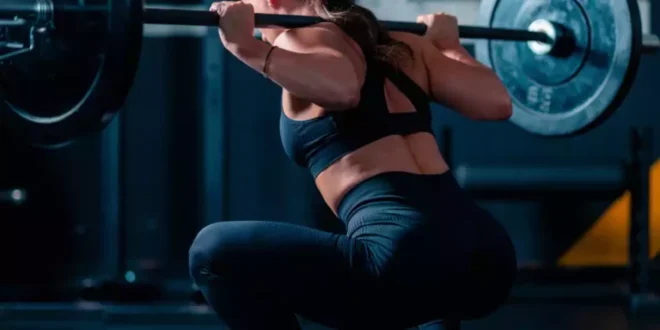

Weighted squats are a key exercise for anyone looking for a full-body workout that combines strength, aesthetics, and functionality. My experience as a personal trainer confirms how effective this move is in any training routine.

- Grip and weight placement: if you’re using a barbell, rest it on your traps (not your neck). With dumbbells or kettlebells, keep your arms close to your body and shoulders back.
- Foot position: set them shoulder-width apart, toes slightly pointed out. Imagine you’re “screwing” your feet into the floor to stabilize your knees.
- Controlled descent – lower down like you’re sitting on an invisible chair: keep a neutral spine, chest up, and core engaged. Look straight ahead to avoid rounding your back.
- Optimal depth: go at least to parallel (thighs parallel to the floor). If your mobility allows, go a bit deeper to engage more glute fibers.
- Explosive (but controlled) rise: push through your heels, not your toes. Keep tension in your glutes and quads throughout the move.
Reps and sets
| Level | Repetitions | Sets | Recommended weight | Rest between sets |
| Beginner | 8-12 | 2-3 | 40-60% of 1RM | 75-90 seconds |
| Intermediate | 10-12 | 3-4 | 65-75% of 1RM | 90-120 seconds |
| Advanced | 6-10 | 4-6 | >75% of 1RM | 2-3 minutes |
- 1RM (one-rep max): the max weight you can lift for one rep with good form.
Muscles involved in the weighted squat
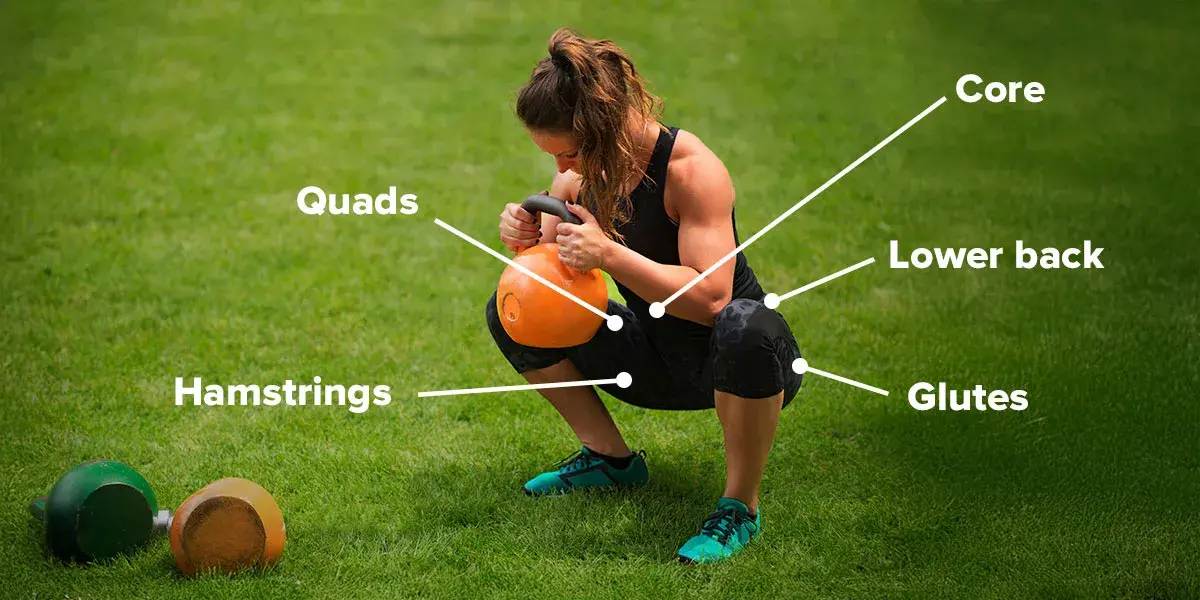
Weighted squat variations to switch up your routine
Try these options for beginners and advanced:
1. Front squat

- Rest the barbell or dumbbell on the front of your shoulders, just below the collarbone.
- Cross your arms in an “X” over the bar or use a clean grip (fingers under the bar, elbows high).
- Set your feet shoulder-width apart, toes slightly pointed out.
- Keep your torso as upright as possible throughout the movement.
- Lower until your thighs are parallel to the floor or a bit below, making sure your knees don’t go past your toes.
- Push up through your heels, keeping your core engaged.
HSN tip: if you struggle to keep the bar in position, start practicing with dumbbells or kettlebells held at chest height.
2. Bulgarian split squat

- Stand facing a bench or elevated surface.
- Extend one leg back and rest the top of your foot on the bench.
- The front leg should be far enough forward so your knee doesn’t go past your toes when you lower down.
- Lower your body until the front thigh is parallel to the floor.
- Keep your torso upright and avoid leaning too far forward.
- Push up through the heel of your front leg.
HSN tip: start without weight to master balance. Then add dumbbells or a barbell to increase intensity.
3. Belt squat

- If you’re using a dedicated belt squat machine, place the belt on your hips and hook the load to the system.
- With a low pulley or belt with chain, adjust the weight so it’s centered under your body.
- Set your feet shoulder-width apart or slightly wider, toes slightly pointed out.
- Lower down controlling the movement, keeping your torso more vertical than in a traditional squat.
- Make sure your knees track the direction of your feet and don’t collapse inward.
- Descend to parallel or a bit below, feeling the intense work in quads and glutes.
- Push up strongly through your heels, keeping your core tight and back relaxed.
HSN tip: beginners should start with light weight to get used to the belt’s feel and movement path. It’s a very safe exercise, but the load feels different than a classic squat. Progress gradually by adding weight or reps.
Common mistakes and how to avoid them
Check out this detailed table with the most common mistakes, their causes, and practical fixes so you can correct them and get the most out of this exercise.
| Common mistake | Causes | Fix |
| Excessive back arching |
|
|
| Knees caving inward |
|
|
| Heels lifting off the ground |
|
|
| Leaning too far forward |
|
|
| Descending too fast |
|
|
Related posts
- Bulgarian split squat vs traditional squat and which to choose
- Are free squats better than smith machine squats?
- Why valgus happens in squats and how to fix it