Fitness, Nutrition, Health and Sports Blog In the HSNstore Blog you will find tips about Fitness, sport in general, nutrition, and health – HSNstore.com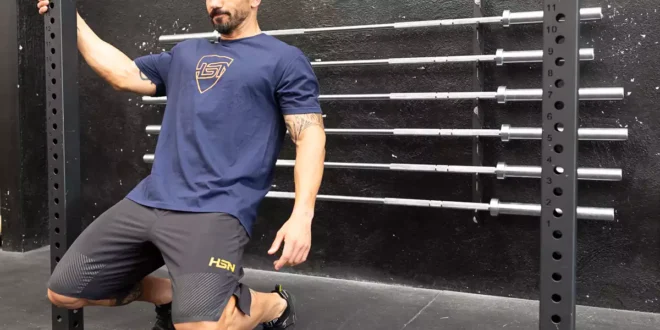

Did you know that the Sissy squat, inspired by Greek mythology and popularized by bodybuilders in the 70s, is one of the most underrated exercises to sculpt quads and strengthen knees?
This move can change your workout, but only if you do it right. First, I’ll explain the correct technique and then we’ll check out some exercises to help you master it step by step. All that without forgetting the common mistakes almost everyone makes and how to dodge them. Ready to start?

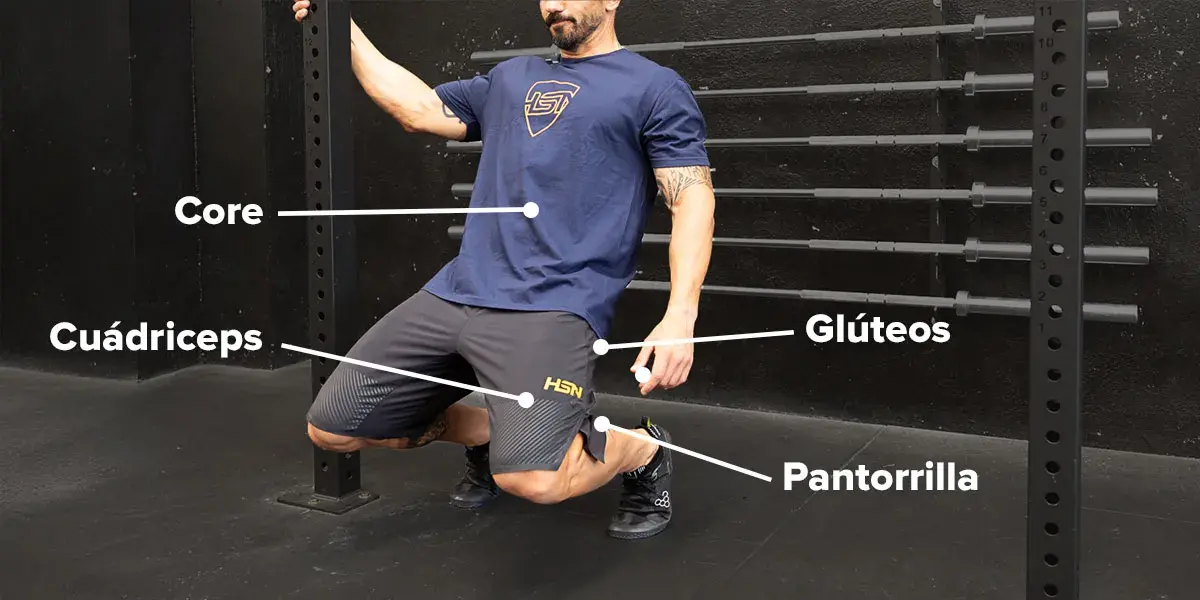
- Stand with your feet hip-width apart. Lean slightly on a post or wall for balance (not to put weight on it).
- Lean your torso back while bending your knees forward, lifting your heels up. Keep your chest up and core engaged.
- Lower down until your thighs are almost parallel to the floor.
- And slowly come back up.
Muscles involved
How to include the Sissy squat in your training routine?
The Sissy squat is an exercise that offers a lot of versatility through training methods like:
- Compound sets (example: conventional squats + sissy squats);
- Drop sets (weighted sissy squats + bodyweight sissy squats; all as a finisher in your session); or
- Regular sets (as just another exercise in your routine).
Prioritize basic exercises like squats and lunges, and save Sissys for the end. It’s a great alternative to leg extensions, perfect for training at home or without machines.
- Example: Weider Quad routine day 1 (there would be a 2nd day per microcycle)
| Exercise | Sets | Reps | Rest |
| Front squats | 1 | 6 | 1min 15sec |
| 1 | Cluster 3+3 | 1min 30sec | |
| 1 | 6 | 1min 15sec | |
| 1 | Cluster 3+3 | 2min 30sec | |
| Back squats | 5 | 8, 6, 5, 6, 8 | 1min 30sec – 2min |
| Lunges | 3 | 10 | 1min 30sec |
| Sissy | 3 | 10, 12, 12 | 1min |
Progressions to start doing the Sissy squat
The Sissy squat is perfect for quads but needs technique and adaptation. These 3 progressions will help you nail it:
1. Wall-supported Sissy squat

- Stand facing the wall, place your hands in front of you.
- Lift your heels and lower your torso back, bending your knees until your glutes almost touch the floor.
- Use the support only to avoid falling.
2. Bar-supported Sissy squat

- Position yourself under a bar placed on a rack.
- Grab the bar with both hands and perform the standard Sissy squat, using the bar’s tension to counterbalance your body weight.
How to protect your knees when doing the Sissy squat
Little tips to make sure you don’t mess up the exercise:
- Always align your knees with your toes to avoid dangerous strain. If you notice them drifting inward or outward, fix your posture before continuing.
- Never skip the warm-up and spend at least 5-10 minutes on moves like slow lunges, spot jumps, or bodyweight squats to activate muscles and lubricate joints.
- Work with a controlled range of motion. Lower as far as you can keep a neutral spine and tension in the quads, but don’t force a depth that makes your lower back arch.
- Forget about adding extra weight if you haven’t mastered the technique yet. Use just your body at first and, when you progress, increase the load gradually and under supervision.
- Choose flat-soled shoes or go barefoot to ensure stability.
- Strengthen stabilizer muscles with exercises like step-ups or Bulgarian split squats so your knees get extra support during the movement.
- Listen to your body’s signals and if you feel sharp pain or pinching when bending, stop and check your technique before continuing.
Sources
- Delavier, F., Gundill, M. (2012). The Delavier Method. Bodybuilding. Equipment-free exercises and home training programs. Barcelona. Hispano Europea.
- Pearl, B. (2008). General Treatise on Bodybuilding. Barcelona. Editorial Paidotribo.
Related Posts
- Free squats or smith machine?
- Bulgarian split squat VS traditional squat
- Learn how to squat correctly step by step